Losing grip strength isn’t just inconvenient after 50 — it’s one of the better early predictors of overall health researchers have found, which is exactly why it’s worth paying attention to now.
Prefer to watch? Here’s the 76-second version.
Opening Summary
Hands do an enormous amount of invisible work — opening jars, carrying bags, typing, gardening, holding a steering wheel — and after 50, two things commonly start to get in the way: a natural decline in grip strength, and the rising likelihood of osteoarthritis in the small joints of the hands and wrists. Neither is something to simply accept as “getting older.” Both respond well to the right kind of attention, and catching changes early tends to make the biggest difference.
The Story
Hand and wrist complaints after 50 usually trace back to a handful of specific, well-understood causes.
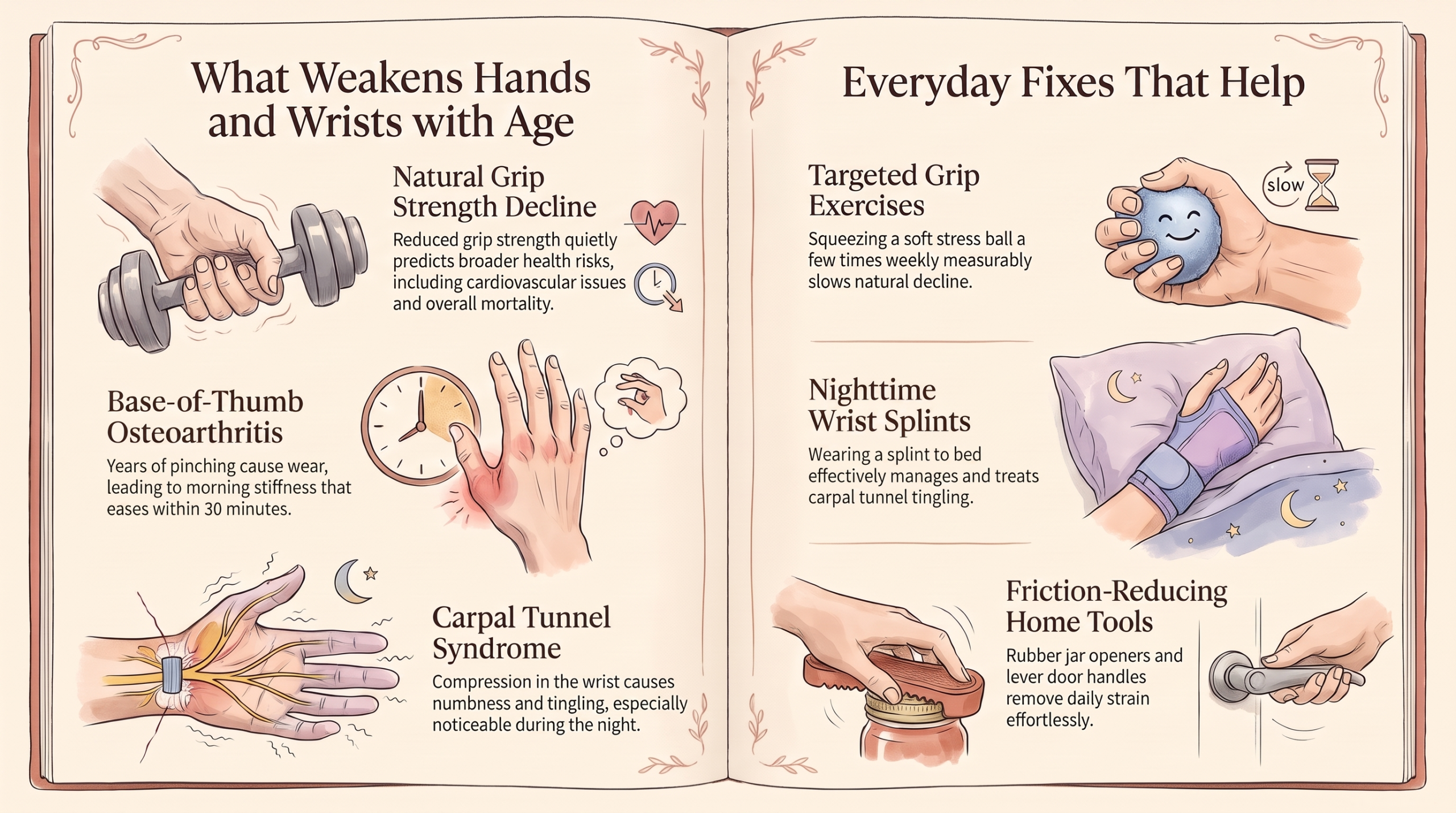
- Grip strength quietly tracks overall health, not just hand strength. Multiple large studies have linked grip strength with outcomes well beyond the hands — including cardiovascular health and overall mortality risk. It isn’t that weak hands cause those problems; it’s that grip strength is a simple, measurable stand-in for overall muscle mass and physical condition. A noticeable drop is worth mentioning at your next check-up.
- Osteoarthritis in the hands often starts at the base of the thumb. The joint where the thumb meets the wrist (the CMC joint) takes a disproportionate amount of wear over a lifetime of pinching and gripping, which is why aching or stiffness there is one of the most common hand complaints after 50. Splints, activity modification, and anti-inflammatory approaches help the large majority of people without surgery.
- Morning stiffness that eases within 30 minutes is usually just osteoarthritis. Stiffness that lasts much longer than that, especially with visible swelling in multiple finger joints on both hands, is more suggestive of rheumatoid arthritis and is worth a doctor’s visit rather than home management alone.
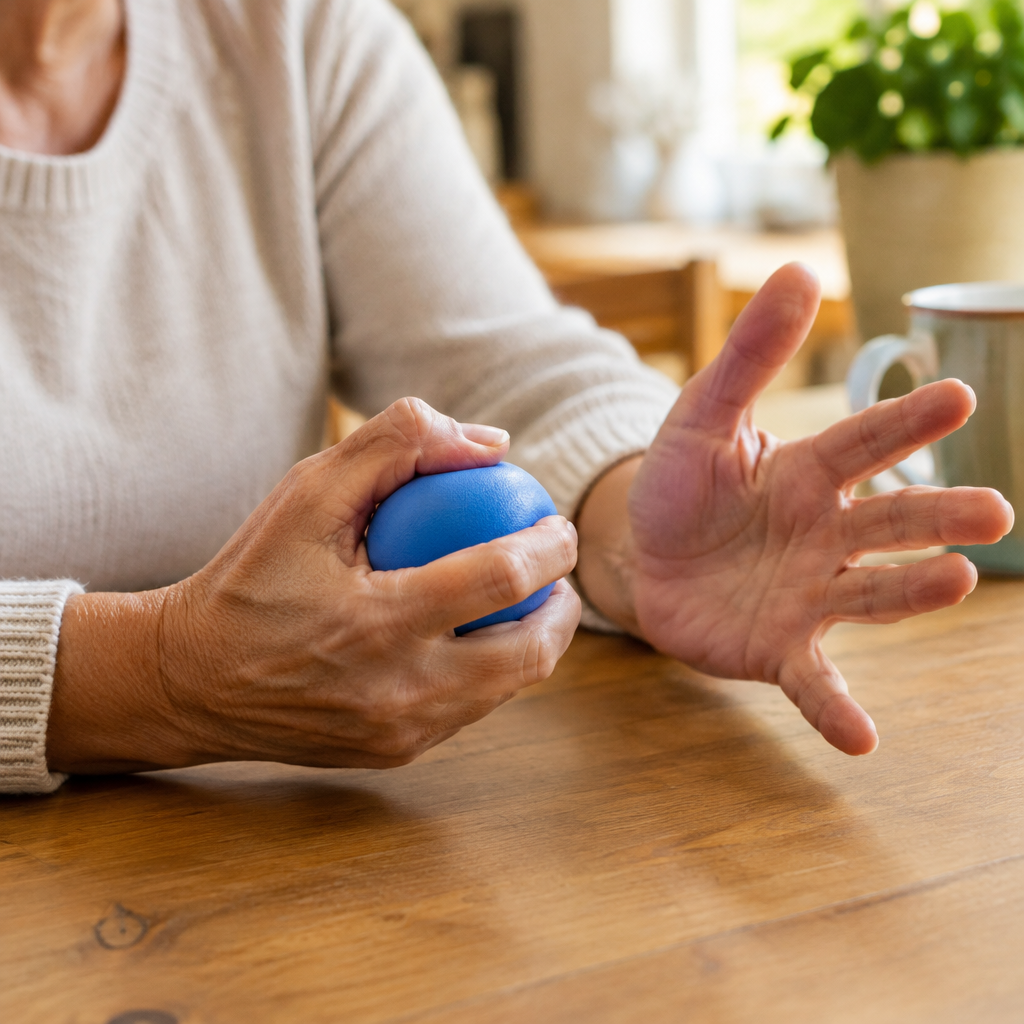
- Grip exercises are one of the simplest “use it or lose it” fixes available. Squeezing a soft stress ball or therapy putty for a few minutes a few times a week, or simply doing more by hand rather than defaulting to the easiest tool, measurably slows the natural decline in grip strength for most people.
- Numbness or tingling, especially at night, often points to carpal tunnel syndrome. This is extremely common after 50 and very treatable — wrist splints worn at night resolve a large share of mild-to-moderate cases without needing surgery.
- Jar lids and tight jar openings aren’t a personal failing. A rubber jar opener, a few well-placed grip-assist tools in the kitchen, and swapping stiff drawer handles for lever-style ones remove daily friction without anyone needing to “push through” discomfort as a point of pride.
Mrs Cure Confidence Score
Evidence strength — Good
Practical value — High
Ease of following — Easy
Cost — Low
Suitability for over 50s — Strong
Mrs Cure’s Wise Take
Hands get taken for granted precisely because they’re so quietly reliable, right up until a stiff jar lid or a tingling thumb makes you notice. Paying them a little attention now, before anything’s gone wrong, is a far better trade than waiting for a problem to force the issue.
What You Can Do Today
- Spend two minutes squeezing a soft ball or therapy putty in each hand, and notice whether one side feels noticeably weaker or stiffer than the other.
- If you wake with numb or tingling fingers, try a simple wrist splint at night for a week and see whether it helps — it’s a low-cost way to rule in or out a common, treatable cause.
- Swap one stiff, hard-to-grip household item (a jar lid, a drawer handle, a tap) for an easier-to-use version this week.
Effort vs Benefit
Very little effort is required here relative to the payoff. A stress ball costs almost nothing, grip exercises take a few minutes, and most of the household fixes are a single trip to a hardware store or supermarket. In exchange, you get ahead of exactly the kind of small daily friction — struggling with jars, dropping things, avoiding activities because of hand discomfort — that otherwise accumulates quietly over years.
Things to Keep in Mind
- Sudden hand weakness on one side, especially with slurred speech or facial drooping, is a stroke warning sign and needs emergency care — it’s not the kind of hand weakness this article is about.
- Swelling, redness, and warmth in a joint, especially with fever, can signal infection or gout and should be seen promptly rather than managed at home.
- If grip exercises cause sharp pain rather than mild working fatigue, stop and check with a doctor or physiotherapist before continuing.
Key Takeaway
Grip strength and hand comfort after 50 are worth tracking the same way you’d track blood pressure or weight — not because a jar lid is dangerous, but because what’s happening in your hands often reflects, and predicts, a lot more about your overall health than people assume.
Mrs Cure Wisdom
Strong hands rarely happen by accident after 50 — they happen because someone kept using them on purpose.
Enjoyed this? Get The Good Years, free.
Our free monthly magazine, packed with the best of our articles, guides and quizzes for life after 50. No spam, unsubscribe any time.
This content is educational and not a substitute for personalised medical advice, diagnosis or treatment.