Prefer to watch? Here’s the 87-second version.
Opening Summary
Gritty, tired eyes by the afternoon. A mouth that feels dry or sticky, especially overnight. These two things are so common after 50 that most people assume they’re just part of getting older — and partly, they are. The glands that produce tears and saliva slow down gradually with age, but “normal” doesn’t mean “nothing can be done.” A few simple habits, and a second look at your medication list, go a long way.
The Story
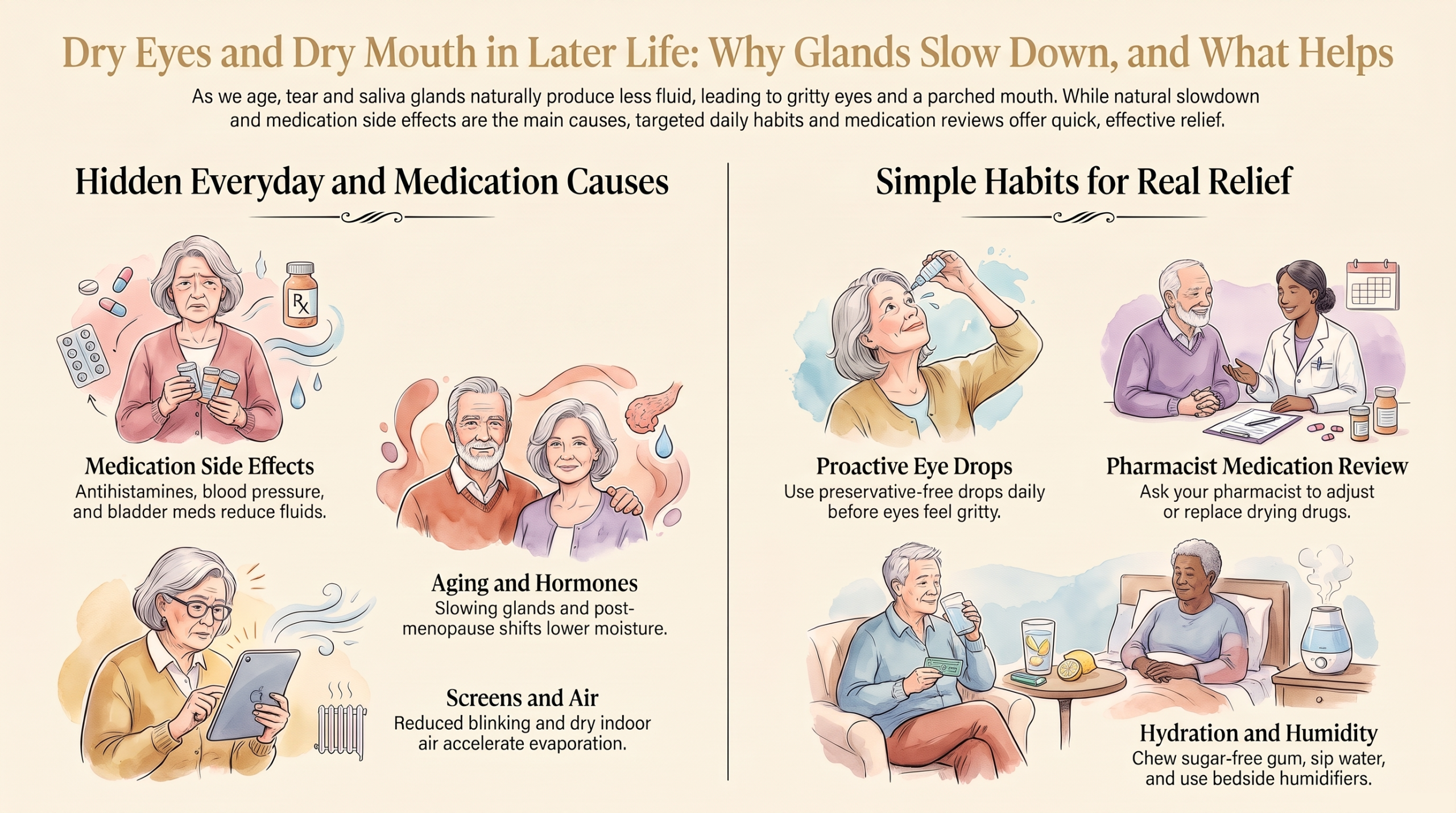
Both tear glands and salivary glands produce less fluid as the decades go by, and the fluid they do produce changes slightly in composition too, making it less effective at keeping things lubricated. On top of that natural slowdown, a few other things pile on:
- Medications are the single biggest hidden cause. Antihistamines, many blood pressure medications and diuretics, some antidepressants, and several bladder medications all commonly cause dryness as a side effect — often without anyone connecting the dots.
- Hormonal changes play a real role. Dry eye becomes noticeably more common around and after menopause, as hormone shifts affect the tear film directly.
- Screens and concentration reduce blinking. You blink roughly half as often while reading or looking at a screen, which lets tears evaporate faster than they’re replaced.
- Dry indoor air, wind, and air conditioning all speed up moisture loss from both eyes and mouth.
- Mouth breathing at night, including from a CPAP mask that leaks air, is one of the most common causes of waking up with a parched mouth.
When dry eyes and a dry mouth show up together and persist, it’s also worth knowing there’s a specific, treatable autoimmune cause called Sjögren’s syndrome that becomes more common in this age group, particularly in women. It isn’t the likely explanation for most people — everyday causes are far more common — but if both symptoms are persistent, unexplained, and come with joint aches or unusual fatigue, it’s a reasonable thing to raise with your GP rather than something to self-diagnose.
Mrs Cure Confidence Score
Evidence strength — Moderate
Practical value — High
Ease of following — Easy
Cost — Low
Suitability for over 50s — Strong
Mrs Cure’s Wise Take
These are the kinds of symptoms people tend to just live with, quietly, for years — because they feel too minor to mention at a doctor’s appointment. But a dry mouth raises your risk of cavities, and dry eyes left alone can genuinely affect your comfort and even your vision over time. They’re worth mentioning, and worth treating properly, not just tolerating.
What You Can Do Today
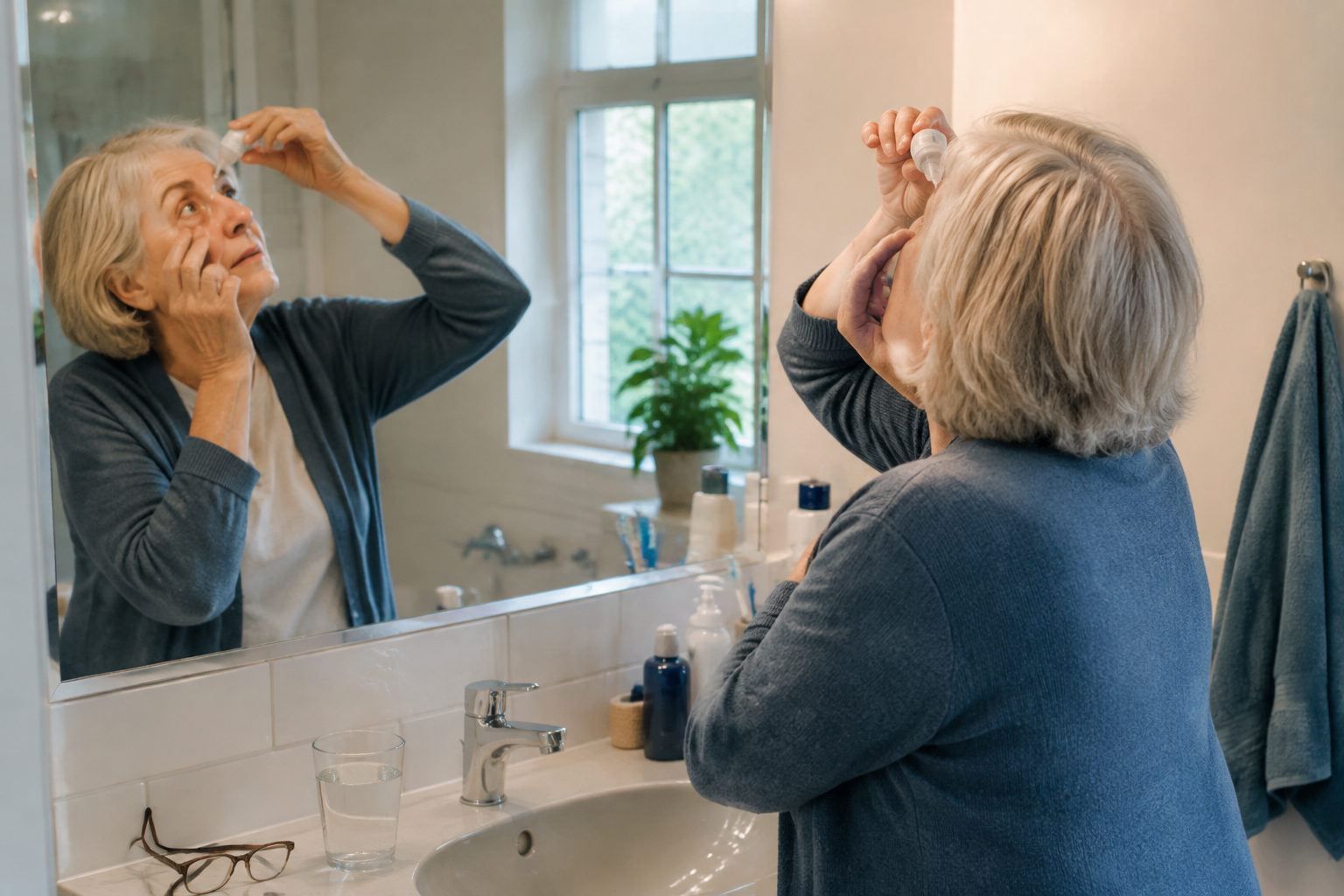
- Start using preservative-free lubricating eye drops regularly, not just when your eyes already feel gritty — prevention works better than rescue.
- Ask your pharmacist whether any of your regular medications list dry mouth or dry eyes as a side effect. Sometimes a timing change or an alternative solves it entirely.
- Keep a water bottle and sugar-free gum or lozenges within reach through the day to keep saliva flowing, and consider a bedside humidifier if you wake up parched.
Effort vs Benefit
Very low effort for genuinely good relief. Over-the-counter eye drops and simple hydration habits work for the large majority of people within days, at minimal cost. The only real effort is remembering to use drops proactively rather than reactively, and taking the slightly awkward step of asking your pharmacist to review your medications for this specific side effect.
Things to Keep in Mind
See your doctor if dry mouth is severe enough to interfere with eating or speaking, if you’re developing frequent cavities despite good dental care, or if dry eyes and dry mouth appear together with joint pain, unusual fatigue, or swollen glands — these combinations are worth a proper evaluation. Good dental check-ups matter more than usual when your mouth is drier than it used to be, since saliva is one of your natural defences against decay.
Key Takeaway
Dry eyes and a dry mouth are common, usually simple results of slowing glands, screen time, indoor air and medication side effects — and they respond well to regular lubrication, hydration and a quick medication review.
Mrs Cure Wisdom
Small discomforts deserve small fixes, applied consistently — not quiet endurance.
Enjoyed this? Get The Good Years, free.
Our free monthly magazine, packed with the best of our articles, guides and quizzes for life after 50. No spam, unsubscribe any time.
This content is educational and not a substitute for personalised medical advice, diagnosis or treatment.