Prefer to watch? Here’s the 71-second version.
Opening Summary
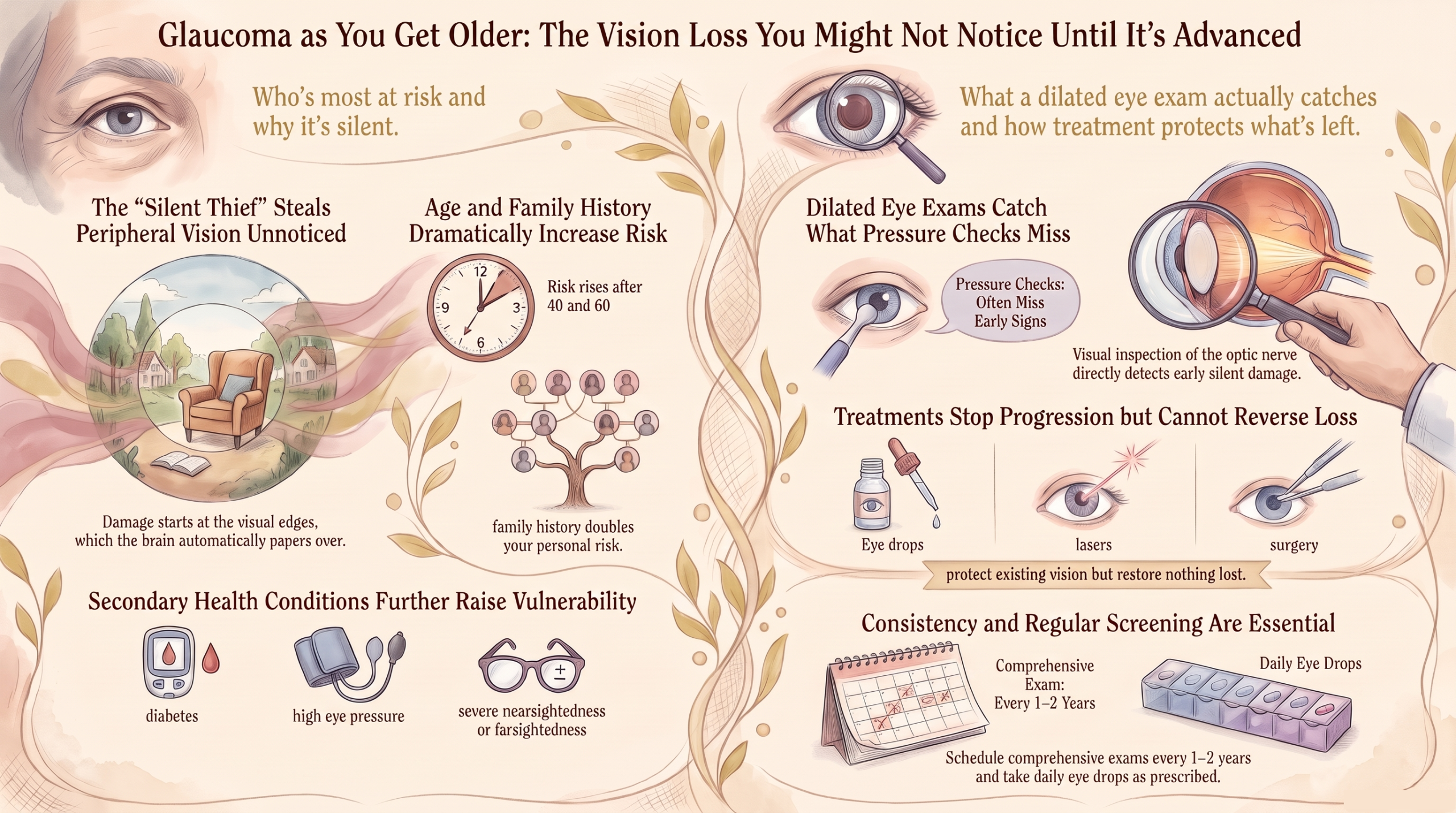
Glaucoma has earned the nickname “the silent thief of sight” for good reason: the most common form causes no pain, no redness, and no noticeable symptoms until a significant amount of vision is already gone. The vision it takes first is at the edges of what you see, which your brain is remarkably good at papering over — so by the time most people notice something is wrong, it’s already fairly advanced. That’s exactly why a simple screening test matters so much more than how your eyes feel.
The Story
Glaucoma is a group of conditions that damage the optic nerve, the cable that carries images from your eye to your brain. The most common type, open-angle glaucoma, develops when fluid doesn’t drain from the eye quite as well as it should, gradually raising pressure inside the eye. That pressure slowly damages the optic nerve, usually starting with peripheral (side) vision, long before central, “straight-ahead” vision is affected. Because the loss is so gradual and starts at the edges, many people don’t notice a problem until a large portion of their field of vision is already gone — and vision already lost to glaucoma cannot be restored, only protected from getting worse.
What raises the risk, and what helps:
- Age is the single biggest factor. Risk rises steadily after 40 and climbs further after 60 — simply getting older is the main reason this is worth thinking about now.
- Family history matters a lot. Having a parent or sibling with glaucoma roughly doubles your own risk, which is reason enough to mention it at your next eye exam even if your vision feels fine.
- Diabetes, high eye pressure, and short-sightedness or long-sightedness are all additional risk factors worth flagging to your optometrist.
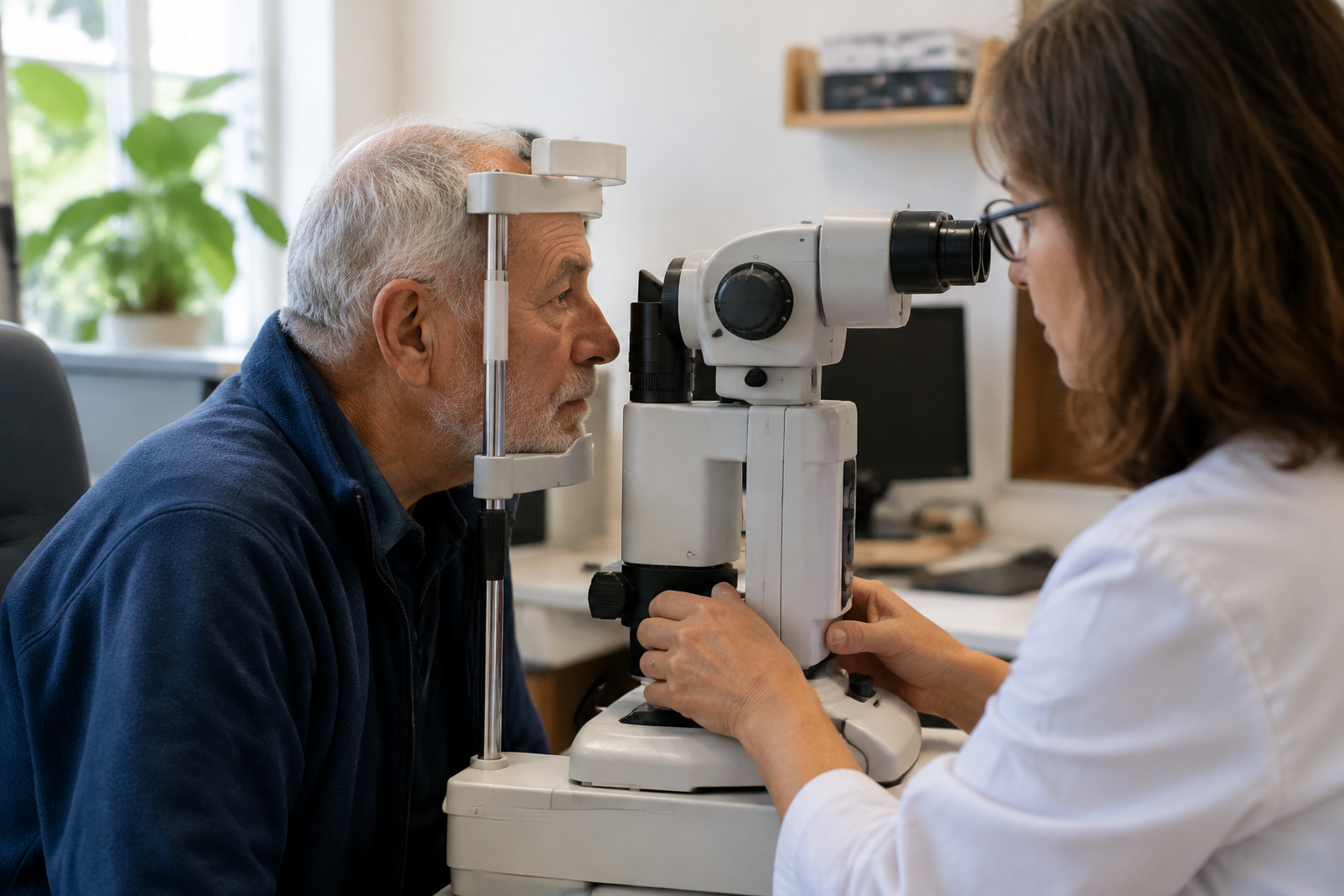
- A dilated eye exam is the test that actually catches it. Checking eye pressure alone can miss a meaningful number of cases; a full exam that looks at the optic nerve itself is far more reliable.
- Treatment works, but only on what’s left. Eye drops, laser treatment or surgery can very effectively stop glaucoma from progressing further — but none of them bring back vision that’s already been lost, which is the whole case for catching it early.
Mrs Cure Confidence Score
Evidence strength — Strong
Practical value — High
Ease of following — Easy
Cost — Low
Suitability for over 50s — Strong
Mrs Cure’s Wise Take
It feels strange to be told to worry about something you cannot feel at all. But that’s precisely the nature of this one — it asks for trust in a test rather than trust in your own senses. I’d rather you sit through twenty quiet minutes of drops and bright lights at the optometrist than lose vision you never even noticed slipping away.
What You Can Do Today
- Book a comprehensive, dilated eye exam if you haven’t had one in the last one to two years, especially if you’re over 60 or have a family history.
- Tell your optometrist your family history of glaucoma specifically — it changes how closely they’ll want to monitor you.
- If you’re already on glaucoma eye drops, take them exactly as prescribed, every day. Skipped doses are one of the most common reasons treatment doesn’t work as well as it should.
Effort vs Benefit
Low effort for a genuinely high stake. A single appointment every year or two, covered or heavily subsidised by many health systems for people in higher-risk groups, is the entire “cost.” The benefit is catching a condition that is otherwise silent until it has already taken a meaningful bite out of your vision — and once caught, very manageable for the rest of your life.
Things to Keep in Mind
A different, much rarer type — acute angle-closure glaucoma — behaves nothing like the quiet, gradual kind: it causes sudden eye pain, blurred vision, redness, nausea, and headache, and needs emergency treatment the same day. This is uncommon but important to know, simply so you’d recognise it and act fast rather than wait it out. For the common, gradual kind, there’s no need for alarm — just consistency with your screening schedule.
Key Takeaway
Glaucoma rarely announces itself, which is exactly why a regular dilated eye exam matters more than how clearly you feel you’re seeing. Caught early, it’s one of the most manageable chronic eye conditions there is.
Mrs Cure Wisdom
Some of the most important health checks are the ones that find nothing wrong — because that’s the whole point of looking.
Enjoyed this? Get The Good Years, free.
Our free monthly magazine, packed with the best of our articles, guides and quizzes for life after 50. No spam, unsubscribe any time.
This content is educational and not a substitute for personalised medical advice, diagnosis or treatment.