Your liver can be quietly struggling for years before it ever says a word about it.
Prefer to watch? Here’s the 72-second version.
Opening Summary
Liver health after 50 is shaped mainly by a handful of everyday, cumulative factors: alcohol intake, body weight, blood sugar, and diet, rather than any single dramatic event. Non-alcoholic fatty liver disease, now the most common liver condition in many Western countries, develops silently and is largely reversible if caught and addressed early, which is precisely why it’s worth paying attention before symptoms ever appear.
The Story
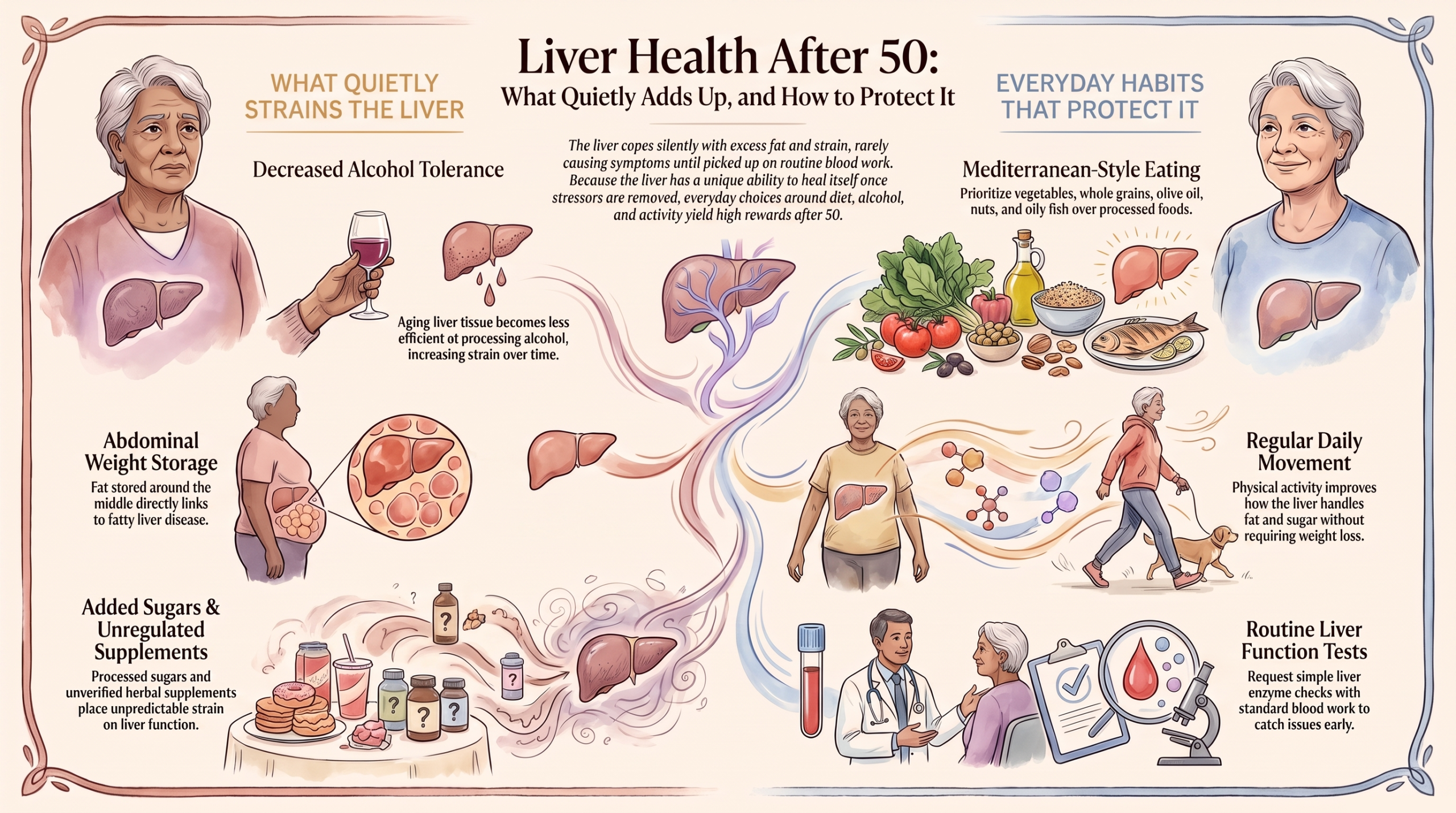
The liver is remarkably good at coping quietly. It can sustain a surprising amount of excess fat or inflammation while still functioning well enough that nothing feels wrong, which means the first sign most people get is an abnormal blood test, not a symptom. That makes liver health one of the areas where what you do matters far more than how you feel.
Know that alcohol’s effect on the liver changes with age. The same amount of alcohol that was comfortably processed at 35 puts more strain on the liver at 55 and beyond, as liver tissue becomes somewhat less efficient at breaking it down over time. This isn’t about guilt, it’s about recalibrating what “moderate” actually means for your body now.
Keep an eye on weight around the middle, not just the number on the scale. Fat stored around the abdomen is specifically linked to fatty liver disease, independent of overall body weight. A modest, sustained reduction, even 5-10% of body weight, has been shown to meaningfully improve liver fat levels.
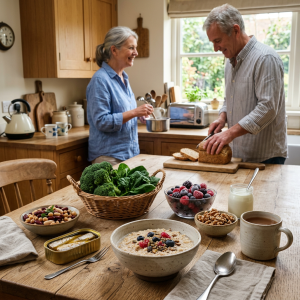
Lean toward a Mediterranean-style way of eating. Vegetables, whole grains, olive oil, nuts and oily fish, with less processed food and added sugar, are consistently linked with better liver markers, largely because this pattern also improves blood sugar and body fat.
Be careful with unregulated supplements. Several herbal and bodybuilding supplements have been linked to liver injury, often because dosing and purity aren’t well controlled. More isn’t automatically safer just because something is labelled “natural.”
Ask about a liver function test at your next blood work. It’s a simple, inexpensive addition to routine bloods, and catching elevated liver enzymes early gives you time to act while the underlying issue is still easily reversible.
Move regularly, even without weight loss as the goal. Regular physical activity improves how your liver handles fat and sugar, independent of any change on the scale, which is good news if weight loss itself feels like the wrong target for you.

Mrs Cure Confidence Score
Evidence strength — Strong
Practical value — High
Ease of following — Moderate
Cost — Low
Suitability for over 50s — Strong
Mrs Cure’s Wise Take
There’s something quietly hopeful about the liver, unlike many organs, it’s genuinely good at healing itself once you remove what’s been straining it. That makes this one of the more worthwhile places to pay attention.
What You Can Do Today
- Honestly tally your alcohol intake over a typical week, not just a typical day.
- Add one extra vegetable-based meal this week, aiming for a Mediterranean-style plate.
- Ask your GP whether a liver function test is included in your next routine blood work.
Effort vs Benefit
Low effort, high benefit: cutting back on added sugar and processed food, regular movement.
Moderate effort, high benefit: shifting toward a Mediterranean-style diet, moderating alcohol.
Requires real commitment: meaningful, sustained weight loss where abdominal fat is a factor.
Things to Keep in Mind
Persistent fatigue, unexplained itching, yellowing of the skin or eyes, or abdominal swelling are worth a prompt GP visit rather than working around. This is general guidance, not personalised medical advice, especially if you already drink regularly, carry excess weight around the middle, or have diabetes. If alcohol’s effects more broadly are of interest, our piece on how your body processes alcohol differently after 50 covers that in more depth.
Key Takeaway
Liver health after 50 is shaped by ordinary daily habits, alcohol, weight, diet, and movement, and the liver’s own strong ability to heal makes those habits unusually worth the effort.
Mrs Cure Wisdom
Few organs reward a little restraint as generously as the liver does.
Enjoyed this? Get more like it.
Practical, no-nonsense health tips for adults 50+, dropped straight in your inbox. No spam, unsubscribe anytime.
This content is educational and not a substitute for personalised medical advice, diagnosis or treatment.