Nobody enjoys the conversation about whether it’s still safe to drive, which is exactly why it’s worth having early, calmly, and on your own terms.
Prefer to watch? Here’s the 81-second version.
Opening Summary
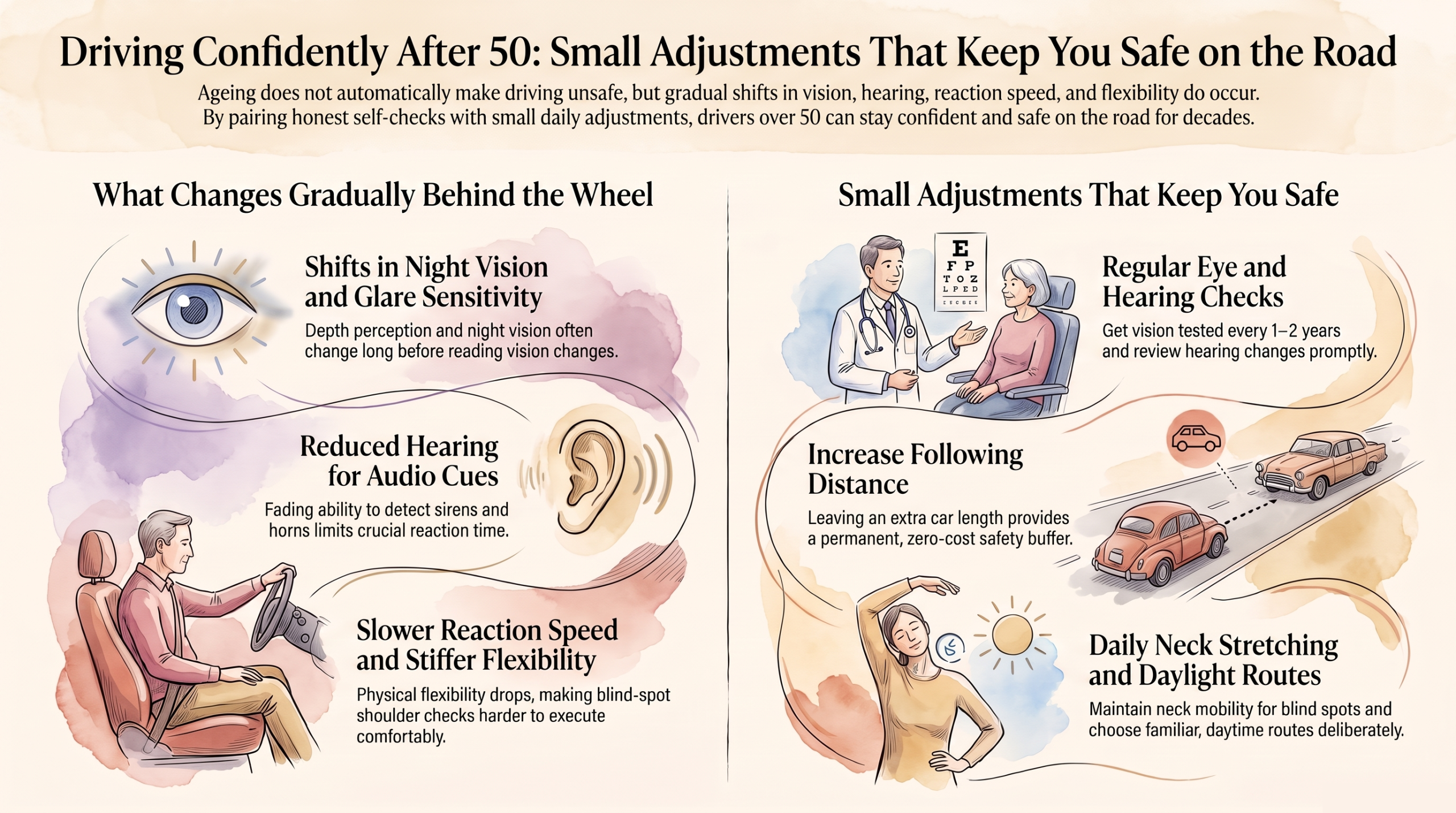
Ageing doesn’t switch off safe driving at any particular birthday. What changes gradually are reaction time, night vision, flexibility for checking blind spots, and hearing for sirens and horns, and each of those has a specific, practical workaround. Most drivers over 50 can stay safely on the road for decades longer with a few honest checks and small habit changes.
The Story
Driving draws on vision, hearing, reaction time, and physical flexibility all at once, and each can shift gradually enough that you adjust without quite noticing. The goal isn’t to panic about any one of these, it’s to check them honestly on a regular basis, the same way you’d service a car rather than wait for it to break down.
Get your eyes tested every one to two years, and always after any change in your vision. Night driving, glare sensitivity, and depth perception are often the first things to shift, well before reading vision changes enough to notice. A simple prescription update solves more driving difficulty than people expect.
Get hearing checked too, it matters more to driving than most people assume. Hearing sirens, horns, and other cues earlier gives you more time to react. If you’ve been turning the radio up louder than you used to, it’s worth mentioning at your next check-up.
Build in extra following distance. Reaction time slows gradually with age for everyone, and a slightly longer gap to the car in front is a simple, permanent buffer against that change, costing nothing and changing nothing about how you otherwise drive.
Keep your neck and shoulders mobile for blind-spot checks. Gentle daily stretching keeps the range of motion you need to properly check over your shoulder, rather than relying on mirrors alone.
Choose daylight and familiar routes when you can, without feeling you must. Many experienced drivers naturally shift toward daytime trips and routes they know well as they get older. That’s sensible judgement, not surrender, and it’s worth doing deliberately rather than only when the alternative feels stressful.
Review medications for drowsiness or slowed reactions. Some blood pressure medications, sedatives, and allergy tablets affect alertness more than people realise. A quick check with your GP or pharmacist about anything you take regularly is worth the five minutes.

Mrs Cure Confidence Score
Evidence strength — Good
Practical value — High
Ease of following — Easy
Cost — Low
Suitability for over 50s — Strong
Mrs Cure’s Wise Take
Confidence behind the wheel isn’t about ignoring what’s changing, it’s about staying honestly ahead of it. A regular eye test is a far better safeguard than quiet worry ever is.
What You Can Do Today
- Book an eye test if it’s been more than a year, or book a hearing check if you’ve been turning the volume up.
- Practise leaving one extra car length of following distance on your next drive.
- Ask your pharmacist whether any regular medication you take can affect alertness.
Effort vs Benefit
Low effort, high benefit: extra following distance, choosing daylight routes when convenient.
Moderate effort, high benefit: regular eye and hearing checks, a medication review.
Requires real commitment: an honest conversation with family, or a formal driving assessment, if confidence or ability genuinely feels different.
Things to Keep in Mind
If you’ve had a recent fall, a new diagnosis affecting movement or cognition, or a near-miss that shook you, it’s worth a frank conversation with your GP rather than working around it quietly. Many areas offer an older-driver assessment that gives an honest, independent read on ability, separate from family opinion either way. This is general guidance, not a medical or legal assessment of your own fitness to drive.
Key Takeaway
Safe driving after 50 is mostly a matter of honest, regular checks, vision, hearing, medication, and a few small habit adjustments, rather than age itself deciding when you should stop.
Mrs Cure Wisdom
Staying ahead of the changes is what keeps you behind the wheel, not pretending they aren’t happening.
Enjoyed this? Get more like it.
Practical, no-nonsense health tips for adults 50+, dropped straight in your inbox. No spam, unsubscribe anytime.
This content is educational and not a substitute for personalised medical advice, diagnosis or treatment.