Your kidneys do an enormous amount of quiet, unglamorous work, and they very rarely complain until they’ve already lost some ground.
Prefer to watch? Here’s the 78-second version.
Opening Summary
Kidney function naturally declines a little with age, but a meaningful drop is usually driven by a few specific, manageable factors: high blood pressure, diabetes, certain painkillers, and dehydration chief among them. Because early kidney decline has almost no symptoms, a simple blood and urine test, not how you feel, is what actually tells you where things stand.
The Story
Your kidneys filter your entire blood supply roughly forty times a day, removing waste and excess fluid while holding onto what your body needs. They also quietly help regulate blood pressure and red blood cell production. Because they have so much spare capacity, function can decline substantially before you’d notice anything at all, which is exactly why relying on symptoms is the wrong approach after 50.
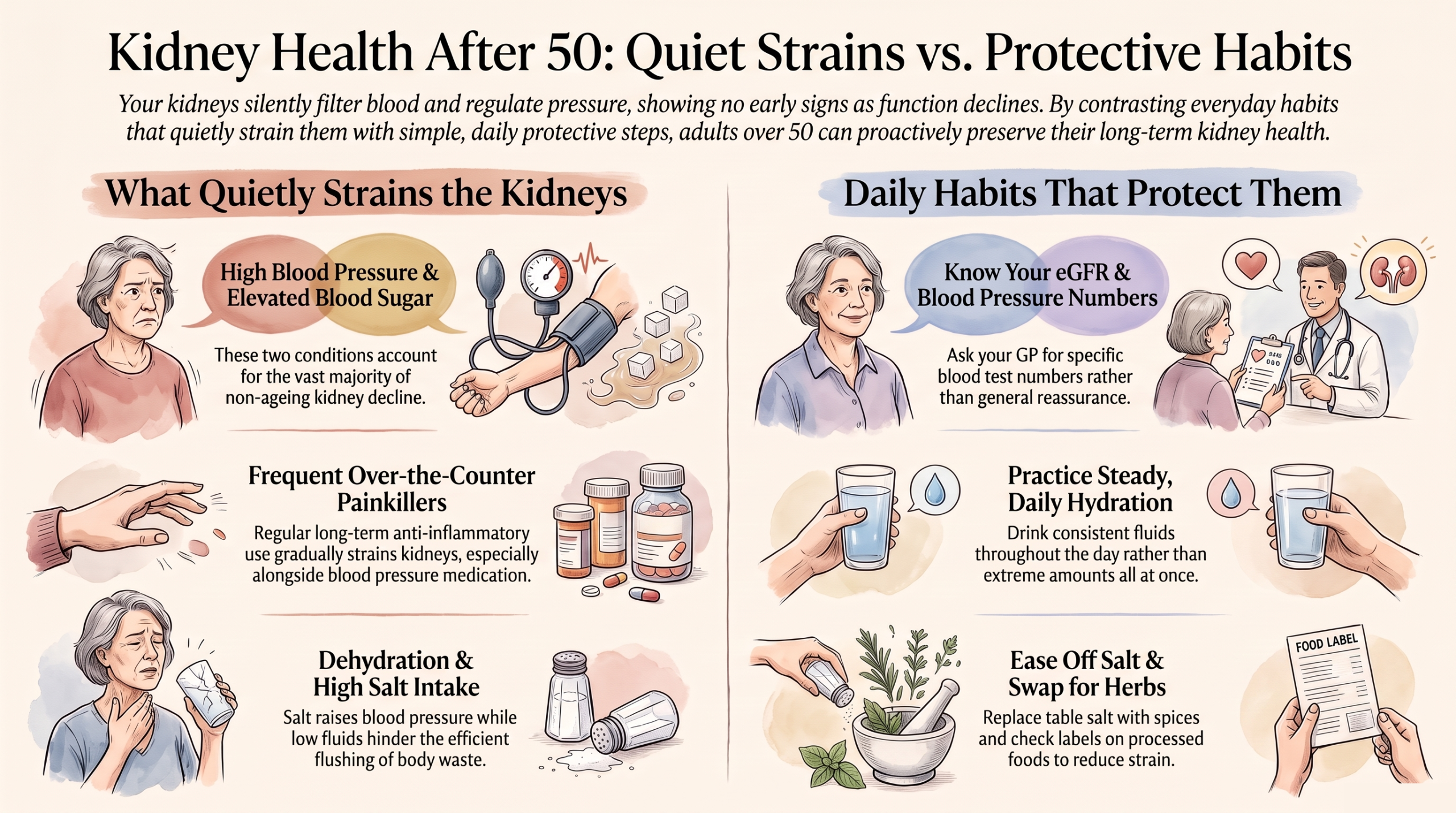
Know your two key numbers: eGFR and blood pressure. An eGFR blood test estimates how well your kidneys are filtering, and it’s often included in routine blood work without you necessarily noticing it. High blood pressure is both a leading cause of kidney decline and one of its earliest consequences, so the two are worth tracking together.
Be cautious with regular over-the-counter painkillers. Occasional ibuprofen or similar anti-inflammatories are fine for most people, but frequent, long-term use can gradually strain the kidneys, particularly alongside blood pressure medication. If you reach for them often, it’s worth mentioning to your GP.
Stay steadily hydrated, without overdoing it. Consistent fluid intake through the day helps your kidneys flush waste efficiently. There’s no need for extreme water intake, just steady, unspectacular hydration, most days.
Keep blood sugar and blood pressure within target range. Diabetes and high blood pressure together account for the large majority of kidney decline that isn’t simply due to ageing. Managing either well is one of the most protective things you can do for your kidneys specifically.
Go easy on added salt. A high-salt diet pushes blood pressure up, which in turn strains the kidneys. Swapping table salt for herbs and spices, and checking labels on processed foods, adds up over months.
Ask for your results, not just a “all fine.” If you have blood work done, ask specifically what your eGFR and kidney-related numbers were, and whether anything is trending in a direction worth watching, rather than accepting a general reassurance.

Mrs Cure Confidence Score
Evidence strength — Strong
Practical value — High
Ease of following — Easy
Cost — Free
Suitability for over 50s — Strong
Mrs Cure’s Wise Take
Kidneys don’t ask for attention the way a sore knee does, which is exactly why they deserve it anyway. A couple of numbers on a routine blood test tell you more than how you feel ever will.
What You Can Do Today
- Ask your GP surgery when your last kidney-related blood test was, and whether one is due.
- Check how often you reach for over-the-counter anti-inflammatory painkillers in an average month.
- Swap one high-salt processed food this week for a lower-salt alternative.
Effort vs Benefit
Low effort, high benefit: steady daily hydration, cutting back on added salt.
Moderate effort, high benefit: keeping blood pressure and blood sugar within target range.
Requires real commitment: managing an existing condition like diabetes closely alongside your GP or specialist.
Things to Keep in Mind
Swelling in the ankles or around the eyes, persistent fatigue, or noticeably foamy or discoloured urine are worth mentioning to a GP rather than waiting out, though they usually appear only once kidney function has already changed meaningfully. This is general information, not personalised medical advice, particularly if you already have diabetes, high blood pressure, or take regular prescription medication.
Key Takeaway
Kidney health after 50 is mostly shaped by blood pressure, blood sugar, hydration, and medication habits, not fate, and a simple blood test tells you far more than how you feel day to day.
Mrs Cure Wisdom
Take care of the organ that never complains, and it tends to keep its side of the bargain.
Enjoyed this? Get more like it.
Practical, no-nonsense health tips for adults 50+, dropped straight in your inbox. No spam, unsubscribe anytime.
This content is educational and not a substitute for personalised medical advice, diagnosis or treatment.