Most intermittent fasting advice online was written with a 30-year-old’s metabolism and muscle mass in mind — which matters, because after 50 the calculation genuinely changes.
Prefer to watch? Here’s the 68-second version.
Opening Summary
Intermittent fasting — eating within a limited daily window, or cycling fasting days with normal ones — has reasonable evidence behind it for weight management and some metabolic markers. But after 50, the bigger priority is usually protecting muscle mass and bone density, and fasting done carelessly can work against both. The approach isn’t off the table, but it needs a few adjustments that most generic advice leaves out.
The Story
The core idea has real evidence behind it, not just trend appeal. Time-restricted eating (commonly 8-hour or 10-hour daily windows) has shown modest benefits for weight, blood sugar control, and some markers of metabolic health in multiple studies. It isn’t magic, but it isn’t nonsense either.
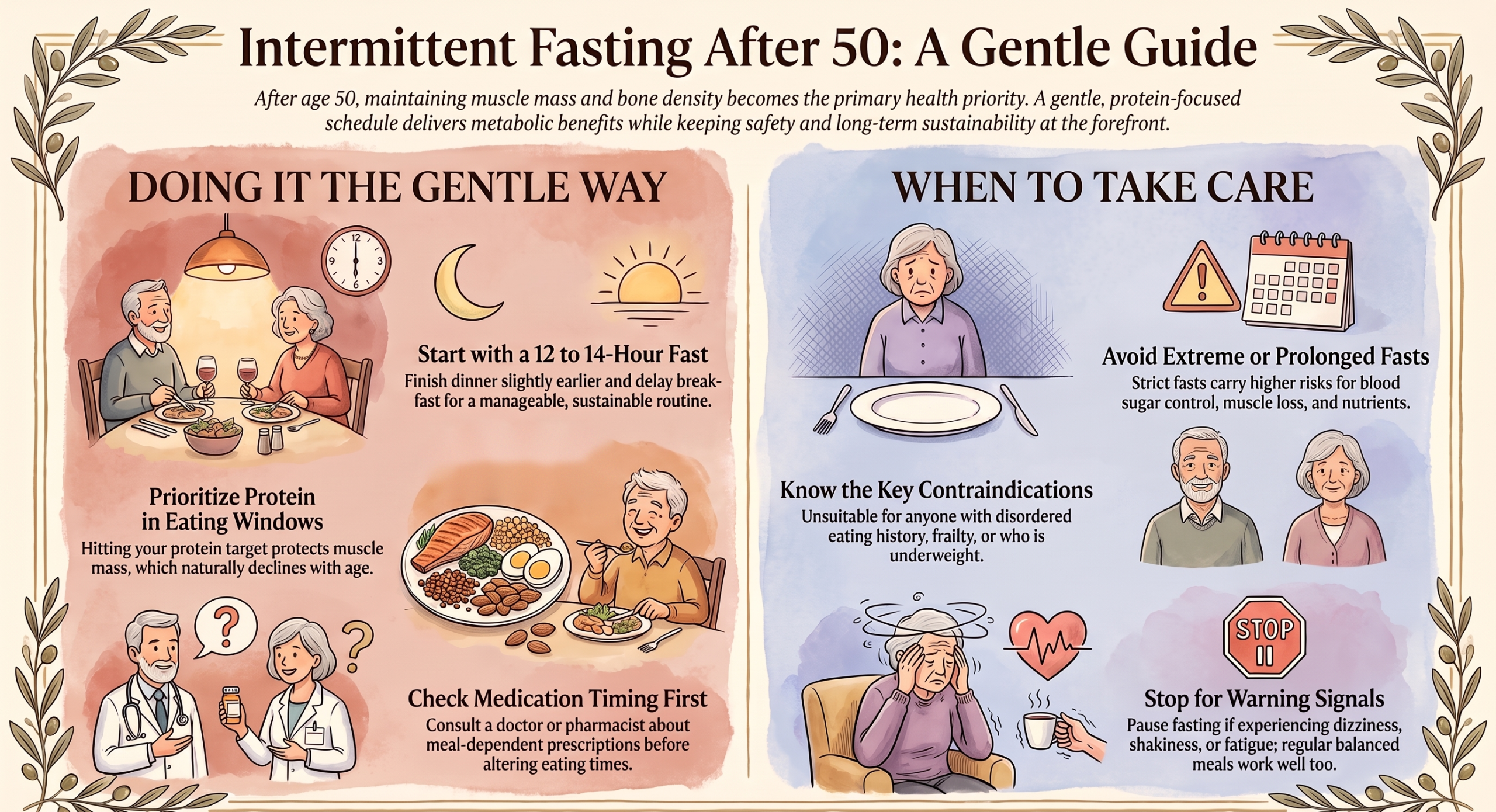
Protein intake becomes the make-or-break detail after 50. Muscle naturally becomes harder to maintain with age, and if a shortened eating window means less overall protein, fasting can accelerate muscle loss rather than just trim fat. Hitting adequate protein within your eating window matters more than the window’s exact length.
Longer or more extreme fasts carry more risk at this age than they do at 30. Multi-day fasting or very restrictive protocols can affect blood sugar regulation, medication timing, and nutrient intake more significantly in older adults, especially those managing diabetes, blood pressure, or other chronic conditions.
Mild versions tend to be easier to sustain, and sustainability is most of the benefit. A modest 12-to-14-hour overnight fast (essentially: finishing dinner earlier and delaying breakfast slightly) delivers some of the same benefits with far less disruption than an aggressive 16-to-8 schedule, and is realistic to keep up long-term.
Medication timing needs checking before starting, not after. Some medications, especially for diabetes or blood pressure, are timed around meals for good reason. Starting any fasting routine without first checking with a doctor or pharmacist about timing can cause real problems, not just inconvenience.
It isn’t necessary, and it isn’t for everyone. People with a history of disordered eating, significant unintentional weight loss, or who are underweight are generally advised against fasting approaches altogether — there are other proven ways to support metabolic health that don’t involve restricting eating windows.

Mrs Cure Confidence Score
Evidence strength — Moderate
Practical value — Moderate
Ease of following — Moderate
Cost — Free
Suitability for over 50s — Moderate, With Care
Mrs Cure’s Wise Take
It’s tempting to adopt whatever worked for your gym-obsessed nephew wholesale — but the version of fasting that serves you well at 55 looks gentler, and leans much more heavily on getting enough protein, than the version aimed at a 28-year-old.
What You Can Do Today
- If you take any regular medication, check with your pharmacist before changing your eating schedule, not after.
- Try a gentle overnight fast first — finish dinner a little earlier and delay breakfast by 30–60 minutes — rather than jumping to a strict 16-hour window.
- Whatever eating window you choose, make sure your protein target is covered within it; that matters more than the window’s exact length.
Effort vs Benefit
A modest overnight fast asks almost nothing of you beyond a slightly earlier dinner and a slightly later breakfast, for a reasonable shot at better blood sugar control and easier weight management. A stricter 16:8 schedule takes more planning and willpower, with benefits that are real but not dramatically larger. The riskiest, most extreme protocols demand the most and, for most people over 50, aren’t worth what they cost in muscle and nutrient intake.
Things to Keep in Mind
Stop and check with a doctor if fasting brings on dizziness, significant fatigue, or blood sugar symptoms like shakiness or confusion. It’s generally not recommended for anyone with a history of disordered eating, unintentional weight loss, frailty, or uncontrolled diabetes without close medical supervision. This is a tool to consider, not an obligation — plenty of people maintain excellent health with regular, well-balanced meals and no fasting at all.
Key Takeaway
Intermittent fasting can be a reasonable tool after 50, but it needs real adjustments — gentler windows, more attention to protein, and a check on medication timing — rather than simply copying advice written for a much younger body.
Mrs Cure Wisdom
The goal after 50 isn’t eating less — it’s eating well, inside whatever window actually works for your life.
Enjoyed this? Get The Good Years, free.
Our free monthly magazine, packed with the best of our articles, guides and quizzes for life after 50. No spam, unsubscribe any time.
This content is educational and not a substitute for personalised medical advice, diagnosis or treatment.