Taking more supplements isn’t automatically more protection after 50 — a few of the most common ones can actually work against you, especially alongside prescription medication.
Prefer to watch? Here’s the 67-second version.
Opening Summary
Supplement use is common among adults over 50, and for good reason: a handful of nutrients genuinely do become harder to get enough of with age. But “more is better” doesn’t hold up here the way it might seem to. Some vitamins build up in the body and become harmful in excess, some supplements interact with common medications in ways that matter, and “natural” or “herbal” labelling says nothing about whether a product has actually been tested for safety or dosed consistently.
The Story
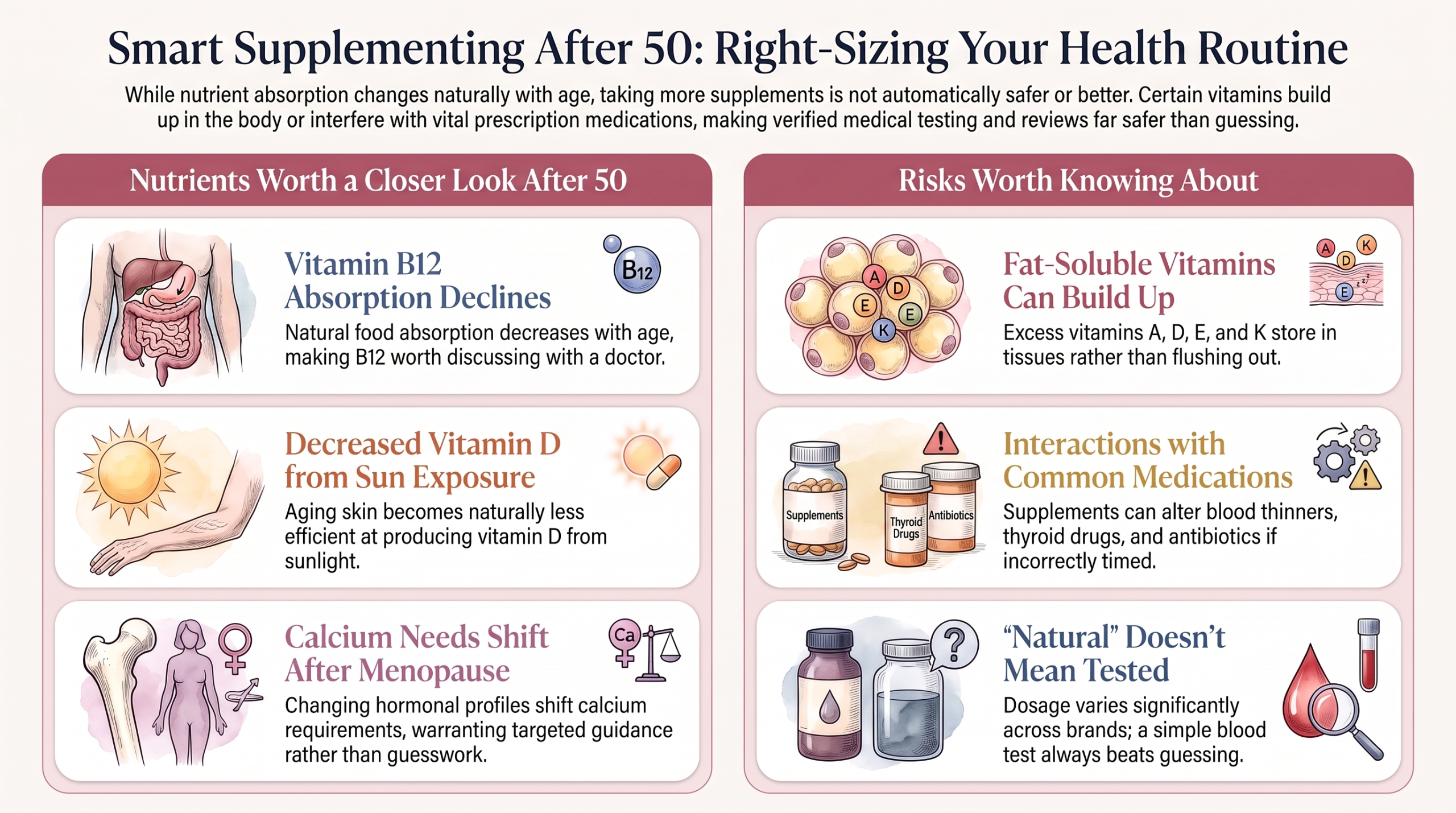
A few specific nutrients really do become harder to get enough of after 50. Vitamin B12 absorption from food naturally declines with age, the skin becomes less efficient at producing vitamin D from sunlight, and calcium needs shift, particularly after menopause. These are the nutrients worth discussing with a GP first, rather than guessing which supplement aisle to start with.
More of a vitamin is not automatically better — some are genuinely risky in excess. Fat-soluble vitamins, particularly A, D, E, and K, are stored in the body rather than flushed out, which means they can build up to harmful levels over time. Excess vitamin A, for instance, has been linked to liver strain and reduced bone density, and iron supplements taken without an actual deficiency can cause real harm.
Supplements can interact with prescription medications in ways that genuinely matter. Vitamin K can interfere with blood-thinning medication like warfarin, St John’s Wort interacts with a long list of common drugs, and calcium or iron supplements can block the absorption of thyroid medication or certain antibiotics if taken too close together. None of this means avoiding supplements altogether — it means timing and combinations matter.
‘Natural’ and ‘herbal’ are not the same thing as ‘tested for safety.’ Supplement regulation is considerably lighter than medication regulation, which means the actual dose inside a bottle can vary more between brands than most people assume. Looking for products that carry independent, third-party testing marks is a simple way to reduce that uncertainty.
A blood test beats guessing, every single time. Rather than assuming you’re low in something based on how you feel, a simple blood panel from your GP can confirm whether a deficiency is actually there. This avoids both unnecessary spending and the risk of supplementing something you didn’t actually need more of.
If you take multiple supplements, bring the actual bottles to your next medication review. Pharmacists and GPs are far better placed to spot a risky interaction when they can see exactly what you’re taking and at what dose, rather than relying on you to remember every name correctly. This is especially worth doing if you’re also on regular prescription medication.

Mrs Cure Confidence Score
Evidence strength — Good
Practical value — High
Ease of following — Moderate
Cost — Moderate
Suitability for over 50s — Strong
Mrs Cure’s Wise Take
A supplement shelf that’s grown over the years without much review isn’t a sign of taking your health seriously — it’s usually just a sign that nobody’s had a proper look in a while.
What You Can Do Today
- Line up everything on your supplement shelf and check whether you actually know why you’re taking each one.
- Ask your GP whether a simple blood test for vitamin D or B12 makes sense for you, rather than assuming either way.
- If you take a blood thinner or thyroid medication, check today whether any of your supplements are meant to be timed apart from it.
Effort vs Benefit
Reviewing what’s already on your shelf costs nothing but a few minutes, and often turns up at least one thing worth stopping or adjusting. Getting a blood test to confirm an actual deficiency takes a bit more effort but prevents a lot of guesswork and wasted spending. Working through a full medication and supplement review with a pharmacist takes the most time to arrange, but is the most thorough way to catch interactions you wouldn’t otherwise spot.
Things to Keep in Mind
Never stop a prescribed medication in favour of a supplement without talking to your doctor first. Extra caution is warranted for anyone on blood thinners, thyroid medication, or diabetes medication, since these are some of the most common and consequential interaction risks. When in doubt about a specific product, a pharmacist is often the quickest, most practical person to ask.
Key Takeaway
A handful of nutrients genuinely deserve a closer look after 50, but the goal is an informed, right-sized approach, not simply adding more — a blood test and a proper review with a GP or pharmacist will tell you far more than guessing ever will.
Mrs Cure Wisdom
The healthiest supplement routine isn’t the fullest one — it’s the one you can actually explain, bottle by bottle, if someone asked you why.
Enjoyed this? Get more like it.
Practical, no-nonsense health tips for adults 50+, dropped straight in your inbox. No spam, unsubscribe anytime.
This content is educational and not a substitute for personalised medical advice, diagnosis or treatment.