The travel bug doesn’t fade after 50 — but the body’s recovery time from a long-haul flight sometimes quietly does, and planning around that makes all the difference.
Prefer to watch? Here’s the 68-second version.
Opening Summary
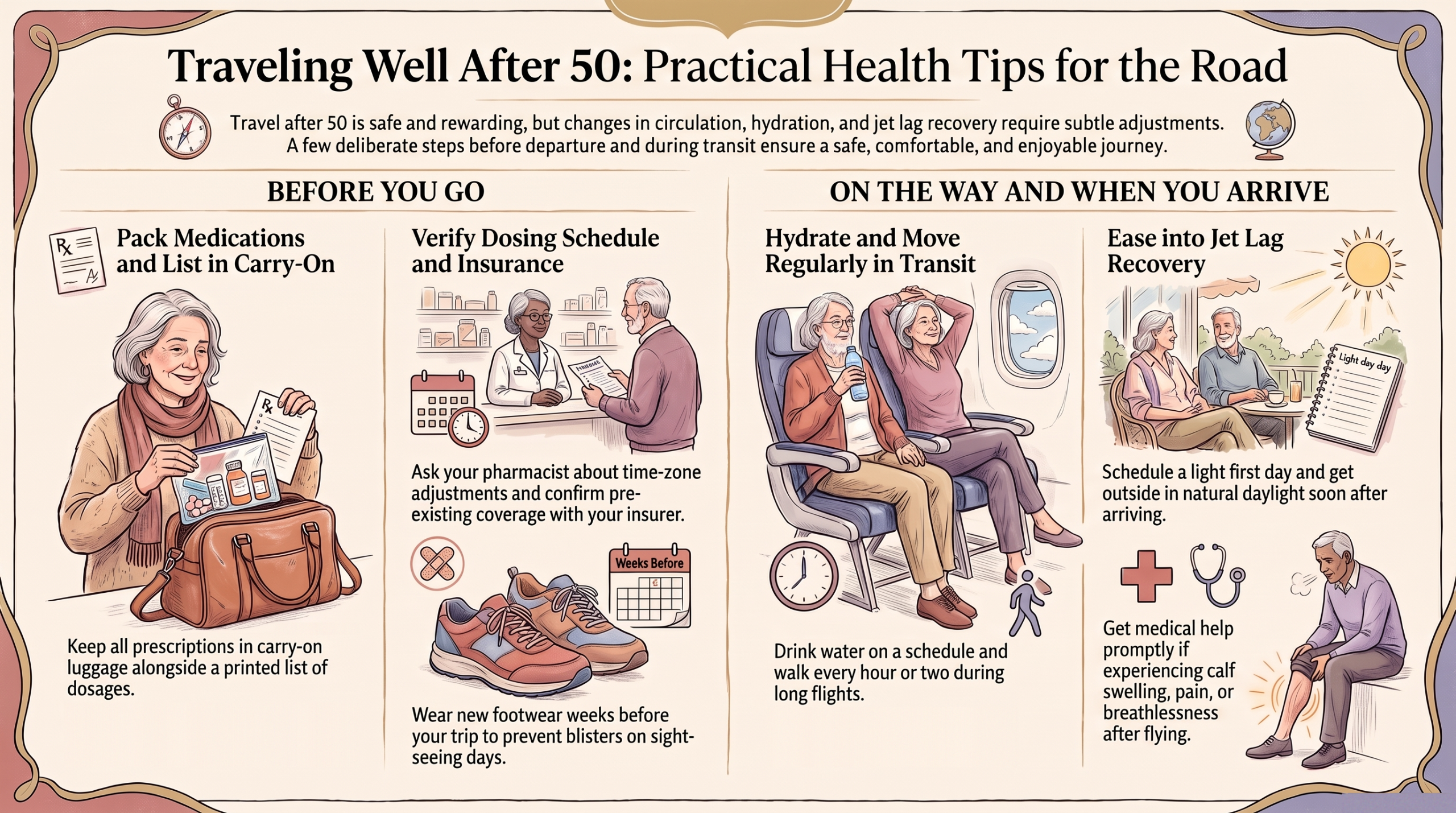
Travel after 50 is, for most people, entirely safe and hugely rewarding — but a few practical adjustments make it considerably more comfortable. Circulation, hydration, medication logistics, and jet lag recovery all behave a little differently than they did two decades ago. None of it means traveling less; it just means packing and planning a little smarter.
The Story
Movement during long flights matters more than most people realise. Sitting still for hours raises the risk of deep vein thrombosis, and that risk increases somewhat with age. Getting up to walk every hour or two, and doing simple ankle and calf exercises in your seat, meaningfully reduces this risk, and compression socks are a reasonable extra precaution on long-haul flights.
Dehydration sneaks up faster in the air and in unfamiliar climates. Cabin air is notoriously dry, and the thirst signal tends to get a little less reliable with age, which is a genuinely unhelpful combination. Drinking water on a schedule, rather than waiting to feel thirsty, heads off the headaches and fatigue that dehydration causes.
Medication logistics deserve real planning, not an afterthought the morning you leave. Pack all regular medication in carry-on luggage, never checked, along with a printed list of what you take and the dosages. For time zone changes, ask your pharmacist in advance how to adjust dosing times rather than guessing on the day.
Jet lag recovery genuinely does take a bit longer, and planning around that helps. Building in a lighter first day or two at your destination, rather than packing the itinerary tight from arrival, makes a noticeably easier trip. Getting outside in daylight soon after arrival also helps reset your body clock faster.
Travel insurance that actually covers pre-existing conditions is worth checking carefully, not assuming. Standard travel insurance sometimes excludes pre-existing conditions unless specifically declared and covered. A few extra minutes reading the policy, or a call to confirm, avoids a genuinely costly surprise if something does come up abroad.
Comfortable, supportive footwear prevents more holiday problems than people expect. New shoes bought specifically for a trip, worn for the first time on cobblestones or long museum days, are a common and avoidable source of blisters and sore feet. Breaking in any new travel shoes well before you go is a small thing that pays off daily.

Mrs Cure Confidence Score
Evidence strength — Good
Practical value — Very High
Ease of following — Easy
Cost — Low
Suitability for over 50s — Very Strong
Mrs Cure’s Wise Take
None of this is a reason to travel less — if anything, it’s permission to travel a little slower, and enjoy it more because of it.
What You Can Do Today
- If you have an upcoming trip, move all regular medications into your carry-on bag now, with a printed list of what you take.
- Book one extra, lighter day into your next itinerary for jet lag recovery, rather than filling every day from arrival.
- Check your travel insurance policy for pre-existing condition coverage before you need it, not after.
Effort vs Benefit
Most of this is genuinely low effort — packing medication properly, drinking water on a schedule, and getting up to move on a flight take almost no extra planning once they’re habits. Reviewing insurance coverage and breaking in new shoes beforehand take a little more forethought, but both head off problems that are far more disruptive and costly to deal with once you’re already away from home.
Things to Keep in Mind
See a doctor before travel if you have a chronic condition and are heading somewhere remote, high-altitude, or with limited medical access, so you can plan accordingly. Seek medical attention promptly for calf swelling, pain, or shortness of breath after a long flight, as these can signal a blood clot. If you manage diabetes or another condition requiring precise timing, get specific advice from your own doctor rather than general guidance for time zone adjustments.
Key Takeaway
Travel after 50 doesn’t need to shrink — it just benefits from a bit more planning around medication, hydration, movement, and recovery time than it used to.
Mrs Cure Wisdom
The best souvenir from any trip is coming home having actually enjoyed it, not just survived it.
Enjoyed this? Get more like it.
Practical, no-nonsense health tips for adults 50+, dropped straight in your inbox. No spam, unsubscribe anytime.
This content is educational and not a substitute for personalised medical advice, diagnosis or treatment.