Feet do decades of quiet, unthanked work, and after 50 they tend to start sending the bill, usually straight up the chain to your knees, hips and balance.
Opening Summary
Feet naturally lose some of their fat padding and flexibility with age, and years of footwear choices, past injuries and simple wear add up. The result is a higher chance of issues like plantar fasciitis, bunions and general stiffness. What makes foot health worth real attention after 50 is that it rarely stays local: unstable or painful feet are directly linked with poorer balance and higher fall risk, so looking after them protects far more than comfort.
The Story
The fat padding on the sole thins with age. That natural cushioning under the heel and ball of the foot gradually reduces, which is part of why standing or walking on hard floors can feel more tiring or uncomfortable than it used to.
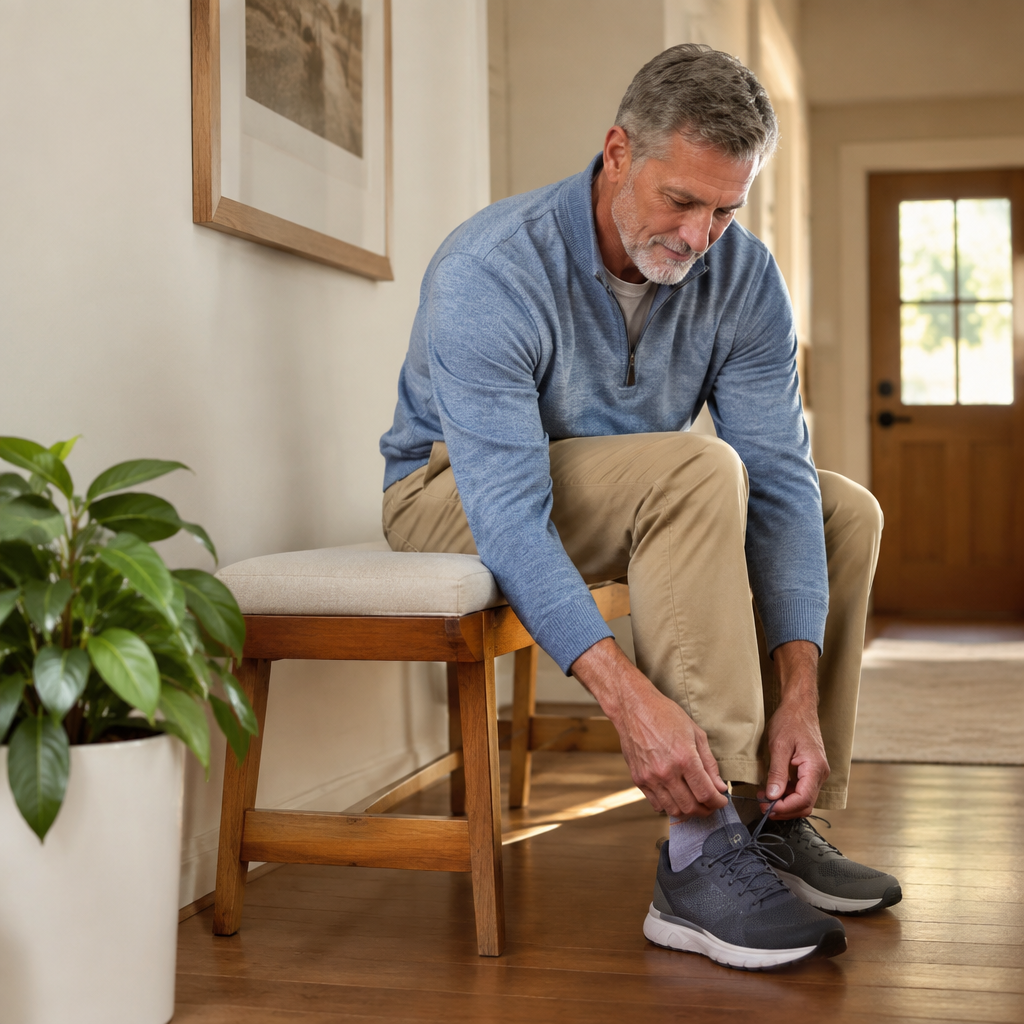
Footwear matters more than most people think. Shoes with good arch support, a stable sole and a proper fit reduce strain on the plantar fascia and joints; worn-out or unsupportive shoes are a common, fixable cause of ongoing foot pain.
Foot problems are directly linked to balance and fall risk. Pain, numbness or reduced sensation in the feet makes it harder to sense the ground accurately, which measurably increases the chance of a trip or fall.
Toenail and skin care prevents bigger problems. Thickened nails, minor cracks or slow-healing cuts are more common with age and, left unattended, can become painful or, for people with diabetes, more serious.
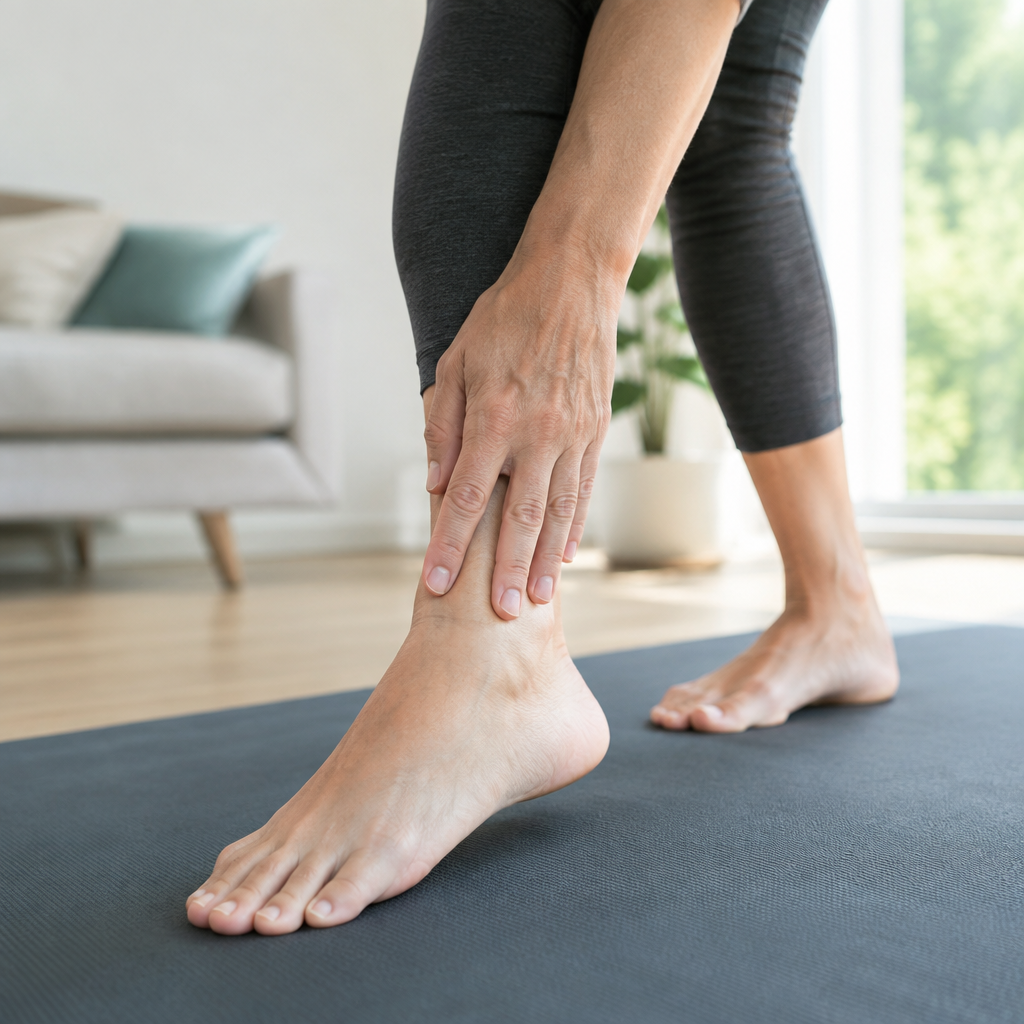
Gentle daily stretching keeps the foot and ankle mobile. A few minutes of ankle circles and toe stretches maintains flexibility that otherwise declines quietly over the years.
A simple routine covers most of it. Sitting on the edge of a bed or chair: circle each ankle slowly, ten times in each direction; spread and curl your toes ten times; then, still seated, gently flex your foot up and down as if pressing a pedal, ten times each side. Done first thing in the morning before you’re on your feet, it takes under two minutes and helps loosen up joints that have been still all night.

Persistent pain isn’t something to just work through. Ongoing heel, arch or joint pain that doesn’t ease with rest and better footwear is worth a podiatrist’s opinion rather than months of guessing.
Mrs Cure Confidence Score
Evidence strength — Strong
Practical value — High
Ease of following — Easy
Cost — Low to moderate, mainly footwear
Suitability for over 50s — Strong
Mrs Cure’s Wise Take
Feet get blamed for being “just tired” for years before anyone thinks to actually look after them. A little attention now is far easier than solving a fall later.
What You Can Do Today
- Check your everyday shoes for worn soles or a lack of arch support, and replace them if needed.
- Spend two minutes stretching your toes and rotating your ankles.
- Look over your feet for cracks, cuts or nail changes that need attention.
Effort vs Benefit
Low effort, high benefit: better-fitting, supportive everyday shoes.
Moderate effort, high benefit: a short daily foot and ankle stretching routine.
Requires real commitment: seeing a podiatrist for a proper assessment if pain is ongoing.
Things to Keep in Mind
Occasional foot tiredness is normal. Pain that persists for more than a couple of weeks, numbness, a wound that isn’t healing, or any change in foot colour or temperature, particularly for people with diabetes or circulation problems, are reasons to see a doctor or podiatrist rather than wait it out.
Key Takeaway
Foot health after 50 is about more than comfort, it’s directly tied to balance and mobility. Supportive shoes, a short daily stretch, and prompt attention to persistent pain cover most of what matters.
Mrs Cure Wisdom
Your feet have carried you this far without complaint. A little looking after now keeps them carrying you exactly where you want to go.
This content is educational and not a substitute for personalised medical advice, diagnosis or treatment.