Losing Your Balance After 50? Here’s Why It Happens (And How to Get It Back)
Ever tripped over absolutely nothing? Felt a little unsteady on the stairs? Or wobbled when you reached for something on a high shelf?
You’re not clumsy. And it’s not “just getting old” — though, as with bone and muscle health after 50, small daily habits make a real difference.
Your sense of balance is like a three-legged stool – it relies on your inner ear (vestibular system), your eyesight, and your muscles/joints (proprioception). After age 50, all three “legs” start to get a little shorter, and for the first time, you start to feel it.
The good news? Unlike eyesight or hearing, balance is a skill – and you can absolutely train it back at any age.
Why Do We Lose Balance After 50?
The decline doesn’t start at 80. It starts much earlier.
- Muscle Loss (Sarcopenia): We lose 3-8% of our muscle mass every decade after 30, accelerating after 50. Weaker ankles, hips, and core = a less stable base.
- Slower Reflexes: Your brain-bodily connection slows down. A 60-year-old’s reaction time is roughly 15-20% slower than a 20-year-old’s, giving you less time to catch yourself.
- Inner Ear Changes: Your vestibular system is your internal spirit level. By age 70, you’ve lost around 40% of the hair cells that detect motion.
- Vision & Proprioception Fade: Depth perception declines, and the sensors in your feet and joints that tell your brain where you are in space become less sensitive.
- The “Use It Or Lose It” Trap: We sit more, move less, and wear supportive shoes. This makes our stabilizer muscles lazy.
Can you pass the 10-second test? A major study in the British Journal of Sports Medicine found that people over 50 who could NOT stand on one leg for 10 seconds (eyes open) had an 84% higher risk of death in the next decade. Try it now (near a wall!). It’s a powerful snapshot of your health.
The Dangers Are Bigger Than a Bruised Ego: The Shocking Stats on Falls
A fall isn’t just embarrassing. For people over 50, it’s the number1 threat to long-term independence.
- 1 in 4 Americans over 65 falls every year. (CDC)
- In the UK, it’s 1 in 3 over 65, and HALF of all people over 80. (Age UK / NHS)
- Falls are the leading cause of fatal injury and the most common cause of trauma-related hospital admissions in older adults.
- 95% of all hip fractures are caused by falling – and 1 in 3 adults over 50 who suffer a hip fracture dies within 12 months due to complications.
- The biggest danger? The Fear of Falling Cycle. You wobble -> you get scared -> you move less -> you get weaker -> you are MORE likely to fall.
This isn’t about scaring you. It’s about showing you why 10 minutes a day is worth it.
The Good News: You CAN Rebuild Your Balance at Any Age
Your brain has neuroplasticity – it can re-wire. Studies consistently show that balance training can reduce fall risk by 23-43%.
Here are 7 simple, safe, and proven ways to improve balance after 50. Do them in bare feet near a kitchen counter.
7 Simple Exercises to Improve Balance After 50
Start with 5 minutes a day. Quality over quantity.
1. The Single-Leg Stand (Your Daily Vitamin)
Stand behind a chair, hold lightly. Lift one foot an inch off the floor. Hold for 10-30 seconds. Switch. Progression: Let go with one hand, then both. Then try closing your eyes for 3 seconds.
2. Heel-to-Toe Walk (The Tightrope)
Put the heel of one foot directly in front of the toes of the other, like walking a line. Take 10-15 steps forward. Use a wall for support. This directly trains the system that prevents stumbling.
3. Sit-to-Stand (The Power Move)
Sit in a sturdy chair (no wheels). Cross arms over chest. Stand up slowly without using your hands, then sit slowly. Do 8-10 reps. This builds critical leg and glute strength.
4. Heel and Toe Raises
Hold the counter. Rise up high on your toes, hold 2 seconds, lower. Then rock back on your heels, lifting toes. Do 10 of each. Strong ankles are your first line of defence.
5. Tai Chi or Gentle Yoga
Tai Chi is the gold standard. The NCCIH confirms it reduces falls in seniors by up to 43%. It’s slow, flowing weight-shifting – perfect balance training. Search YouTube for “Tai Chi for seniors 10 minutes”.
6. Marching in Place
Stand tall, lift knees high like marching, swinging opposite arms. Try for 30 seconds. Progression: Do it while slowly turning your head left and right.
7. The Clock Reach
Imagine you’re in the middle of a clock. Stand on your left leg, hold the chair. Reach your right foot to tap 12 o’clock, 3 o’clock, 6 o’clock on the floor. Switch legs. This builds dynamic stability for real life.
Beyond Exercise: 4 Often-Missed Balance Boosters
- Get Your Eyes & Ears Checked: A new glasses prescription and treating inner ear issues is the fastest balance fix there is. Book both annually.
- Medication Review: Blood pressure pills, sleep aids, and some antidepressants can cause dizziness. Ask your GP or pharmacist for a “falls risk” review. Never stop them yourself.
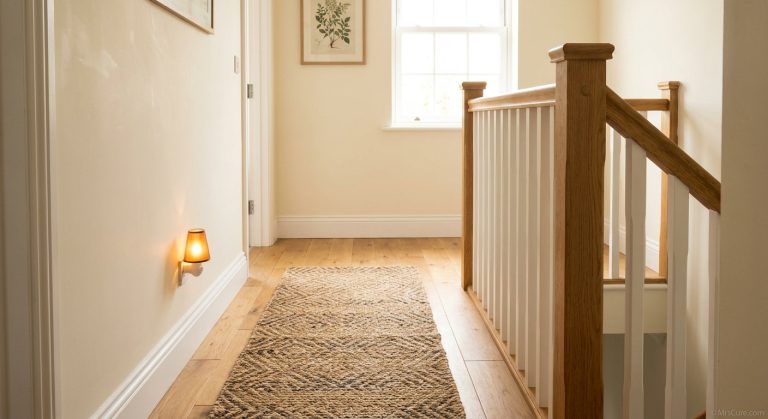
- Home-Proof for Falls: Remove throw rugs, add non-slip mats in the bathroom, install a nightlight on the path to the toilet, and keep cords tucked away. 50% of falls happen at home.
- Check Vitamin D & Hydration: Low Vitamin D weakens muscles and bones. Dehydration causes dizziness. Aim for regular walks outside and drink water consistently.
When Should You Talk to Your Doctor?
If you’ve fallen more than once in the past year, feel dizzy when you stand up, or have sudden balance loss, don’t just exercise through it. It could be related to blood pressure, neuropathy, or your inner ear. Get checked first.
Final Thought: Don’t Just Live Longer, Live Steadier
Losing balance after 50 isn’t inevitable. It’s a signal. Your body is asking you to move differently – to be more intentional.
You don’t need to join a gym or stand on a wobble board. You just need a kitchen counter and 10 minutes.
Start today with the 10-second single-leg test. How did you do?
Let me know in the comments below – and share this with a friend who needs to stay steady.
Disclaimer: This post is for informational purposes only and is not medical advice. Please consult your GP or a physical therapist before starting a new exercise program, especially if you have a history of falls or health conditions.