Of all the ways to move your body after 50, few are as forgiving, as effective, and as quietly enjoyable as getting into a pool.
Prefer to watch? Here’s the short video version.
Opening Summary
Swimming and water-based exercise sit in a sweet spot that’s hard to find anywhere else: they raise your heart rate, work muscles through a full range of motion, and build real strength and stamina, all while the water takes the pounding off your joints. For anyone managing arthritis, stiff hips or knees, extra weight, or simply a body that doesn’t bounce back from hard workouts the way it used to, water offers a way in that land-based exercise often can’t. This article walks through why swimming suits adults over 50 so well, how to get started whether that’s a gentle water aerobics class or lap swimming, and the practical details that make the first few sessions go smoothly.
The Story
Water holds you up, so your joints don’t have to. Standing chest-deep in a pool, your body weighs roughly 10% of what it does on land. That buoyancy takes the compressive load off knees, hips and the lower back, which is exactly why swimming is one of the exercises physiotherapists reach for first with arthritis or joint replacement patients. You can move a stiff hip through a much fuller range in water than you’d ever attempt on a gym floor, simply because gravity isn’t fighting you the whole way.
It still works your heart and lungs properly. Buoyancy doesn’t mean the workout is soft. Water is roughly 800 times denser than air, so every stroke, kick or arm raise is pushing against real resistance. A steady session of laps or a brisk water aerobics class raises your heart rate into a genuine cardiovascular training zone, the kind that supports healthy blood pressure, circulation and heart function over time, without ever putting your joints through the jarring impact of running or court sports.
It builds strength in a way most people don’t expect. Because water resists movement in every direction, not just downward like a dumbbell, swimming and water aerobics work opposing muscle groups on both the push and the pull. Regular sessions build shoulder, back, hip and leg strength, and strength in these areas is directly linked to the kind of independence, that older adults care about most, like carrying groceries, climbing stairs and getting up off the floor.
The water itself lowers your risk of falling. On land, a wobble or wrong step can mean a fall. In a pool, the water slows you down and buoys you up, so a stumble rarely turns into a real accident. That built-in safety net is one reason water exercise is often the first form of structured activity recommended for someone easing back into movement after an illness, a fall, or a long period of inactivity.
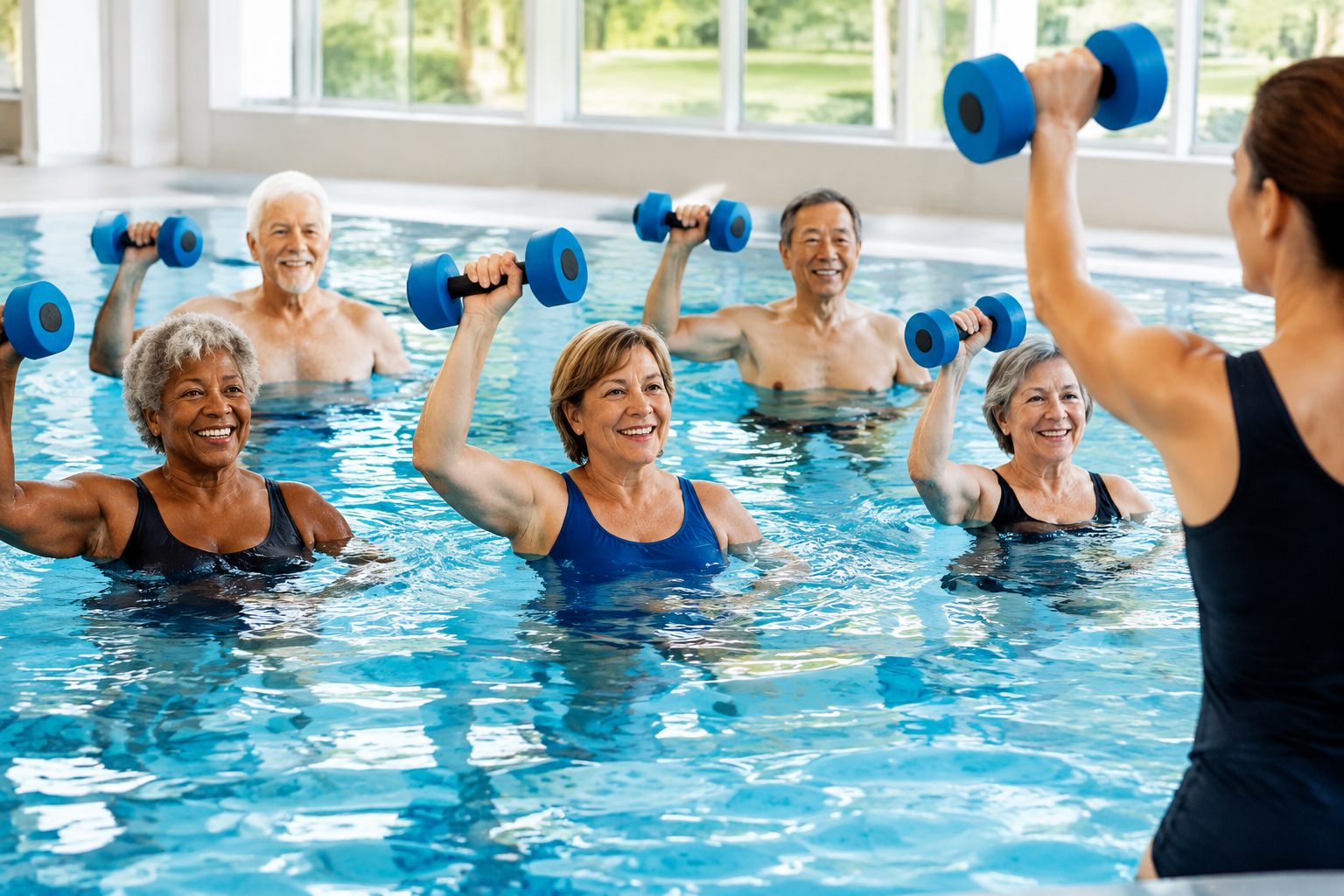
Start with a water aerobics class if you want structure and company. A class comes with an instructor cueing the movements, a group to keep you motivated, and a set routine that takes the guesswork out of what to actually do in the water. It’s a natural starting point if you’re newer to exercise, recovering from something, or simply prefer not to swim laps on your own.
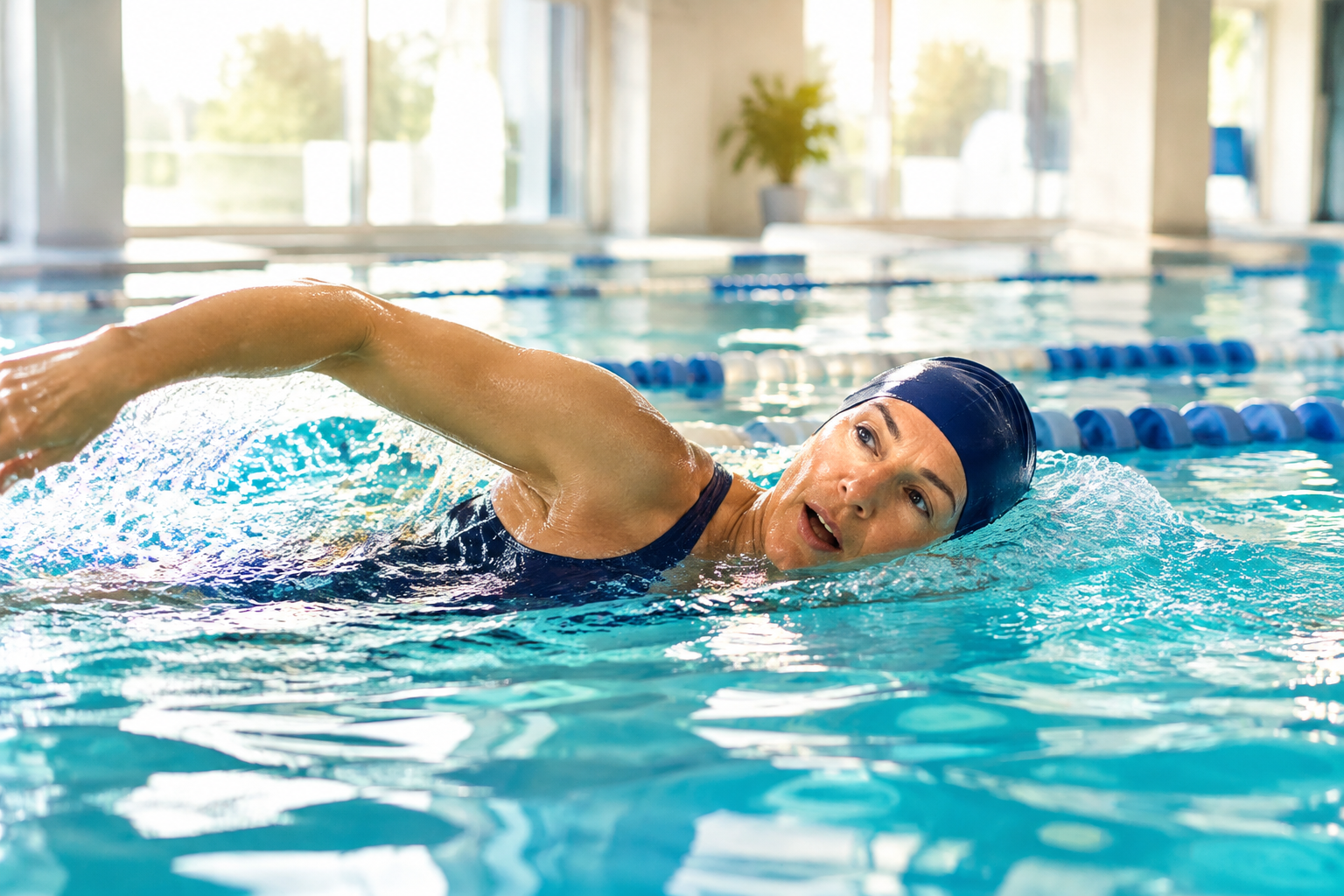
Choose lap swimming if you want a quieter, self-paced workout. Lap swimming lets you set your own pace, track your own progress, and lose yourself in the rhythm of the strokes. You don’t need to be fast or elegant. A slow, steady breaststroke or a modified front crawl with your head up still delivers a genuine cardiovascular workout, and most pools have a slow lane specifically for this.
Either way, start shorter than you think you need to. Ten to fifteen minutes in the water is a completely legitimate first session, even if it feels almost too easy. Water exercise recruits muscles you haven’t used in a while, and the fatigue often shows up the next day rather than during the session itself. Building up gradually over a few weeks means you’ll still be swimming in month three, not nursing an overdone shoulder on the sofa.
Mrs Cure Confidence Score
Evidence strength — Strong
Practical value — High
Ease of following — Moderate
Cost — Low
Suitability for over 50s — Excellent
Mrs Cure’s Wise Take
There’s something almost humbling about a pool: it doesn’t care how fit you were twenty years ago, and it won’t punish you for showing up exactly as you are today. It simply holds you, lets you move, and gives a little back each time you return.
What You Can Do Today
- Call your nearest leisure centre or gym and ask about beginner water aerobics class times and any over-50s or “gentle” swim sessions they run.
- If you have any joint, heart or balance condition, mention it to your doctor before you start, so they can flag anything specific to watch for.
- Pack a swimsuit, goggles and a towel tonight, and book yourself in for one trial session this week, just one, to see how it feels.
Effort vs Benefit
Getting to the pool and back is the biggest hurdle for most people, the actual exercise is the easy part once you’re in the water. A single 20-30 minute session is low-effort, low-risk, and delivers a genuine cardiovascular and strength benefit that’s hard to match elsewhere. Building it into a regular habit, two or three times a week, takes a bit more commitment, mainly around scheduling and getting past that first slightly awkward walk from the changing room to the poolside, but it’s the kind of moderate, sustainable effort that pays off steadily rather than demanding a dramatic overhaul of your routine.
Things to Keep in Mind
A few practical things are worth checking before you dive in. If you’re prone to ear infections or sinus trouble, a snug-fitting pair of earplugs and a nose clip can save you a lot of discomfort. Ask the facility about their water temperature, pools kept specifically for aqua aerobics and rehab are usually warmer and more comfortable for older joints than a competitive lap pool. Check that the poolside and changing rooms have handrails and non-slip surfaces if balance is a concern for you, and always shower before entering to help keep the water clean for everyone. If you have a heart condition, uncontrolled blood pressure, an open wound, or you’ve had recent surgery, check with your doctor first, most people are cleared for gentle water exercise, but it’s worth a quick conversation rather than an assumption.
Key Takeaway
Swimming and water aerobics give you a rare combination after 50: a real cardiovascular and strength workout with almost none of the joint strain of land-based exercise. Whether you ease in with a structured class or find your own rhythm in the lap lane, the water meets you where you are and lets you build fitness safely, steadily, and without pain standing in the way.
Mrs Cure Wisdom
You don’t have to swim fast or far to benefit, you just have to keep showing up at the water’s edge.
Enjoyed this? Get more like it.
Practical, no-nonsense health tips for adults 50+, dropped straight in your inbox. No spam, unsubscribe anytime.
This content is educational and not a substitute for personalised medical advice, diagnosis or treatment.