Prefer to watch? Here’s the 77-second version.
Opening Summary
If someone told you there was a free, side-effect-free habit that lowered your risk of memory decline, heart trouble and early death roughly as much as quitting smoking, you’d want to know what it was. It’s not a supplement or a diet. It’s regular, genuine social contact — and researchers increasingly treat the lack of it as a measurable health risk, not just an emotional one.
The Story
For years, loneliness got filed under “nice to have company” rather than “health factor”. That’s shifted. Long-running studies now link sustained social isolation to higher rates of high blood pressure, weakened immune response, and faster cognitive decline — and some of the more recent research suggests isolation can act as an independent risk factor for memory problems, separate from the usual culprits like diet or exercise.
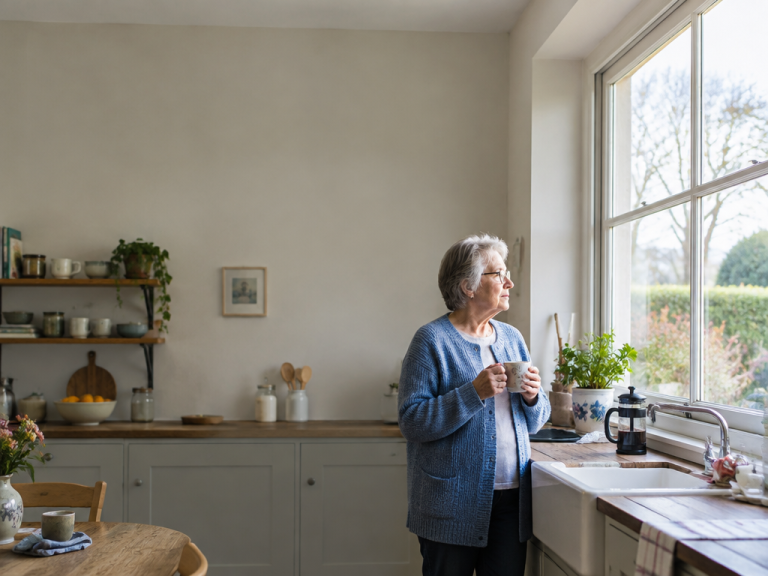
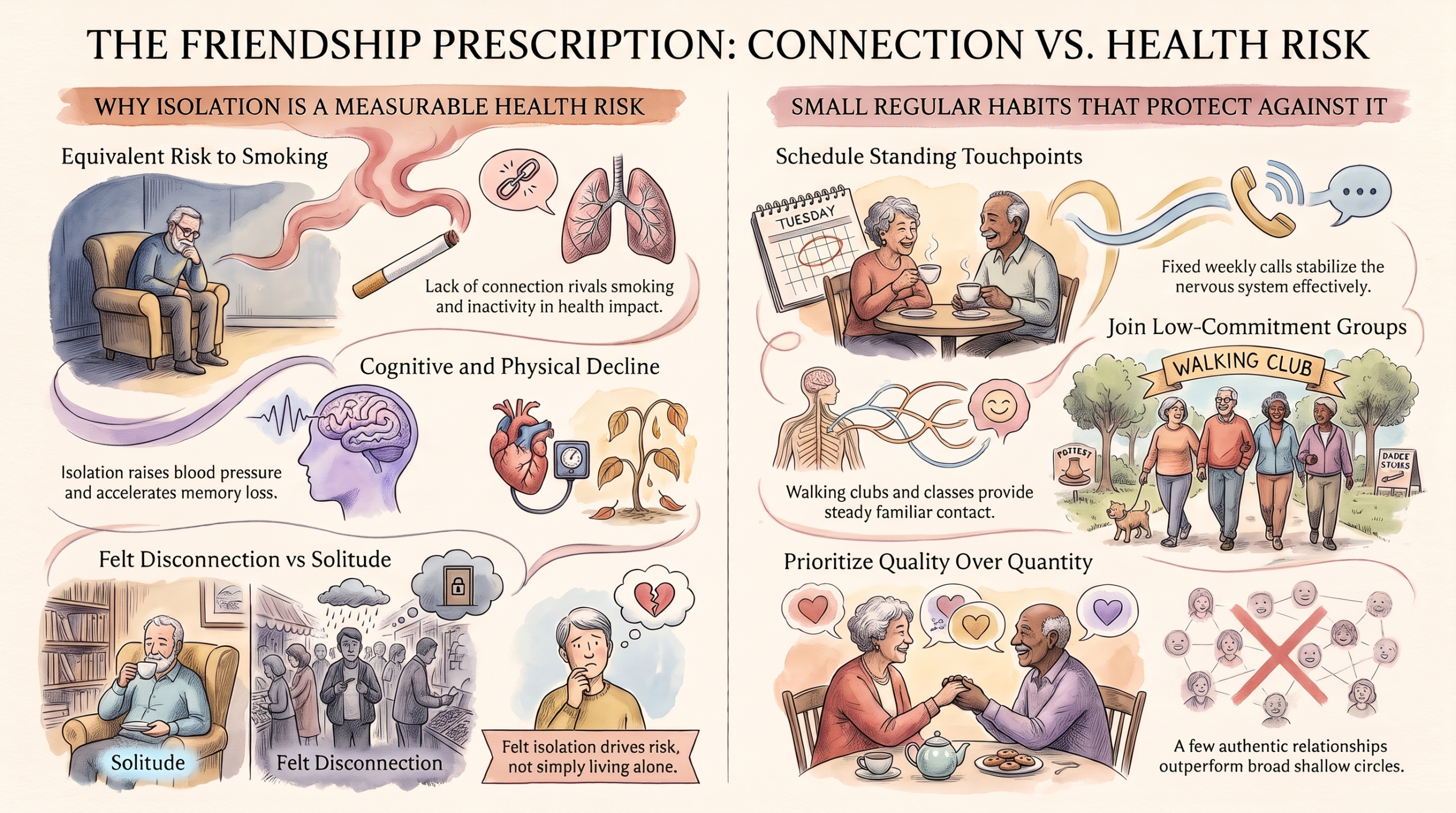
- Isolation and loneliness aren’t quite the same thing. You can live alone and feel perfectly connected, or be surrounded by people and feel completely alone. It’s the felt sense of connection that seems to matter most for health, not simply how many people are in the room.
- Quality beats quantity. A handful of relationships where you can be genuinely yourself tends to matter more for wellbeing than a large but shallow social circle.
- Retirement, bereavement and reduced mobility are the three biggest disruptors of the social contact people built over a working life — which is exactly why this tends to creep up quietly in your sixties and seventies rather than announcing itself.
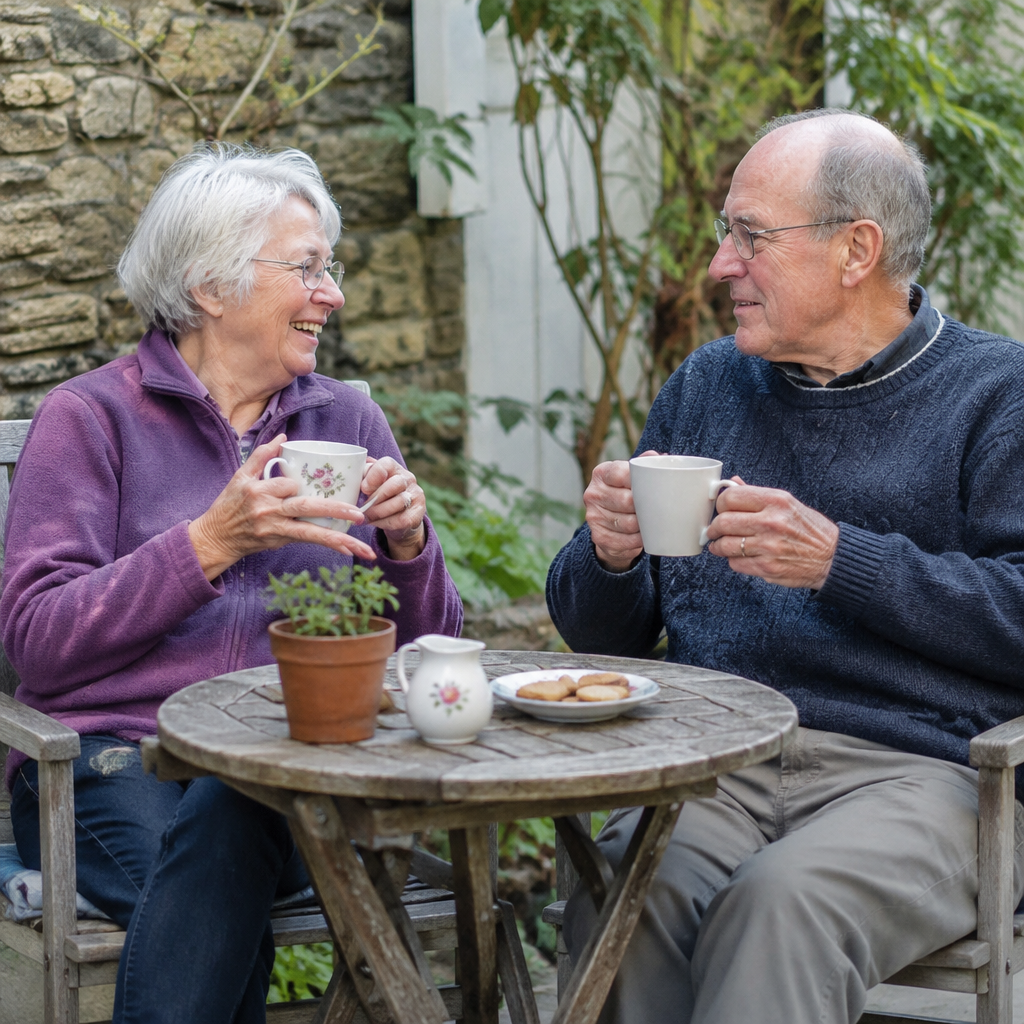
- Small, regular contact outperforms rare big events. A short weekly phone call or a standing coffee date does more for sustained wellbeing than an occasional big family gathering, because it’s the regularity that your nervous system seems to respond to.
Mrs Cure Confidence Score
Evidence strength — Good
Practical value — High
Ease of following — Moderate
Cost — Free
Suitability for over 50s — Strong
Mrs Cure’s Wise Take
We spend so much energy guarding our cholesterol numbers and so little guarding our calendars. I don’t think that’s because people don’t value their friendships — it’s that nobody ever framed “call a friend” as a health habit with the same seriousness as “take a walk”.
What You Can Do Today
- Pick one person and set a standing, recurring time to speak — weekly, not “whenever we get round to it”.
- If mobility or distance is the barrier, a regular video or phone call genuinely counts; the research doesn’t require it to be in person.
- Consider one low-commitment group activity — a walking group, a class, a place of worship, a hobby club — where you’ll see the same familiar faces each time, since familiarity builds connection faster than novelty does.
- If you suspect a friend or neighbour has become isolated, a simple regular check-in from you may matter to their health more than either of you realises.
Effort vs Benefit
The effort is mostly emotional rather than physical — picking up the phone, showing up to the class the first few times when it feels awkward. The benefit, by the current evidence, sits alongside established risk factors like physical inactivity and poor diet. That’s a serious return for a free habit.
Things to Keep in Mind
This isn’t about becoming more sociable than suits your personality. Introverts don’t need a wider circle, just a reliably present one. And persistent, heavy sadness or loss of interest in things you used to enjoy is different from loneliness and deserves its own conversation with a GP — don’t assume more company alone will fix it.
Key Takeaway
Social connection isn’t a soft, optional extra once you’re past 50 — the evidence increasingly treats it as a genuine health habit, on par with the ones we already take seriously. A standing weekly call or coffee is a small, concrete way to protect it.
Mrs Cure Wisdom
Put the coffee date in the diary with the same seriousness as the dentist, and you’ll probably keep both appointments.
Enjoyed this? Get The Good Years, free.
Our free monthly magazine, packed with the best of our articles, guides and quizzes for life after 50. No spam, unsubscribe any time.
This content is educational and not a substitute for personalised medical advice, diagnosis or treatment.