Loud snoring after 50 isn’t just a nuisance for whoever’s sleeping next to you — it can be a sign your breathing is actually stopping for seconds at a time, hundreds of times a night.
Prefer to watch? Here’s the 75-second version.
Opening Summary
Snoring gets treated as a running joke more often than a health issue, but after 50 it’s worth a second look. Obstructive sleep apnea — where the airway repeatedly narrows or collapses during sleep — becomes significantly more common with age, and it does more than disrupt sleep. Left unaddressed, it’s linked with higher blood pressure, greater cardiovascular risk, and daytime fatigue serious enough to affect driving and concentration. The reassuring part: it’s one of the most treatable sleep conditions once it’s actually diagnosed.
The Story
Sleep apnea is easy to miss because the person who has it is usually asleep for the part that matters most.
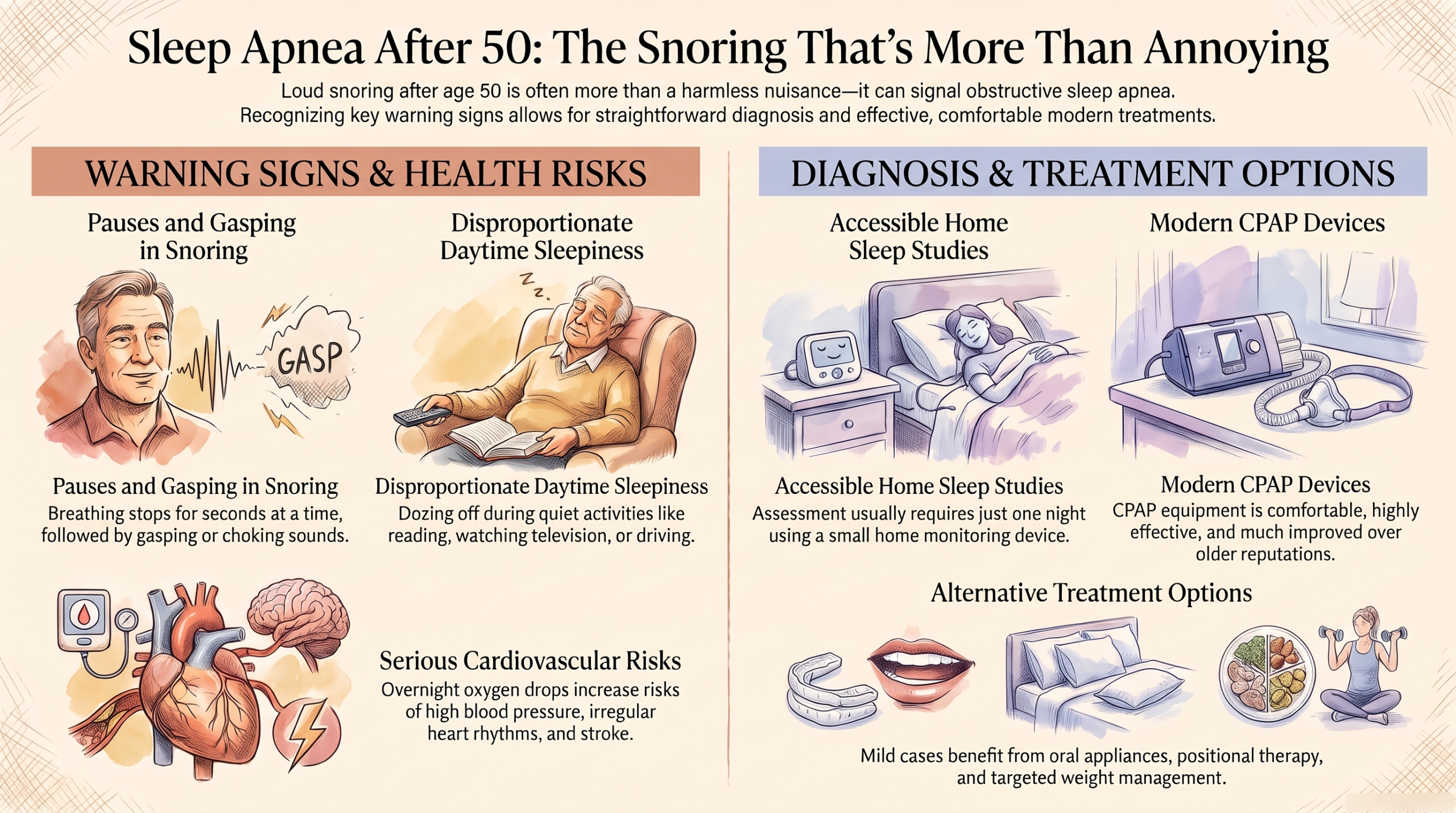
- The telltale pattern is loud snoring with pauses, not just loud snoring. A bed partner describing snoring that stops abruptly, followed by a gasp or choking sound, then starts again, is describing something more specific than ordinary snoring — that pause is often an actual breathing interruption.
- Daytime sleepiness that feels disproportionate is a major clue. Feeling genuinely exhausted despite what seems like a full night’s sleep, dozing off during quiet daytime activities like reading or watching television, is one of the most common and under-reported signs.
- Weight matters, but it isn’t the whole story. Extra weight around the neck increases risk, but sleep apnea also affects people at a healthy weight, particularly with age-related changes in muscle tone around the airway, so it shouldn’t be dismissed just because someone “doesn’t look like” the stereotype.
- It’s a genuine cardiovascular issue, not just a sleep inconvenience. Repeated drops in oxygen overnight are linked with higher blood pressure, irregular heart rhythms, and increased risk of heart disease and stroke over time — which is why doctors take a description of possible sleep apnea seriously rather than filing it under “just snoring.”
- A sleep study is more accessible than people expect. Many are now done at home with a small monitoring device rather than requiring an overnight stay in a lab, which has made diagnosis considerably more convenient than it used to be.
- CPAP isn’t the only option, and modern devices are far more comfortable than their reputation. A CPAP machine (which gently keeps the airway open with air pressure) remains the most effective treatment for moderate-to-severe cases, but oral appliances, positional therapy, and weight management can help milder cases. Most people adjust to CPAP within a few weeks and describe genuinely feeling more rested than they had in years.

Mrs Cure Confidence Score
Evidence strength — Strong
Practical value — High
Ease of following — Moderate
Cost — Moderate
Suitability for over 50s — Strong
Mrs Cure’s Wise Take
Snoring jokes are so familiar that it’s easy to laugh off exactly the kind of pattern that deserves a proper look. Nobody wants to be “that person with the machine,” but plenty of people who finally got diagnosed say the same thing afterward: they didn’t realise how exhausted they’d gotten used to being.
What You Can Do Today
- Ask whoever shares your bedroom, or record a night with a phone app, whether your snoring includes pauses or gasping sounds, not just steady noise.
- Honestly rate how sleepy you feel during quiet daytime moments — reading, watching television, sitting in traffic — using a simple 0-to-3 scale, and mention it to your doctor if it’s regularly a 2 or higher.
- Ask your GP whether a home sleep study makes sense for you, especially if snoring and daytime fatigue are both present.
Effort vs Benefit
Getting assessed takes one conversation and, usually, one night wearing a small home monitoring device — genuinely low effort for the information it provides. If sleep apnea is confirmed, treatment does ask more of you, particularly the adjustment period with CPAP, but the payoff (better daytime energy, lower cardiovascular risk, often a visibly better quality of life) is substantial and well documented.
Things to Keep in Mind
- Untreated sleep apnea is linked with a higher risk of accidents from drowsy driving, so persistent daytime sleepiness, especially behind the wheel, should be taken seriously and raised with a doctor promptly.
- Sleep apnea and insomnia can coexist, and treating one without recognising the other can leave someone still feeling unrested — a thorough assessment matters more than assuming it’s “just” one or the other.
- Alcohol, sedatives, and sleeping on your back can all worsen sleep apnea symptoms, so it’s worth mentioning these to whoever is helping you manage it.
Key Takeaway
Snoring with pauses, gasping, or genuine daytime exhaustion after 50 is worth raising with a doctor rather than brushing off as an old joke about getting older. Sleep apnea is common, well understood, and genuinely treatable — and treating it tends to improve far more than just how well you sleep.
Mrs Cure Wisdom
Good sleep isn’t a luxury at this age — it’s one of the more quietly powerful things you can protect.
Enjoyed this? Get The Good Years, free.
Our free monthly magazine, packed with the best of our articles, guides and quizzes for life after 50. No spam, unsubscribe any time.
This content is educational and not a substitute for personalised medical advice, diagnosis or treatment.