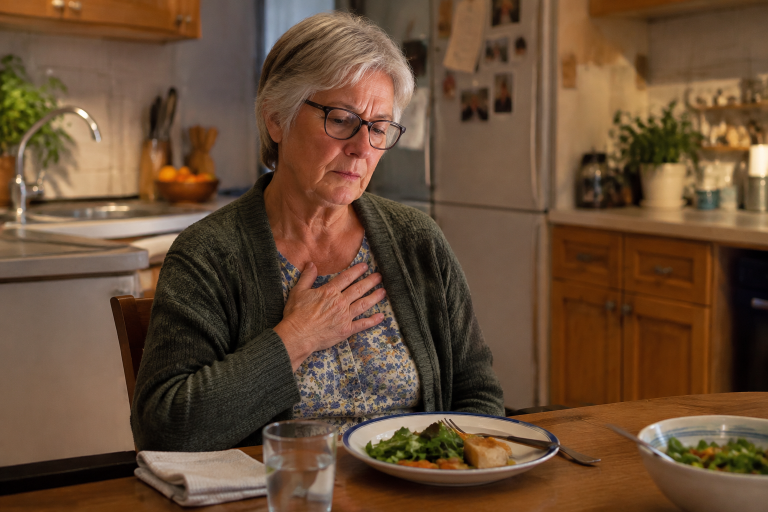
The biggest winter health risks after 50 aren’t icy pavements alone — they’re the quiet ones, like a cold house or a shoveled driveway, that catch people off guard.
Prefer to watch? Here’s the 73-second version.
Opening Summary
Cold weather asks more of the body after 50 than it used to, and the risks aren’t limited to slipping on ice. Blood vessels constrict in the cold, which raises blood pressure and strain on the heart; body temperature regulation becomes less efficient, which makes hypothermia a real risk even indoors; and shorter, darker days bring their own toll on mood and activity. None of this is a reason to dread winter — it’s a short list of specific, fixable things worth knowing before the temperature drops, not after.
The Story
Most winter health advice aimed at older adults focuses on not falling on ice, which matters, but it’s only part of the picture. Here’s what actually causes the bulk of winter-related harm after 50, and what helps.
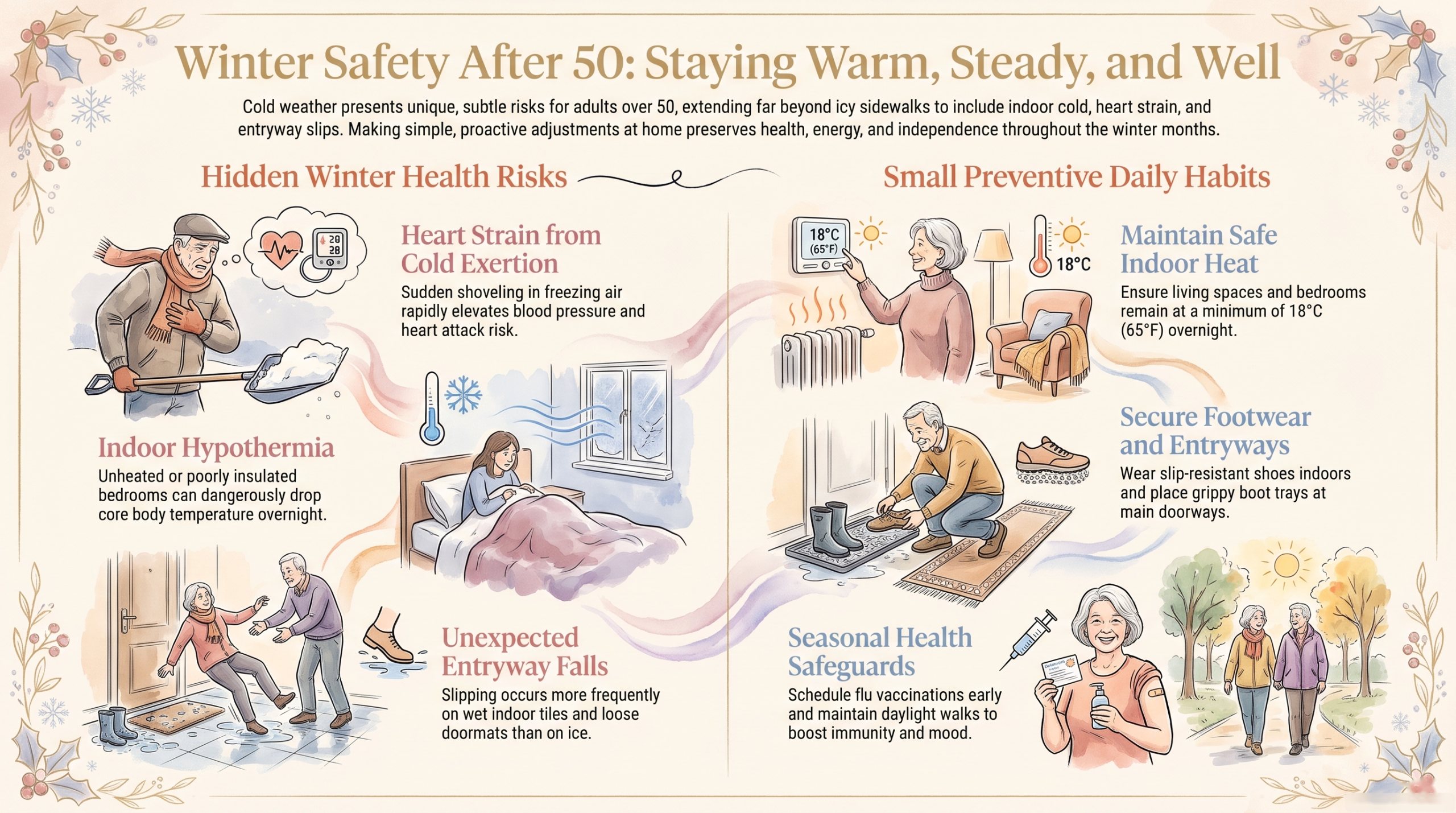
- Shoveling snow is harder on the heart than most people expect. The combination of cold air, sudden exertion, and holding your breath while pushing a loaded shovel raises blood pressure and heart rate sharply. It’s a well-documented cause of heart attacks in people who are otherwise fine the rest of the year. If you must clear snow, push rather than lift where you can, take frequent breaks, and consider asking a neighbour, family member, or paid service to handle heavier falls.
- Indoor cold is a bigger risk than most people realise. Hypothermia doesn’t require a blizzard — a consistently under-heated home, especially overnight, is enough over time, particularly for anyone on medications that affect temperature regulation. Keeping the main living areas and bedroom at a minimum of around 18–21°C (65–70°F) is a reasonable target, even if that means layering up rather than cranking the heat all day.
- Footwear matters more than the obvious icy patch. Many falls happen on wet entryway tiles, uneven doormats, or the single icy step that doesn’t look slippery. Grippy-soled boots worn indoors near entrances, and a boot tray so wet soles aren’t tracked onto smooth flooring, prevent more falls than people expect from something so unglamorous.
- Cold genuinely increases joint stiffness for many people. It isn’t just in your head: lower temperatures are linked with more reported joint pain, particularly in arthritic joints. Gentle movement indoors, warm (not hot) compresses, and keeping hands and feet covered even inside the house all help more than people expect.
- Winter illness isn’t just “a cold.” Flu, RSV and other seasonal respiratory infections hit harder after 50, and recovery takes longer. If you haven’t had this season’s flu vaccine, it’s worth checking whether you’re due, alongside any other seasonal shots your doctor has recommended.
- Shorter days affect mood and movement, not just light levels. Less daylight is linked with lower activity levels and, for some people, a genuine dip in mood. A short walk during the brightest part of the day, even 15–20 minutes, does more for both than most people give it credit for.
Mrs Cure Confidence Score
Evidence strength — Good
Practical value — High
Ease of following — Easy
Cost — Free to low-cost
Suitability for over 50s — Strong
Mrs Cure’s Wise Take
Winter has a way of making people feel like they need to tough it out, when a few small, unglamorous precautions would serve them far better. There’s no medal for shoveling the whole driveway in one go, or keeping the thermostat low to save a few pounds a week. Comfort and caution aren’t softness at this age — they’re strategy.
What You Can Do Today
- Check that your main living space and bedroom can comfortably hold a temperature of at least 18°C (65°F) overnight, and have a backup plan (extra blankets, a safe space heater) if the heating ever fails.
- Put a grippy boot tray and a pair of indoor-outdoor slip-resistant shoes by your main entrance, so the few steps between the car and the front door are never the riskiest part of your day.
- If you haven’t already, book this season’s flu vaccine (and check with your doctor about any other seasonal vaccines you’re due for).
Effort vs Benefit
This is about as favourable a trade as preventive health gets. None of the changes above require new equipment, a gym membership, or a major routine overhaul — mostly it’s a boot tray, a thermostat check, one phone call to book a vaccine, and asking for help with the shovel instead of assuming you should do it yourself. The payoff is avoiding exactly the kind of sudden, serious incident (a fall, a cardiac event, a bad flu) that tends to have an outsized effect on independence and recovery time after 50.
Things to Keep in Mind
- If you have heart disease, high blood pressure, or any condition affecting circulation, talk to your doctor before taking on strenuous cold-weather tasks like shoveling, even if you’ve always done it yourself in past winters.
- Confusion, slurred speech, or unusual drowsiness in a cold home can be signs of hypothermia and needs urgent medical attention — it doesn’t always look like obvious shivering.
- If joint pain is new, one-sided, or comes with swelling or redness, that’s worth a doctor’s visit rather than putting it down to the cold alone.
Key Takeaway
Most winter health risks after 50 aren’t dramatic, and they’re rarely about the weather forecast itself — they’re about a cold bedroom, a heavy shovel, a slippery doormat, or a vaccine appointment that got put off. Handling the small, unglamorous things early is what actually keeps winter from becoming a health event rather than just a season.
Mrs Cure Wisdom
The people who come through winter best aren’t the toughest — they’re the ones who made the boring preparations in November instead of January.
Enjoyed this? Get The Good Years, free.
Our free monthly magazine, packed with the best of our articles, guides and quizzes for life after 50. No spam, unsubscribe any time.
This content is educational and not a substitute for personalised medical advice, diagnosis or treatment.