If you’ve ever had chickenpox, the virus never actually left — it’s been resting quietly in your nerves for decades, waiting for your immune system to have an off year.
Prefer to watch? Here’s the 71-second version.
Opening Summary
Shingles is caused by the same virus as chickenpox reactivating, and the risk of that happening rises sharply after age 50 as immunity naturally wanes. It causes a painful, blistering rash, and in some people, nerve pain that lingers for months after the rash clears. The good news is that a highly effective vaccine exists specifically for this age group, and most people have never had a clear explanation of why it matters as much as it does.
The Story
Anyone who’s had chickenpox is carrying the virus for life, whether they think about it or not. After chickenpox clears, the varicella-zoster virus doesn’t leave the body — it goes dormant in nerve tissue. Shingles is simply that same virus waking back up, usually when the immune system’s ability to suppress it weakens, which happens naturally with age.
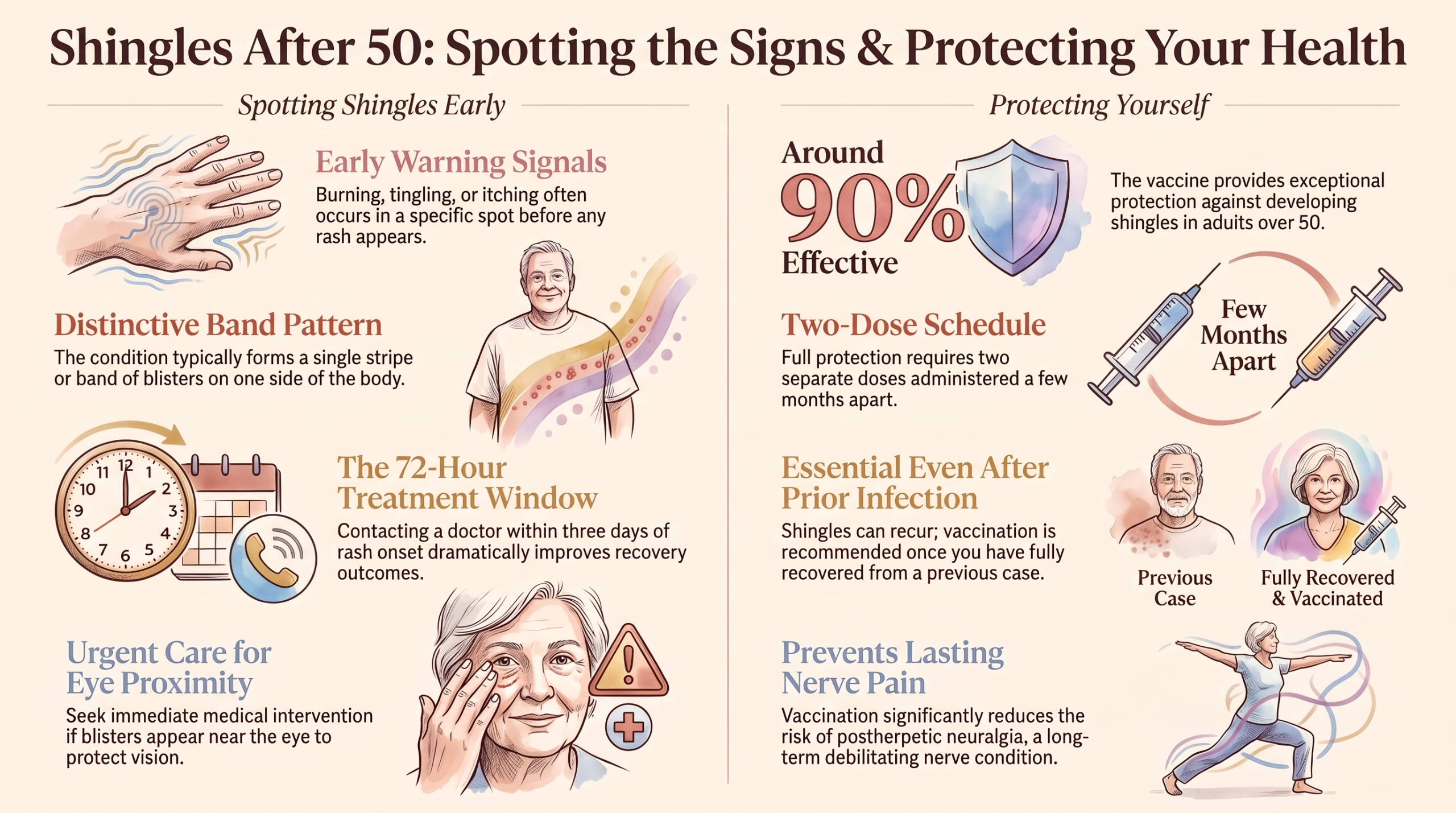
The rash is distinctive, and usually appears in a single band on one side of the body. It typically shows up as a stripe of blisters following one nerve pathway, often on the torso or face, and is frequently preceded by days of burning, tingling, or itching in that exact spot before any rash appears. Recognising this pattern early matters, because treatment works best in the first 72 hours.
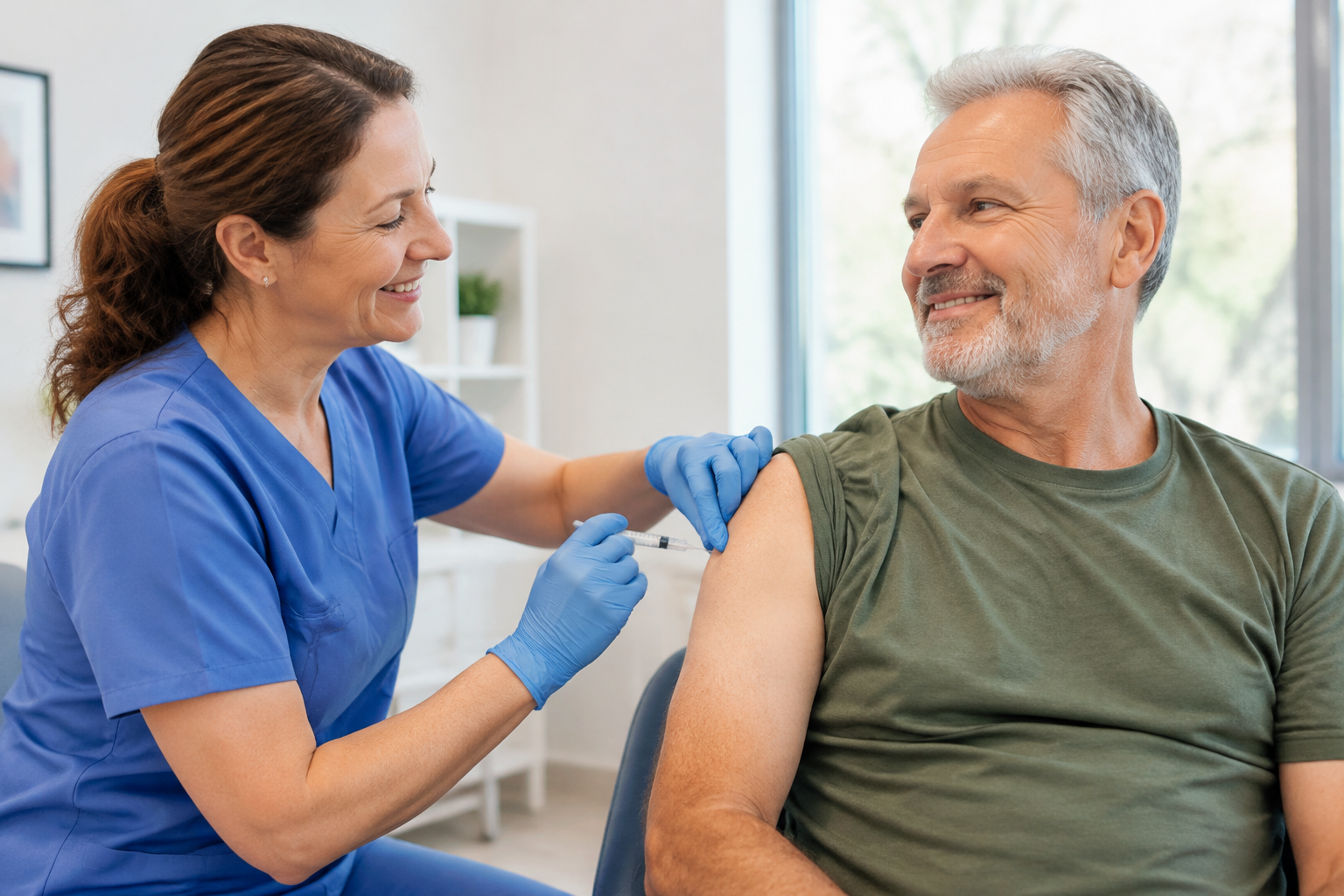
The vaccine isn’t a minor nice-to-have — it’s one of the more effective vaccines available for any condition. The current shingles vaccine is around 90% effective at preventing shingles in adults over 50, and it also significantly reduces the risk of the long-term nerve pain that makes shingles genuinely dreaded by people who’ve had it. It’s typically given as two doses, a few months apart.
Post-shingles nerve pain (postherpetic neuralgia) is the complication that makes early action worth it. In some people, especially those over 60, pain can persist in the affected area for months or even years after the rash itself has healed. This is the single biggest reason doctors push early antiviral treatment and vaccination so firmly for this age group.
You can get shingles more than once, which surprises a lot of people. Having had it before doesn’t grant lasting immunity the way some other illnesses do, and a second episode is entirely possible. Vaccination is recommended even for people who’ve already had shingles, once they’ve recovered.
Early antiviral treatment shortens the illness and lowers complication risk considerably. Antiviral medication started within three days of the rash appearing can meaningfully reduce both the severity of the outbreak and the odds of lasting nerve pain afterward — which is why calling a doctor promptly at the first blisters, rather than waiting to see how it develops, genuinely changes the outcome.
Mrs Cure Confidence Score
Evidence strength — Excellent
Practical value — Very High
Ease of following — Easy
Cost — Often Covered
Suitability for over 50s — Very Strong
Mrs Cure’s Wise Take
It’s an odd thing to protect yourself against a virus you caught as a child — but that’s exactly what makes this one worth taking seriously rather than putting off.
What You Can Do Today
- Ask your doctor or pharmacist whether you’re due for the shingles vaccine, even if no one has mentioned it to you before.
- If you notice unexplained burning or tingling in one spot on your skin, especially in a band or stripe pattern, don’t wait it out — call your doctor the same day.
- If you’ve had shingles before, ask about vaccination anyway once you’ve fully recovered; it isn’t a one-time-only illness.
Effort vs Benefit
Getting vaccinated is a single short appointment, repeated once a few months later — genuinely minimal effort for protection against a condition that can otherwise mean weeks of real pain. Recognising early symptoms and calling a doctor promptly if shingles does develop takes a bit of attentiveness, but pays off enormously in a shorter, milder illness. Managing established nerve pain, by contrast, often takes ongoing medical care over months, which is exactly why prevention is worth prioritising.
Things to Keep in Mind
See a doctor promptly if a blistering rash appears near the eye, as this can threaten vision and needs urgent treatment. The vaccine is generally not recommended during active shingles, pregnancy, or for people with significantly weakened immune systems without first discussing it with a doctor. Mild soreness or a short-lived flu-like feeling after the vaccine is common and not a reason for concern.
Key Takeaway
Shingles is common, often painful, and strongly age-related — but it’s also one of the few conditions on this list with a highly effective vaccine built specifically for people over 50, which makes this a genuinely easy box to tick.
Mrs Cure Wisdom
Some protection takes real lifestyle change. This one just takes one conversation with your pharmacist.
Enjoyed this? Get more like it.
Practical, no-nonsense health tips for adults 50+, dropped straight in your inbox. No spam, unsubscribe anytime.
This content is educational and not a substitute for personalised medical advice, diagnosis or treatment.