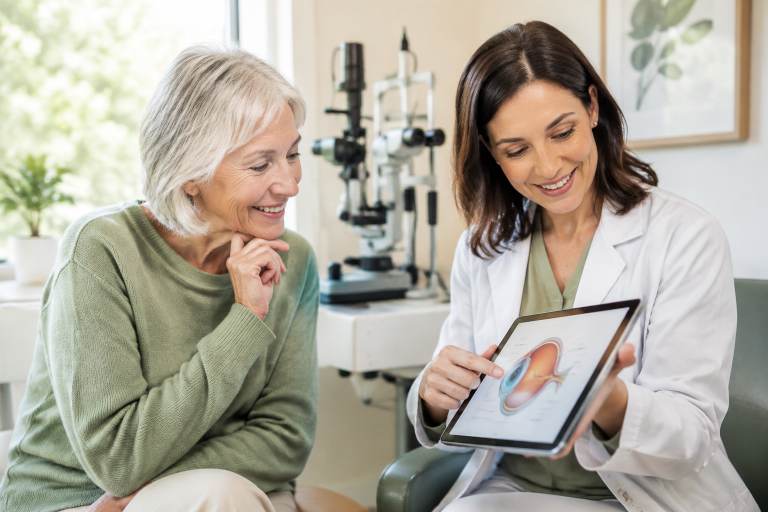
Tired, achy legs by the end of the day aren’t just a sign you’ve been on your feet, they can be your circulation asking for a bit of attention.
Prefer to watch? Here’s the 65-second version.
Opening Summary
Varicose veins, spider veins and general heaviness or swelling in the legs become noticeably more common after 50, particularly for women, largely down to valves in the leg veins wearing less efficiently over time. Most of it is cosmetic or mildly uncomfortable rather than dangerous, and responds well to movement, elevation and supportive stockings. A smaller number of signs are worth a proper check, and it’s useful to know the difference.
The Story
Veins in your legs rely on one-way valves to push blood back up towards the heart against gravity, helped along by the calf muscles acting as a pump with every step. Over decades, those valves can weaken, especially with prolonged standing, pregnancy history, excess weight, or family history, allowing blood to pool and veins to stretch and bulge. This is what shows up as varicose or spider veins, and often the heaviness, aching or swelling that goes with them.
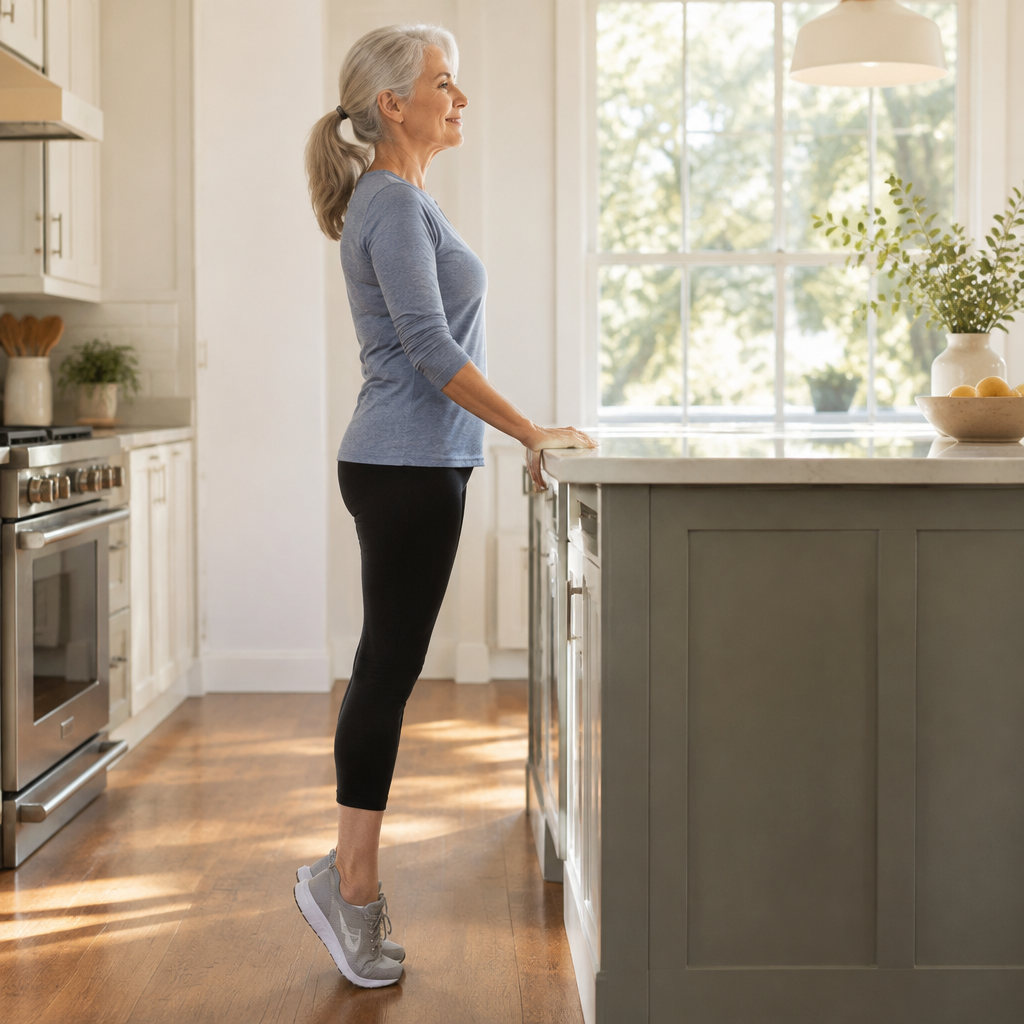
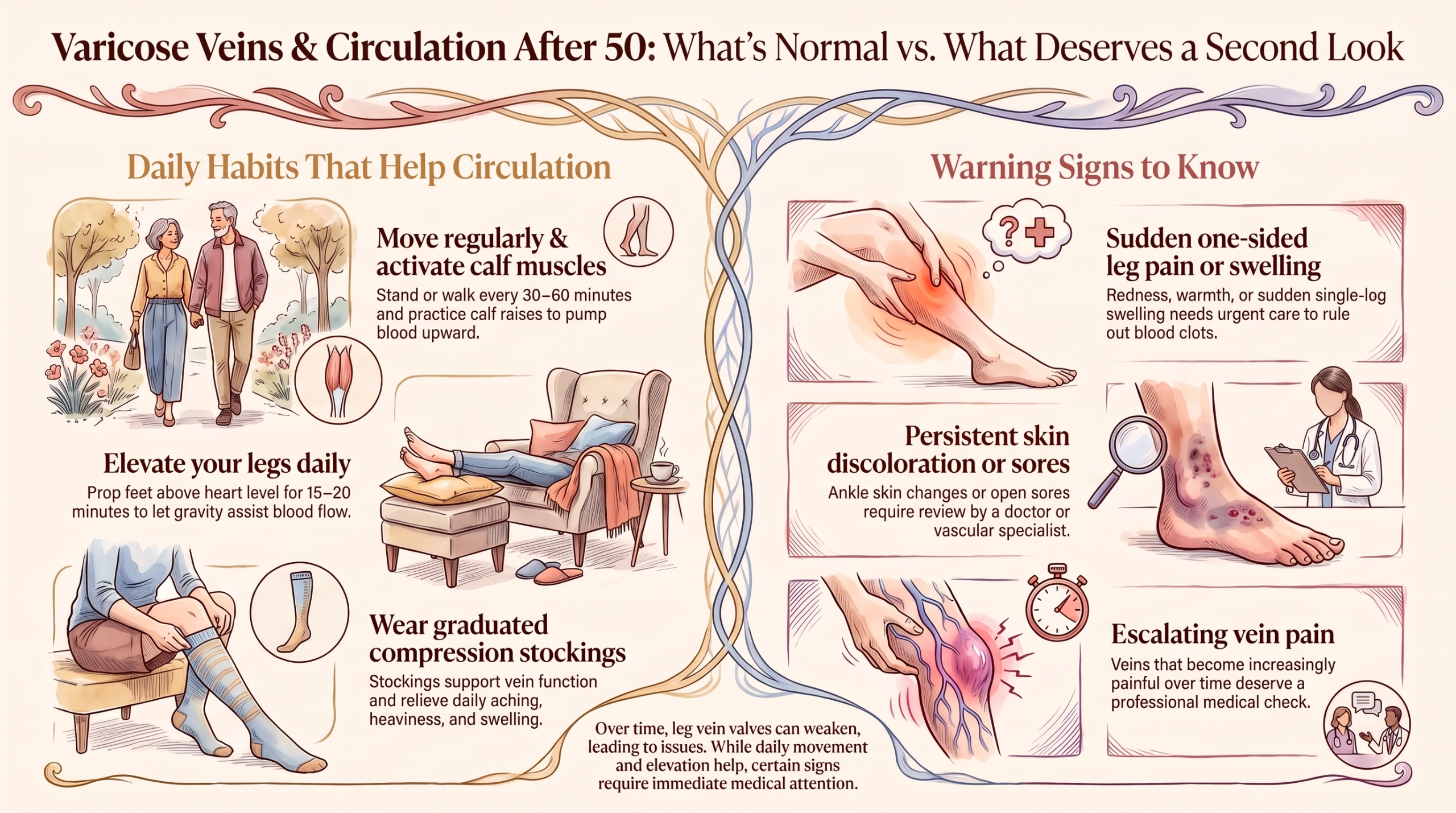
Move regularly, especially if you sit or stand for long stretches. The calf muscle is often called the body’s “second heart” because of how much it contributes to returning blood upward. Standing up and walking briefly every 30 to 60 minutes makes a real difference.
Elevate your legs when you can. Propping your feet above heart level for 15 to 20 minutes, a few times a day if possible, helps blood drain back down using gravity rather than fighting it.
Consider compression stockings if symptoms are noticeable. Graduated compression stockings genuinely help many people with aching, heavy or swollen legs by supporting vein function. A pharmacist or GP can advise on the right level of compression.
Stay active with walking and calf-strengthening movement. Regular walking is one of the most consistently recommended habits for vein health, alongside simple calf raises done throughout the day.
Watch your weight and avoid very tight clothing around the waist or legs. Both add pressure that can work against healthy blood flow.
Know the difference between “cosmetic” and “concerning.” Visible veins with mild aching are common and usually not urgent. Sudden swelling in one leg, redness, warmth, or pain, especially after a long flight or period of immobility, needs prompt medical attention, as it can indicate a blood clot.
Mrs Cure Confidence Score
Evidence strength — Good
Practical value — High
Ease of following — Easy
Cost — Low to moderate
Suitability for over 50s — Strong
Mrs Cure’s Wise Take
Leg veins rarely get the attention joints and hearts do, yet a bit of daily movement and a pair of decent compression stockings quietly prevent a lot of end-of-day discomfort. It’s an easy one to underestimate.
What You Can Do Today
- Take a short walk or set a reminder to stand up every hour if you sit for long stretches.
- Elevate your legs for 15 minutes this evening while you watch TV or read.
- Ask your pharmacist about compression stockings if your legs regularly feel heavy or achy by the end of the day.
Effort vs Benefit
Low effort, high benefit: leg elevation and regular movement breaks through the day.
Moderate effort, high benefit: wearing compression stockings consistently.
Requires real commitment: sustained weight management and daily calf-strengthening habits.
Things to Keep in Mind
Sudden one-sided leg swelling, redness, warmth or pain, particularly after a long flight, surgery or period of immobility, needs urgent medical attention, as it can signal a blood clot (deep vein thrombosis). Persistent skin discolouration, an open sore near the ankle, or veins that are increasingly painful are also worth a GP or vascular specialist review rather than managing alone. This is general guidance, not a substitute for medical advice.
Key Takeaway
Most leg vein changes after 50 are common and manageable with movement, elevation and compression support. The exceptions, sudden one-sided swelling or pain, are worth knowing so you can act quickly if they show up.
Mrs Cure Wisdom
Your legs carry you further than you probably give them credit for. A little daily care for them goes a long way back.
Enjoyed this? Get more like it.
Practical, no-nonsense health tips for adults 50+, dropped straight in your inbox. No spam, unsubscribe anytime.
This content is educational and not a substitute for personalised medical advice, diagnosis or treatment.