Your immune system doesn’t need boosting so much as it needs looking after, and the two are not quite the same thing.
Prefer to watch? Here’s the 80-second version.
Opening Summary
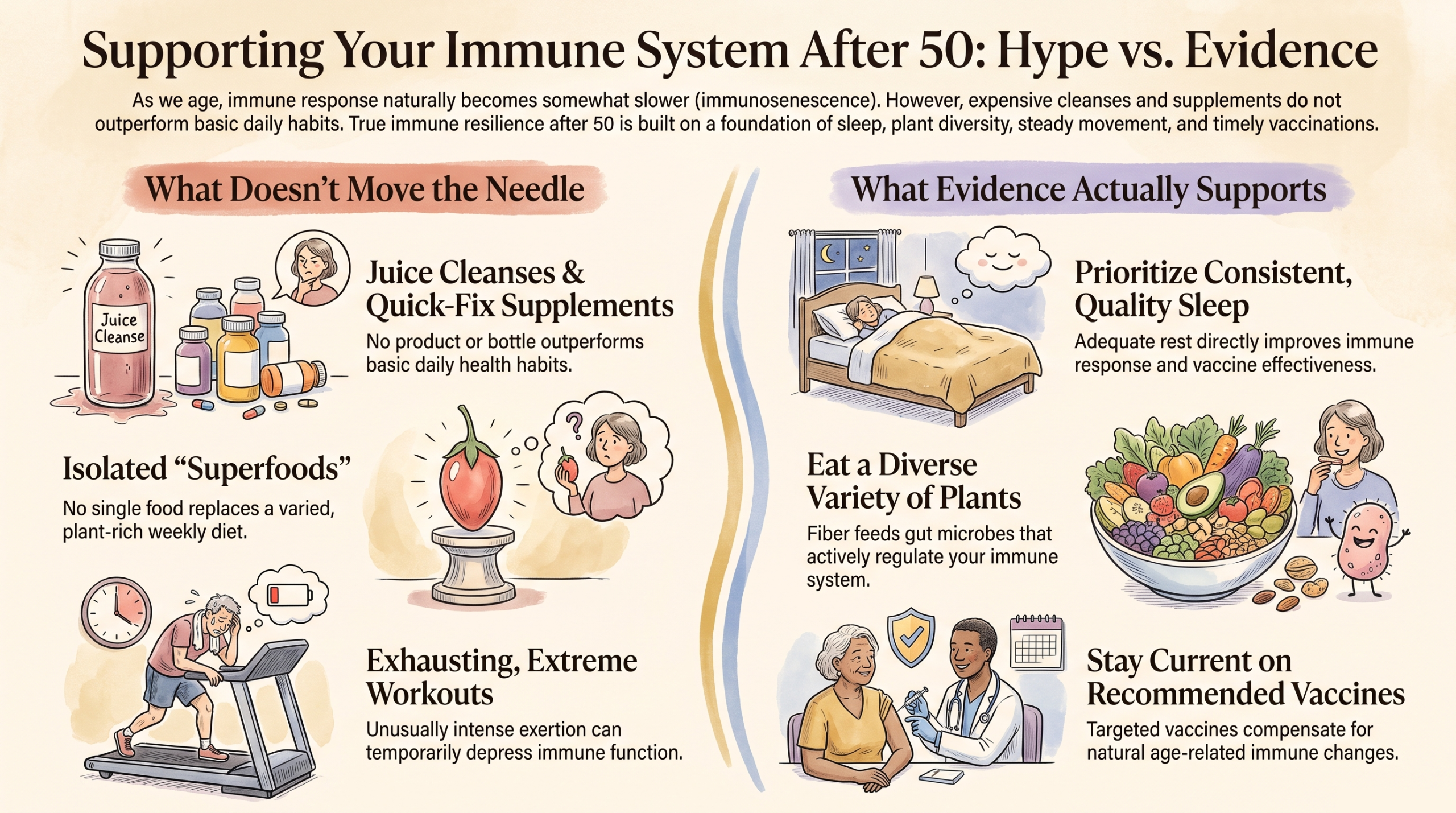
As the weather turns and colds, flu and other seasonal bugs start circulating, it’s worth knowing that immune function does genuinely change with age, generally becoming somewhat slower to respond. The well-evidenced ways to support it are refreshingly ordinary: enough sleep, regular movement, a varied diet, and staying up to date on the vaccines recommended for your age group. No juice cleanse or supplement has been shown to outperform these basics.
The Story
The immune system’s decline with age, sometimes called immunosenescence, is real but gradual and highly influenced by lifestyle. It’s part of why infections can hit a bit harder or linger a bit longer after 50, and why certain vaccines are specifically recommended for older adults. None of this means your immune system is “weak,” it means it benefits even more from the everyday habits that support it at any age.
Prioritise sleep before anything else. Poor sleep measurably reduces the effectiveness of immune response, including how well the body responds to vaccines. Consistent, adequate sleep is one of the single most impactful habits here.
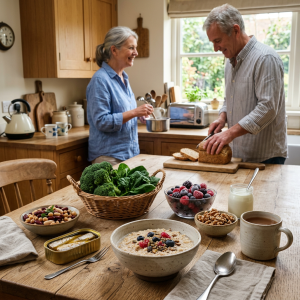
Eat a wide variety of plants, not a specific “immune-boosting” food. Fibre and plant diversity feed the gut microbiome, which plays a genuine role in immune regulation. Colourful vegetables, fruit, whole grains and legumes across the week matter more than any single “superfood.”
Keep moving, moderately. Regular moderate exercise, brisk walking, swimming, gardening, is linked with better immune function. Extremely intense, exhausting exercise can temporarily do the opposite, so steady and sustainable beats occasional and punishing.
Stay up to date on recommended vaccinations. Flu, and where applicable pneumococcal, shingles and COVID-19 vaccines are specifically recommended for older adults because immune response and infection risk genuinely shift with age. Your GP surgery can confirm what you’re due.
Manage stress where you can. Chronic, unrelenting stress is associated with weaker immune response. This doesn’t mean eliminating stress, which isn’t realistic, but building in genuine recovery time matters more than people assume.
Wash your hands and mind crowded, poorly ventilated spaces during peak season. Unglamorous, but still one of the most effective ways to simply avoid picking things up in the first place.

Mrs Cure Confidence Score
Evidence strength — Good
Practical value — High
Ease of following — Easy
Cost — Low
Suitability for over 50s — Strong
Mrs Cure’s Wise Take
Immune health marketing loves a dramatic fix in a bottle. The genuinely well-supported approach is far less exciting: sleep properly, eat a variety of plants, keep moving, and turn up for the vaccines recommended for your age.
What You Can Do Today
- Check what vaccines you’re due and book them if the season’s flu jab, or anything else, is outstanding.
- Add one extra vegetable or piece of fruit to a meal you’re already making today.
- Protect tonight’s sleep by setting a consistent wind-down time rather than scrolling until you’re tired.
Effort vs Benefit
Low effort, high benefit: booking recommended seasonal vaccinations and washing hands regularly.
Moderate effort, high benefit: steady, varied eating and consistent sleep habits.
Requires real commitment: sustaining regular moderate exercise and stress management over the long term.
Things to Keep in Mind
A high fever, breathlessness, confusion, or an infection that isn’t improving as expected are reasons to seek medical attention rather than waiting it out. If you’re on medication that affects immune function, or manage a chronic condition, talk to your GP about what preventive steps are specifically right for you. This is general guidance, not a substitute for personalised medical advice.
Key Takeaway
There’s no shortcut to immune resilience after 50, but there is a reliable formula: sleep, movement, dietary variety, and staying current on recommended vaccinations. It’s ordinary, and it works.
Mrs Cure Wisdom
Your immune system isn’t looking for a miracle. It’s looking for the basics, done consistently.
Enjoyed this? Get more like it.
Practical, no-nonsense health tips for adults 50+, dropped straight in your inbox. No spam, unsubscribe anytime.
This content is educational and not a substitute for personalised medical advice, diagnosis or treatment.