An enlarged prostate is one of the most common things to happen to a man’s body after 50, and one of the least talked about, which only makes it feel bigger than it usually is.
Opening Summary
The prostate naturally grows with age, a condition called benign prostatic hyperplasia, and it affects the majority of men to some degree by their sixties and seventies. In most cases it’s a manageable nuisance rather than a serious threat, causing symptoms like more frequent urination, especially at night. The exceptions worth knowing are the specific warning signs that call for a doctor’s visit, and the fact that regular conversations with a GP, not guesswork, are what keep it manageable.
The Story
An enlarged prostate is common, not a sign that something has gone wrong. It’s part of ordinary ageing for most men, caused by hormonal changes rather than anything preventable through lifestyle alone.
The main symptoms are urinary, not painful. Needing to urinate more often, especially overnight, a weaker stream, or a feeling of not fully emptying the bladder are the typical early signs, and they’re worth mentioning to a doctor rather than working around quietly.
Reducing evening fluids, caffeine and alcohol genuinely helps night-time symptoms. A simple change to when and what you drink in the evening measurably reduces overnight bathroom trips for many men.
Pelvic floor exercises aren’t just for women. Regular pelvic floor strengthening can improve bladder control and reduce urgency for men as well.
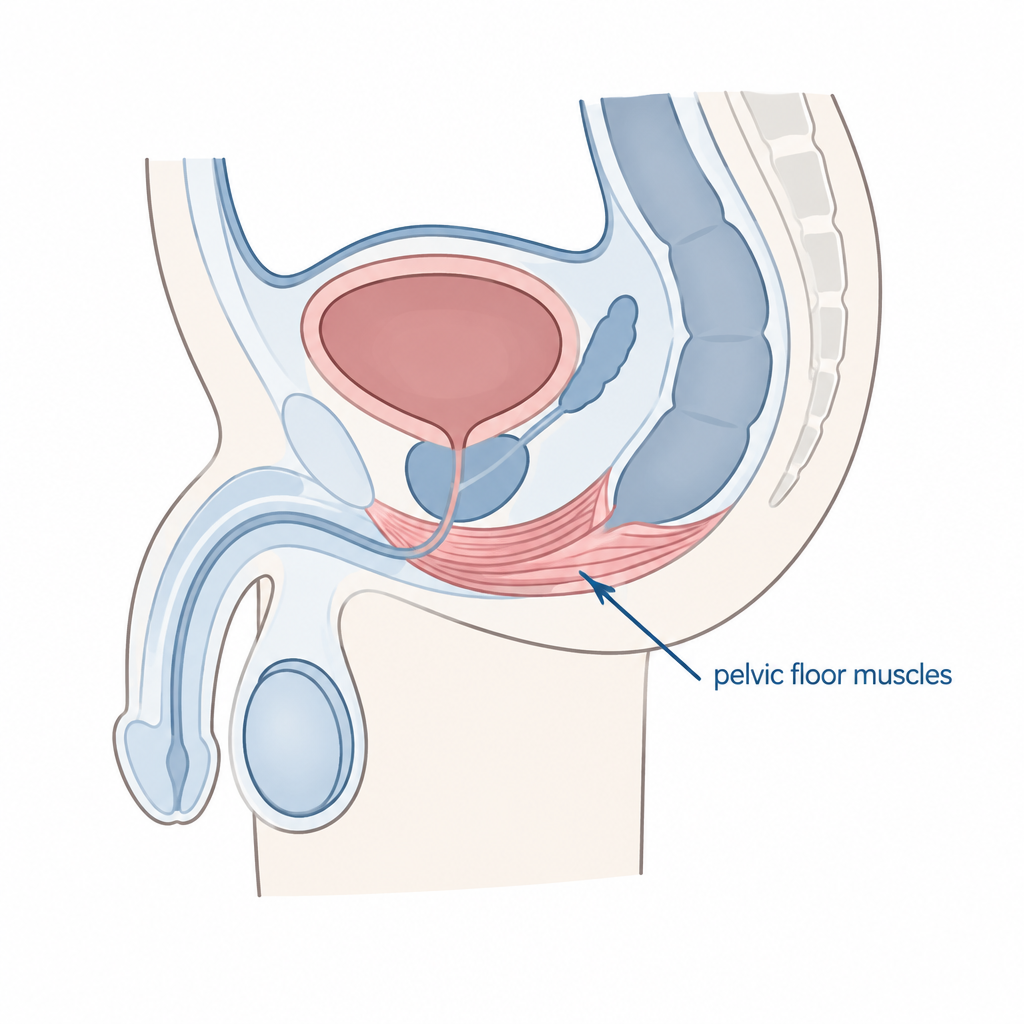
So what is a pelvic floor exercise, exactly? The pelvic floor is a sling of muscle that supports the bladder and bowel from underneath, shown in the diagram below. To find the right muscles, try stopping the flow of urine partway through, or imagine tightening the muscles that stop you passing wind — that lifting, squeezing feeling is the pelvic floor engaging. The exercise itself is simple: sitting or lying comfortably, squeeze and lift those muscles, hold for 3 to 5 seconds, then relax fully for the same length of time. Ten repeats, two or three times a day, is enough for most men to notice a difference within a few weeks.
Prostate cancer and an enlarged prostate are different things. An enlarged prostate does not mean cancer, but because some symptoms can overlap, a doctor’s assessment, sometimes including a PSA blood test, is the only reliable way to tell the difference.
A GP conversation is easier than most men expect. It’s a common, low-drama appointment for a doctor, even when it feels like a bigger deal to bring up.

Mrs Cure Confidence Score
Evidence strength — Strong
Practical value — High
Ease of following — Easy to moderate
Cost — Free to low, mostly self-care and GP visits
Suitability for over 50s — Strong
Mrs Cure’s Wise Take
This is one of those topics that feels much bigger in private worry than it does once it’s actually said out loud to a doctor. Most men who bring it up wish they’d done it sooner.
What You Can Do Today
- Cut back on caffeine, alcohol and fluids in the two to three hours before bed.
- Try a short daily pelvic floor exercise routine.
- Book a GP appointment if you’ve noticed changes to urination, even minor ones.
Effort vs Benefit
Low effort, high benefit: adjusting evening fluid and caffeine intake.
Moderate effort, high benefit: a regular pelvic floor exercise habit.
Requires real commitment: an honest, ongoing conversation with your GP if symptoms are affecting daily life.
Things to Keep in Mind
Difficulty urinating at all, blood in urine or semen, unexplained pelvic or lower back pain, or unexplained weight loss are reasons to see a doctor promptly rather than wait. These are less common than ordinary enlarged-prostate symptoms, but they’re always worth checking rather than assuming.

Key Takeaway
An enlarged prostate is a common, usually manageable part of ageing, not something to quietly work around. Simple habit changes help day to day, and a GP conversation is the most useful step for anything beyond that.
Mrs Cure Wisdom
Bringing it up is almost always easier than carrying it alone. Your doctor has had this exact conversation more times than you’d guess.
This content is educational and not a substitute for personalised medical advice, diagnosis or treatment.