
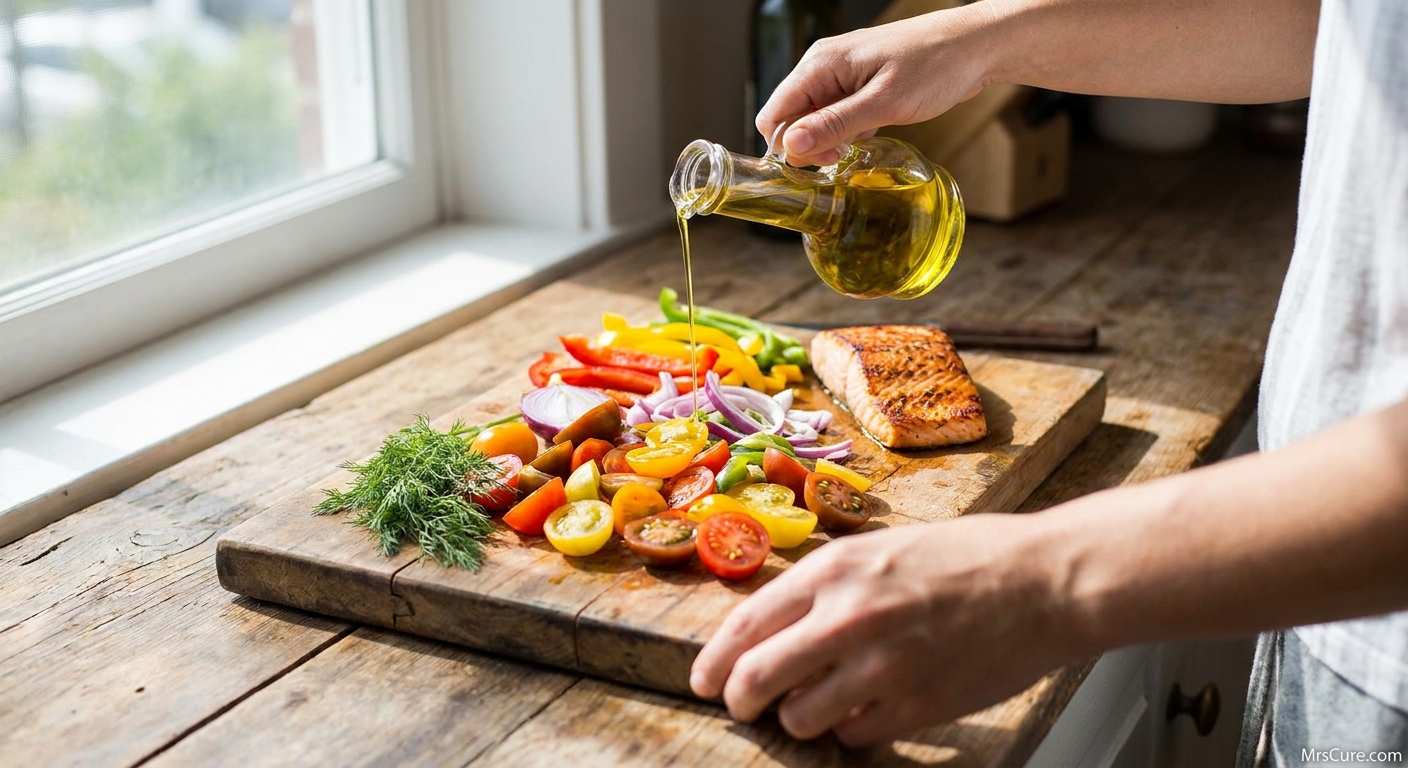
Eating for Your Heart: Small Swaps That Add Up
Heart-healthy eating has a reputation for meaning bland, restrictive, or expensive. In practice, it’s mostly a handful of ordinary swaps, repeated often enough to matter.
Opening Summary
Diets rich in vegetables, whole grains, oily fish and healthy fats, and lighter on processed and red meat, are consistently linked with lower cholesterol and better heart health. The Mediterranean-style pattern has the strongest evidence behind it, and it’s built from small, repeatable swaps rather than a rigid plan.
The Story
Heart disease risk builds up over decades, driven partly by LDL cholesterol, blood pressure and inflammation, all of which respond to diet. The Mediterranean pattern, vegetables, olive oil, oily fish, whole grains, nuts, modest amounts of dairy and meat, is one of the most studied diets for heart health, and it doesn’t require cutting out entire food groups.
Swap butter for olive oil where you can. Olive oil’s unsaturated fats are linked with lower LDL cholesterol compared with saturated fats like butter.
Add oily fish twice a week. Salmon, mackerel, sardines and trout supply omega-3 fats linked with lower triglycerides and reduced heart disease risk.
Choose wholegrain over refined where it’s an easy swap. Wholegrain bread, rice and pasta support healthier cholesterol levels compared with their refined equivalents.
Snack on nuts instead of processed snacks. A small daily handful of unsalted nuts is linked with improved cholesterol profiles in multiple studies.
Add a vegetable to meals rather than removing something else. It’s an easier habit to sustain than subtraction-based dieting, and fibre from vegetables helps manage cholesterol directly.
Watch processed and red meat, not eliminate it entirely. Reducing frequency, rather than cutting it out completely, is realistic and still meaningfully reduces risk.
Mrs Cure Confidence Score
| Evidence strength | Strong, among the most researched diets for heart health |
| Practical value | High |
| Ease of following | Easy, swap-based rather than restrictive |
| Cost | Low to moderate |
| Suitability for over 50s | Strong |
Mrs Cure’s Wise Take
Nobody sustains a diet that feels like punishment. Small swaps you barely notice tend to outlast any dramatic overhaul.
What You Can Do Today
- Cook one meal today using olive oil instead of butter.
- Add a handful of unsalted nuts to your day instead of a processed snack.
- Plan one oily fish meal for this week.
Effort vs Benefit
Low effort, high benefit: swapping butter for olive oil, adding nuts as a snack.
Moderate effort, high benefit: two oily fish meals a week, choosing wholegrain regularly.
Requires real commitment: consistently reducing processed and red meat over months.
Things to Keep in Mind
If you have high cholesterol, existing heart disease, or take related medication, speak to your GP or a dietitian about changes specific to you, rather than general guidance alone.
Key Takeaway
Heart-healthy eating doesn’t require an overhaul. A handful of small, repeatable swaps toward a Mediterranean-style pattern add up meaningfully over months and years.
Mrs Cure Wisdom
Your heart doesn’t need a perfect diet. It needs a good-enough one, repeated for years.
This content is educational and not a substitute for personalised medical advice, diagnosis or treatment.




Add a review
Your email address will not be published. Required fields are marked *