Worry that used to pass in an afternoon can start to feel like it’s moved in permanently, and that shift is worth paying attention to.
Prefer to watch? Here’s the 65-second version.
Opening Summary
Anxiety after 50 often looks different from the anxiety of younger years. It’s less likely to show up as panic and more likely to show up as a persistent undercurrent of worry, tension, or a racing mind at 3am, sometimes tied to health, family, retirement or simply a life that feels less predictable than it used to. It’s common, genuinely treatable, and not something you have to just manage quietly on your own.
The Story
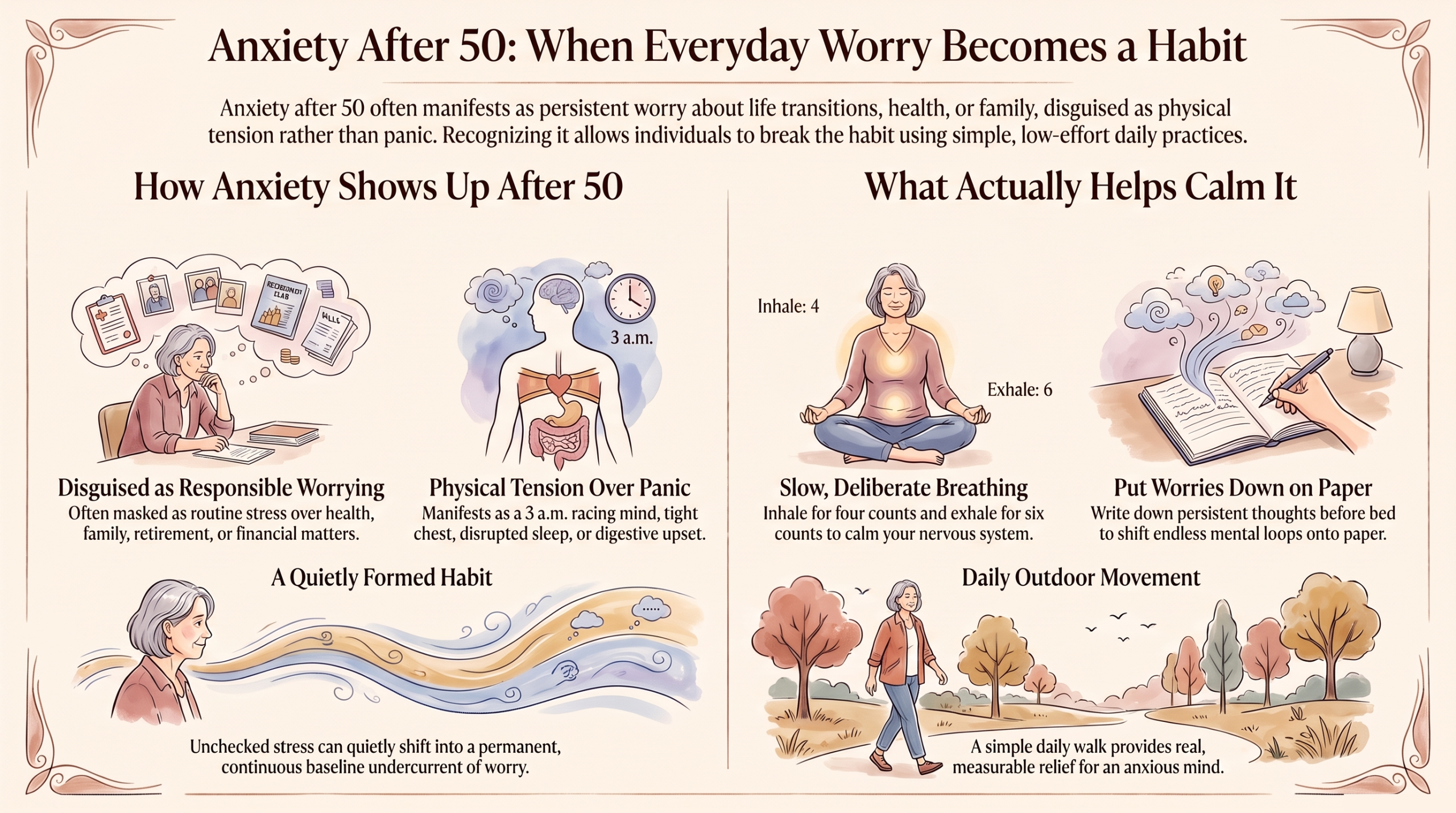
Anxiety doesn’t announce itself the same way in everyone. In midlife and beyond it often shows up as physical tension, a tight chest, disrupted sleep, digestive upset, or a mind that won’t switch off, rather than the classic image of a panic attack. Life transitions common to this decade, retirement, health scares, caring for ageing parents, adult children leaving home, can all feed a baseline of worry that quietly becomes a habit rather than a passing response to a specific stress.
Name it as anxiety, not just “stress” or “a busy mind.” Recognising persistent worry as anxiety, rather than simply your personality or the cost of a busy life, is often the first step toward actually addressing it rather than accommodating it indefinitely.
Practise slow, deliberate breathing. Slowing your exhale, longer out-breaths than in-breaths, directly signals your nervous system to calm down. A few minutes, a few times a day, is more effective than it sounds.
Get moving, even gently. Regular physical activity is one of the best-evidenced ways to reduce anxiety symptoms, and you don’t need intensity, a daily walk has real, measurable effect.
Limit the anxiety-feeding habits. Doom-scrolling news, excess caffeine, and irregular sleep all reliably worsen anxious feelings. None of these are the root cause, but all of them make it harder to manage.
Put worries down on paper. Writing down what’s on your mind, particularly before bed, is a simple, well-supported way to quiet a racing brain. It moves the worry from an endless loop to something finite you can look at.
Talk to your GP if it’s persistent or affecting daily life. Anxiety that lingers for weeks, disrupts sleep regularly, or stops you doing things you’d otherwise enjoy is genuinely treatable, through talking therapies, lifestyle changes, or medication where appropriate. There’s no reward for managing it alone.

Mrs Cure Confidence Score
Evidence strength — Strong
Practical value — High
Ease of following — Moderate
Cost — Free to moderate
Suitability for over 50s — Strong
Mrs Cure’s Wise Take
There’s a particular kind of anxiety that arrives disguised as responsible worrying, about health, about family, about money. It rarely announces itself as something to address. But a mind that’s rarely at rest deserves the same attention you’d give a knee that ached every day.
What You Can Do Today
- Try five minutes of slow breathing, in for four counts, out for six, next time worry creeps in.
- Write down what’s on your mind before bed tonight instead of turning it over in the dark.
- Go for a 15-minute walk, ideally outdoors, and notice how your mind feels afterwards.
Effort vs Benefit
Low effort, high benefit: breathing exercises and writing worries down.
Moderate effort, high benefit: a regular daily walk and cutting back on late-evening news or caffeine.
Requires real commitment: talking therapy or an ongoing mindfulness practice, both of which take weeks to build real skill.
Things to Keep in Mind
Anxiety that comes with chest pain, breathlessness, or symptoms that feel physically alarming should always be checked by a doctor first, to rule out a physical cause, before being treated as anxiety. If worry is constant, overwhelming, or accompanied by low mood that doesn’t lift, please speak to your GP. This is general guidance, not a diagnosis or a substitute for professional support.
Key Takeaway
Anxiety after 50 is common, often shows up physically rather than dramatically, and responds well to breathing techniques, movement, and, where needed, professional support. It’s not a personal failing, and it’s not something you have to simply live alongside.
Mrs Cure Wisdom
A quiet mind isn’t a luxury reserved for people with simpler lives. It’s something you can build, a little, most days.
Enjoyed this? Get more like it.
Practical, no-nonsense health tips for adults 50+, dropped straight in your inbox. No spam, unsubscribe anytime.
This content is educational and not a substitute for personalised medical advice, diagnosis or treatment.