Depression after 50 rarely announces itself with tears — far more often, it shows up as a persistent lack of interest in things that used to matter, and that’s exactly why it gets missed.
Prefer to watch? Here’s the 82-second version.
Opening Summary
Many adults picture depression as constant sadness or crying, but in people over 50 it often looks different: fatigue, irritability, physical aches with no clear cause, withdrawing from people, or simply losing interest in things once enjoyed. Because it doesn’t match the stereotype, it’s commonly mistaken for “just getting older” or dismissed by the person experiencing it. Recognising the quieter signs is the first real step toward feeling better.
The Story
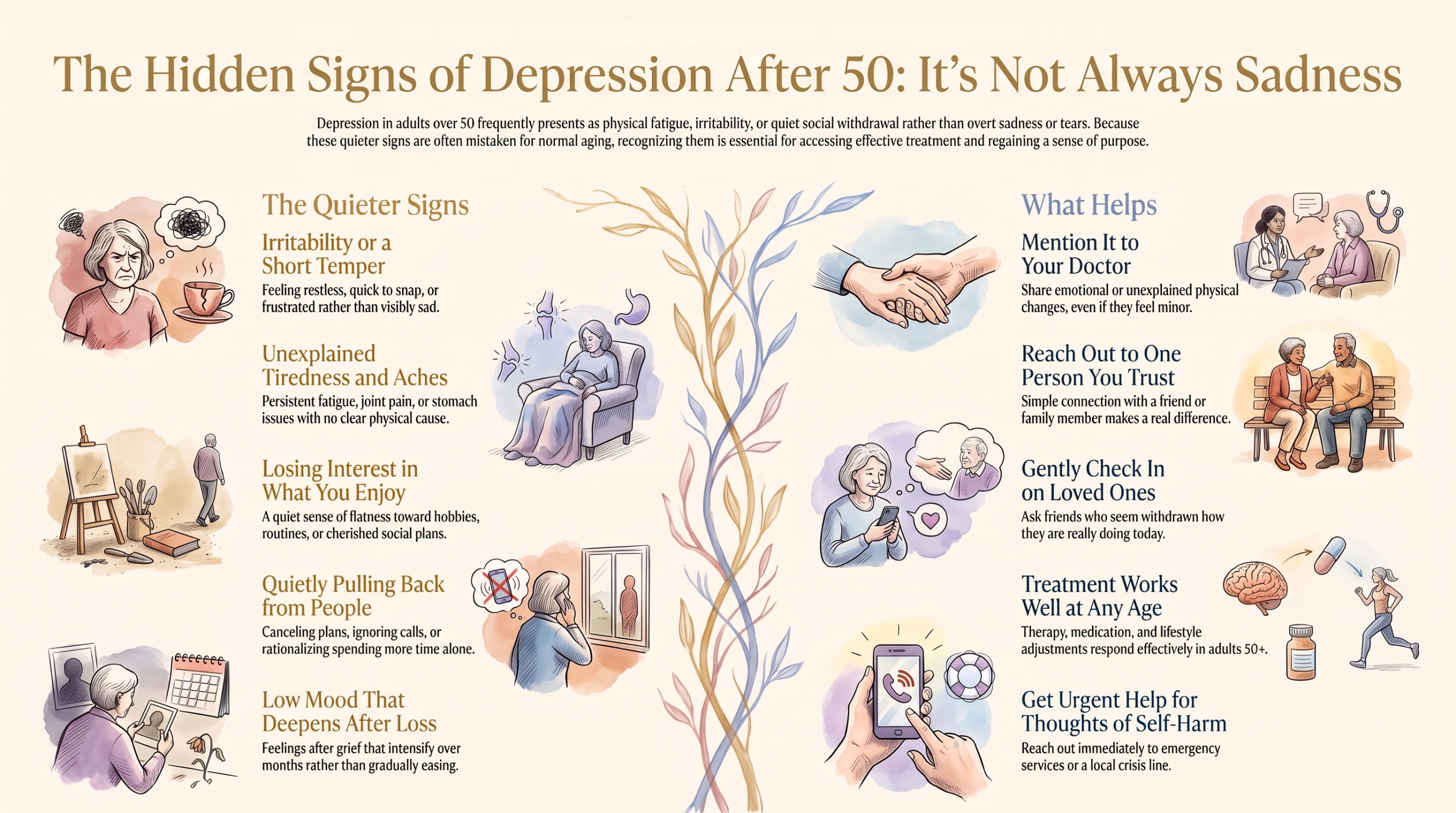
Irritability and short temper can be depression wearing a different face. Where younger adults are more often described as sad, people over 50 more frequently report feeling irritable, restless, or quick to snap — which doesn’t fit most people’s idea of what depression “should” look like, and so goes unrecognised.
Unexplained physical symptoms are a genuinely common presentation. Persistent fatigue, vague aches, digestive changes, or sleep problems with no clear medical cause can be the body’s way of signalling depression, especially in people who aren’t used to discussing emotional distress directly. It’s worth mentioning mood to a doctor even when the complaint feels purely physical.
Losing interest in things you used to enjoy is one of the clearest signals, even without sadness. If hobbies, social plans, or things that reliably used to bring pleasure start to feel like effort rather than enjoyment, that flatness — not necessarily sadness — is one of the two core symptoms doctors look for.
Pulling back from people often happens quietly, and gets rationalised. Cancelling plans, letting calls go unanswered, or preferring to be alone more and more can be framed as simply “not feeling social,” when it’s sometimes an early sign that’s easy to talk yourself out of noticing.
Grief and depression can look alike, but they’re not the same thing, and both deserve attention. Grief after loss is a normal, necessary process. But when low mood, loss of interest, and withdrawal persist for months, deepen rather than ease, or come with hopelessness, it’s worth asking whether something beyond grief has taken hold.
Life transitions at this age — retirement, an empty nest, health changes, caregiving — are real risk points, not just “life stuff to push through.” These changes can quietly chip away at identity, purpose, and routine, all of which matter more to mental health than most people realise until they’re missing.

Mrs Cure Confidence Score
Evidence strength — Good
Practical value — High
Ease of following — Moderate
Cost — Varies
Suitability for over 50s — Strong
Mrs Cure’s Wise Take
So many people over 50 were taught to push feelings down and carry on, which makes it genuinely hard to recognise depression in yourself — it rarely looks like what you were told to watch for.
What You Can Do Today
- If you’ve lost interest in things you used to enjoy for more than two weeks, write it down and mention it at your next doctor’s visit, even if nothing else feels “wrong.”
- Reach out to one person you trust today, even just to talk about something ordinary — reconnection matters more than it feels like it will.
- If a loved one has been more irritable, withdrawn, or tired than usual for a while, ask them gently how they’re really doing, rather than assuming it’s just a phase.
Effort vs Benefit
Simply naming what you’re noticing — to yourself, a doctor, or someone you trust — takes very little effort but is often the single hardest and most valuable step. Treatment, whether that’s talking therapy, medication, lifestyle changes, or a combination, asks for more ongoing commitment, but depression at this age responds well to treatment, often as well as it does at any other age.
Things to Keep in Mind
If you or someone you know is having thoughts of self-harm or not wanting to be alive, that’s an emergency — contact a doctor, local crisis line, or emergency services right away, rather than waiting to see if it passes. Depression can also sometimes be a side effect of medication or linked to other health conditions, so a doctor’s visit is useful for ruling those out, not just for discussing mood on its own.
Key Takeaway
Depression after 50 often hides behind irritability, fatigue, or quiet withdrawal rather than obvious sadness — which is exactly why naming it clearly, to yourself or someone else, is usually the hardest and most important part.
Mrs Cure Wisdom
Not wanting to do the things you used to love isn’t just a phase to wait out — it’s worth saying out loud to someone.
Enjoyed this? Get more like it.
Practical, no-nonsense health tips for adults 50+, dropped straight in your inbox. No spam, unsubscribe anytime.
This content is educational and not a substitute for personalised medical advice, diagnosis or treatment.