Cataract surgery is one of the most common operations performed on adults over 50 — and one of the least understood until it’s actually on your own calendar.
Prefer to watch? Here’s the 79-second version.
Opening Summary
A cataract is simply the eye’s natural lens clouding over time, and for most people it’s a normal part of aging rather than a disease to fear. The surgery that corrects it is short, done as an outpatient, and ranks among the most successful procedures in modern medicine — but the practical questions, like what you’ll actually see afterward and how long you’ll need help getting around, rarely get a straight answer until you’re the one booking it.
The Story
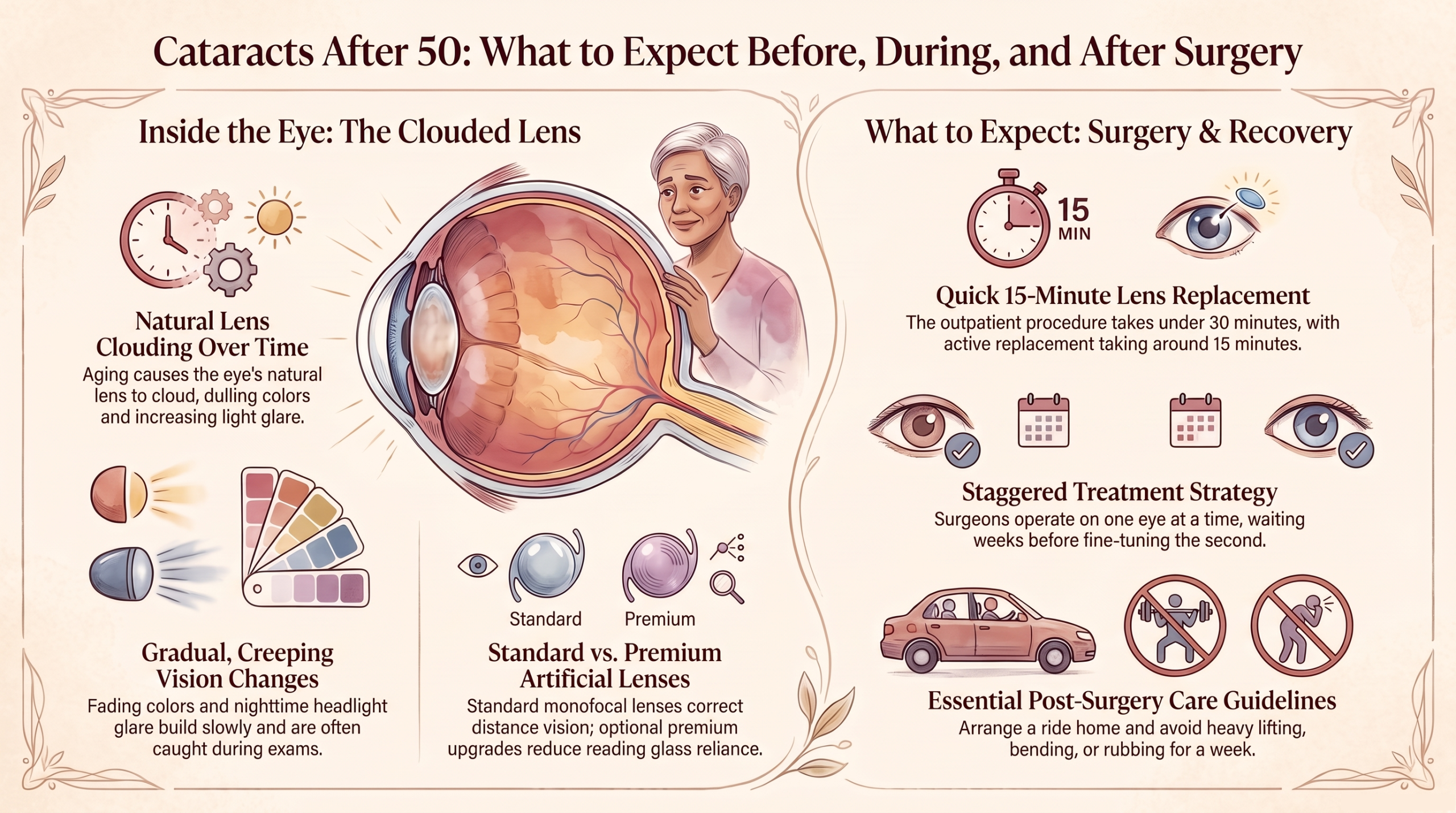
Cataracts build slowly, which is why most people wait longer than they need to. Colors dulling, headlights seeming glarier at night, needing brighter light to read — these changes creep in over years, and it’s easy to adjust around them rather than notice them. An eye exam is what actually catches it, often before you’d describe your vision as a real problem.
The surgery itself is brief, but what happens beforehand matters more than people expect. The operation typically takes well under half an hour, with the actual lens replacement often done in around 15 minutes. In the weeks before, your surgeon measures your eye precisely to choose the right replacement lens — skipping or rushing this step is what leads to a less sharp result.
Vision doesn’t snap back to normal on day one. Many people notice a real improvement within a day or two, but full stabilization, especially for fine, close-up focus, can take several weeks as the eye heals and swelling settles. Colors often look strikingly brighter and whiter almost immediately — a sign of just how much the clouded lens had been filtering out.
You’ll need a ride home, and a quieter day than usual. You can’t drive yourself immediately after, and most surgeons recommend avoiding bending, heavy lifting, and rubbing the eye for about a week. Arranging this in advance, rather than the morning of, makes the whole day considerably less stressful.
The standard replacement lens is usually well covered; “premium” lenses are an optional upgrade. A standard monofocal lens corrects distance vision well and is the typical covered option. Lenses that also reduce the need for reading glasses exist, but usually carry an extra out-of-pocket cost — worth asking about, not assuming either way.
One eye at a time is the standard, deliberate approach. Surgeons typically treat one eye, let it heal for a couple of weeks, then do the second. It isn’t an oversight or a cost-cutting measure — it lets your brain and vision adjust in stages, and gives your surgeon a chance to fine-tune the second eye based on how the first one healed.

Mrs Cure Confidence Score
Evidence strength — Excellent
Practical value — Very High
Ease of following — Easy
Cost — Often Covered
Suitability for over 50s — Very Strong
Mrs Cure’s Wise Take
There’s a strange kind of grief people feel for vision they didn’t even realize they’d lost — and then real delight when it comes back. Don’t let unfamiliarity with the process talk you into waiting longer than you need to.
What You Can Do Today
- If it’s been more than a year since your last eye exam, book one — cataracts are caught early this way, long before they feel urgent.
- If surgery is already on your calendar, arrange your ride home and a quiet day or two afterward now, rather than the week of.
- Ask your optometrist directly whether a standard or premium lens makes more sense for your lifestyle and budget.
Effort vs Benefit
Booking the eye exam that catches a cataract early takes a single appointment and almost no effort. The surgery itself asks very little of you physically — it’s quick, done under light sedation, and the recovery is mostly about patience rather than exertion. The only real planning required is lining up help for the day itself, which is a small ask against vision that, for most people, comes back clearer than it’s been in years.
Things to Keep in Mind
Mild grittiness, light sensitivity, and slightly blurry vision for the first few days are normal and expected. Call your surgeon promptly if you notice increasing pain, a sudden drop in vision, flashes of light, or discharge from the eye — these can signal a rare complication that needs prompt attention. Anyone on blood thinners or with other eye conditions should discuss these specifically with their surgeon beforehand, rather than assuming the standard advice applies.
Key Takeaway
Cataract surgery is one of the most predictable, well-understood procedures a person over 50 is likely to have — the uncertainty around it usually comes from simply not knowing what to expect, not from the procedure itself being risky or complicated.
Mrs Cure Wisdom
Clearer vision is one of the few things in life that genuinely does come back better than before — you just have to be willing to ask about it.
Enjoyed this? Get more like it.
Practical, no-nonsense health tips for adults 50+, dropped straight in your inbox. No spam, unsubscribe anytime.
This content is educational and not a substitute for personalised medical advice, diagnosis or treatment.