The single biggest factor in recovering well from a stroke often isn’t which hospital treats it — it’s how quickly the people nearby recognised what was happening and called for help.
Prefer to watch? Here’s the 64-second version.
Opening Summary
Stroke risk rises steadily with age, and climbs more noticeably from the mid-50s onward, roughly doubling with each additional decade. The encouraging part is twofold: a large share of stroke risk is genuinely modifiable, mainly through blood pressure control, and recognising the warning signs quickly, within minutes rather than hours, has a real, measurable effect on how much recovery is possible. This is one of the few pieces of health information where simply knowing it, and acting on it fast, can change an outcome.
The Story
Stroke risk doesn’t rise gradually and evenly — it accelerates meaningfully after 50. While stroke can happen at any age, the risk curve steepens from the 50s onward, largely tracking the rise in high blood pressure, irregular heart rhythms, and diabetes that also tend to appear in this decade. This is part of why stroke awareness becomes more relevant, not less, as you get older.
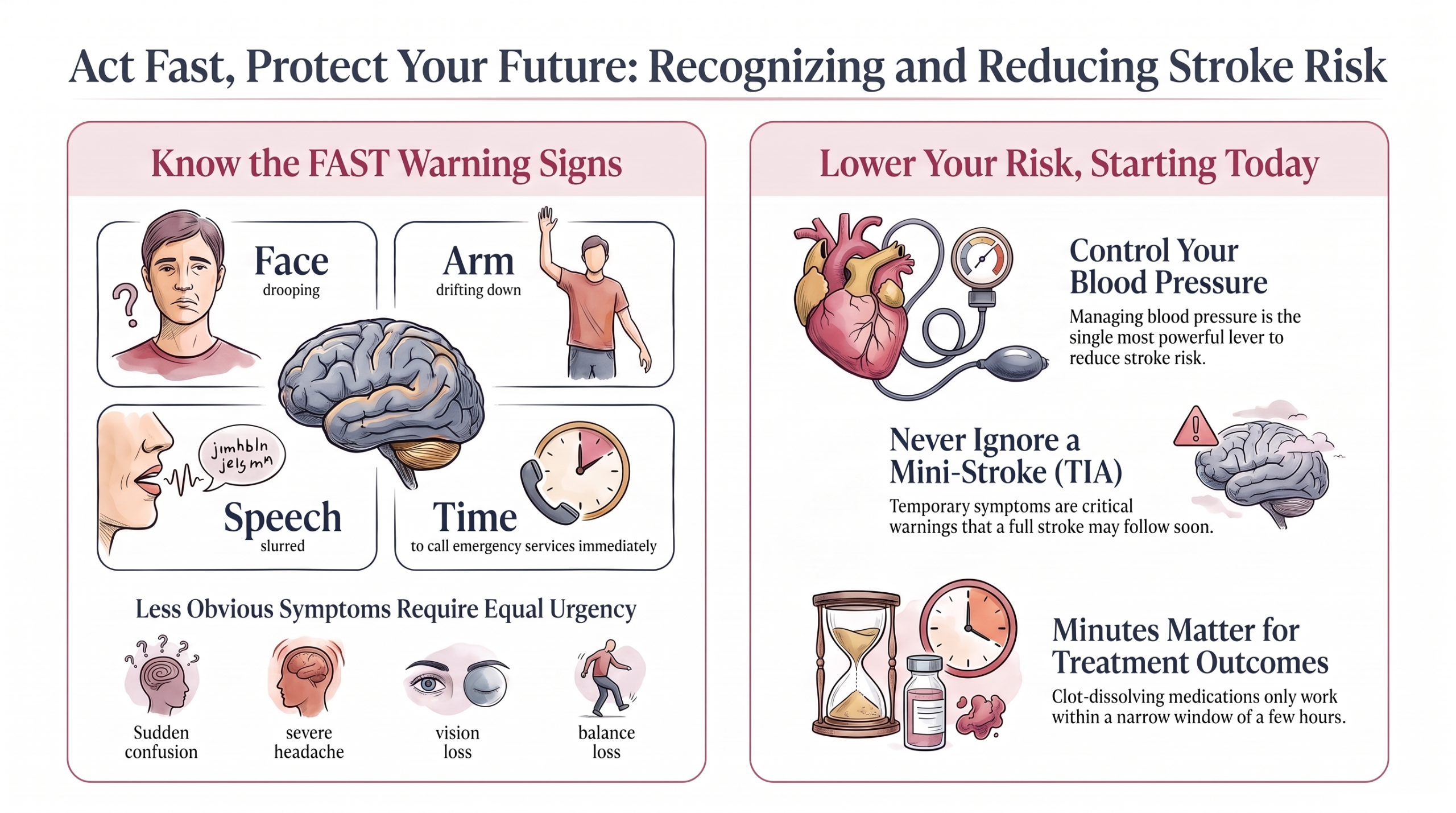
FAST is designed to be remembered under stress, not studied in advance. Face — has one side drooped or gone numb? Arm — does one arm drift downward when both are raised? Speech — is it slurred, or hard to find words? Time — if any of these appear, call emergency services immediately and note the time symptoms started. It’s short on purpose, because clear thinking is exactly what a stroke can take away in the moment.
Some strokes announce themselves quietly rather than dramatically. Sudden confusion, a sudden severe headache with no clear cause, vision loss or blurring in one eye, or a sudden loss of balance or coordination can all be stroke signs even without the more commonly known face or arm symptoms. Any of these appearing suddenly and without explanation deserves the same urgency as the classic signs.
Minutes genuinely matter, because of how emergency stroke treatment actually works. Clot-dissolving medication used for the most common type of stroke is only effective within a narrow window of a few hours from when symptoms start, and the sooner it’s given within that window, the better it tends to work. Driving to the hospital yourself, or waiting to see if symptoms pass, both cost time that can’t be bought back — calling emergency services is the faster, safer route in almost every case.
A ‘mini-stroke,’ or TIA, is a warning most people are tempted to shrug off. A transient ischaemic attack causes stroke-like symptoms that resolve within minutes to a couple of hours, which makes it easy to dismiss as nothing. In reality, it’s one of the clearest warning signs that a full stroke may follow soon after, and it needs the same urgent medical assessment as any other stroke symptom, even once the symptoms have already passed.
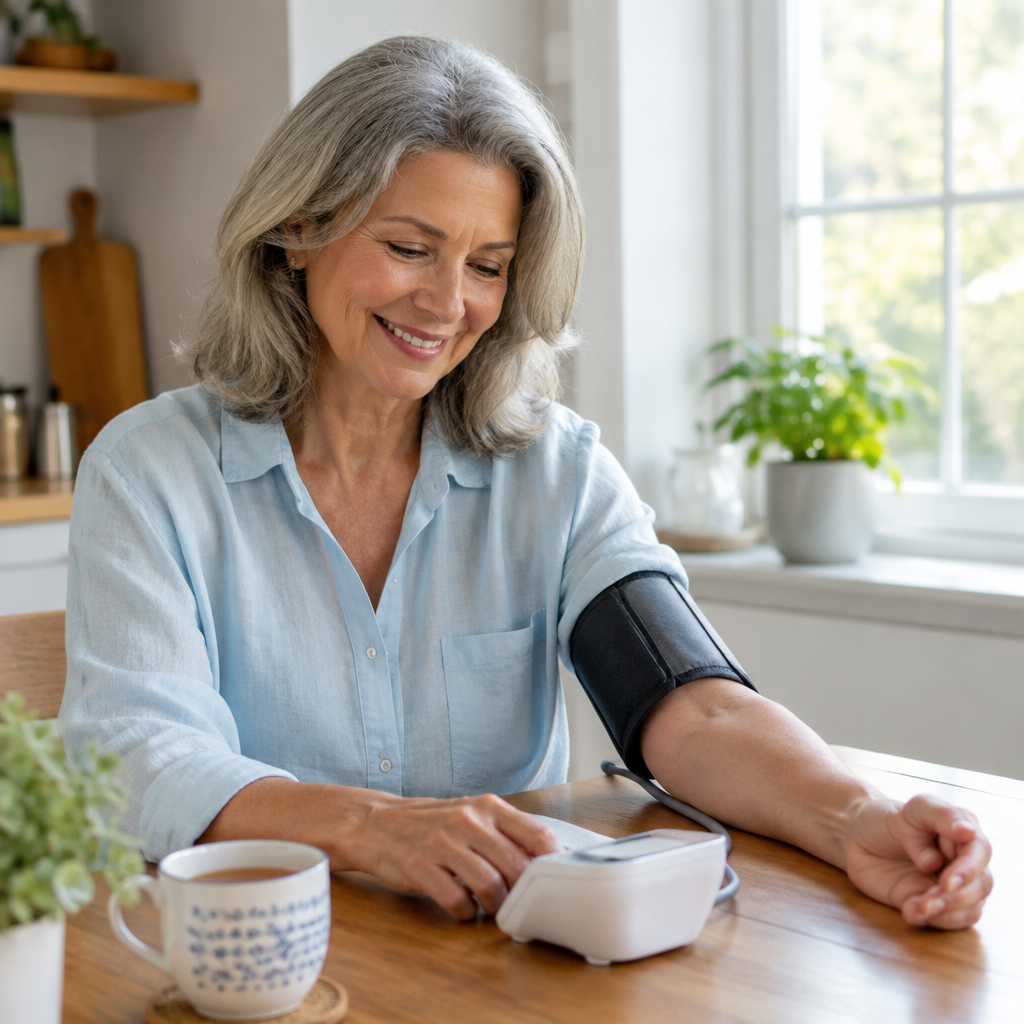
Blood pressure control is the single most powerful lever most people can actually pull. High blood pressure is the leading modifiable risk factor for stroke, ahead of diet, weight, or almost anything else on its own. Knowing your numbers, and working with your GP to keep them in a healthy range, does more for stroke prevention than most other single habits combined.
Mrs Cure Confidence Score
Evidence strength — Strong
Practical value — High
Ease of following — Easy
Cost — Free
Suitability for over 50s — Very Strong
Mrs Cure’s Wise Take
This isn’t the sort of thing to read once and file away — it’s worth saying the letters F, A, S, T out loud right now, so they’re already sitting there, ready, if you ever need them in a hurry.
What You Can Do Today
- Say the FAST test out loud once today — Face, Arm, Speech, Time — so it’s easier to recall under pressure.
- If you don’t know your current blood pressure reading, book a check with your GP surgery or a pharmacy this week.
- Share the FAST test with a family member or someone you live with, since recognising it in someone else is just as valuable as recognising it in yourself.
Effort vs Benefit
Learning and remembering the FAST test takes only a few minutes and costs nothing, for a benefit that’s genuinely hard to overstate if it’s ever needed. Getting blood pressure checked regularly is a small, low-cost routine with an outsized effect on long-term risk. Actually managing high blood pressure, through medication, diet, or lifestyle change, takes sustained effort, but it remains the single highest-leverage thing most people can do to lower their personal stroke risk.
Things to Keep in Mind
This article is about recognising emergency warning signs, not diagnosing or predicting a stroke. If you or anyone near you shows any FAST sign, or any of the less typical signs described above, call emergency services immediately rather than waiting to see if it passes — it’s always the safer choice, even if it turns out to be something else.
Key Takeaway
Stroke risk climbs meaningfully after 50, but a large share of it is modifiable through blood pressure control, and recognising the FAST signs quickly, then calling for emergency help without delay, remains one of the most effective things anyone can do to protect themselves or someone they love.
Mrs Cure Wisdom
Hope you never need it, but know it anyway — FAST is four letters that are worth carrying around for the rest of your life.
Enjoyed this? Get more like it.
Practical, no-nonsense health tips for adults 50+, dropped straight in your inbox. No spam, unsubscribe anytime.
This content is educational and not a substitute for personalised medical advice, diagnosis or treatment.