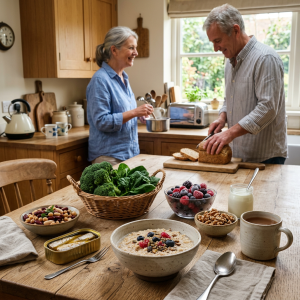
Muscle doesn’t quietly vanish after 50 out of bad luck — for most people, it vanishes because two fixable habits slipped: not enough protein, and not enough reason for muscle to stick around.
Prefer to watch? Here’s the 79-second version.
Opening Summary
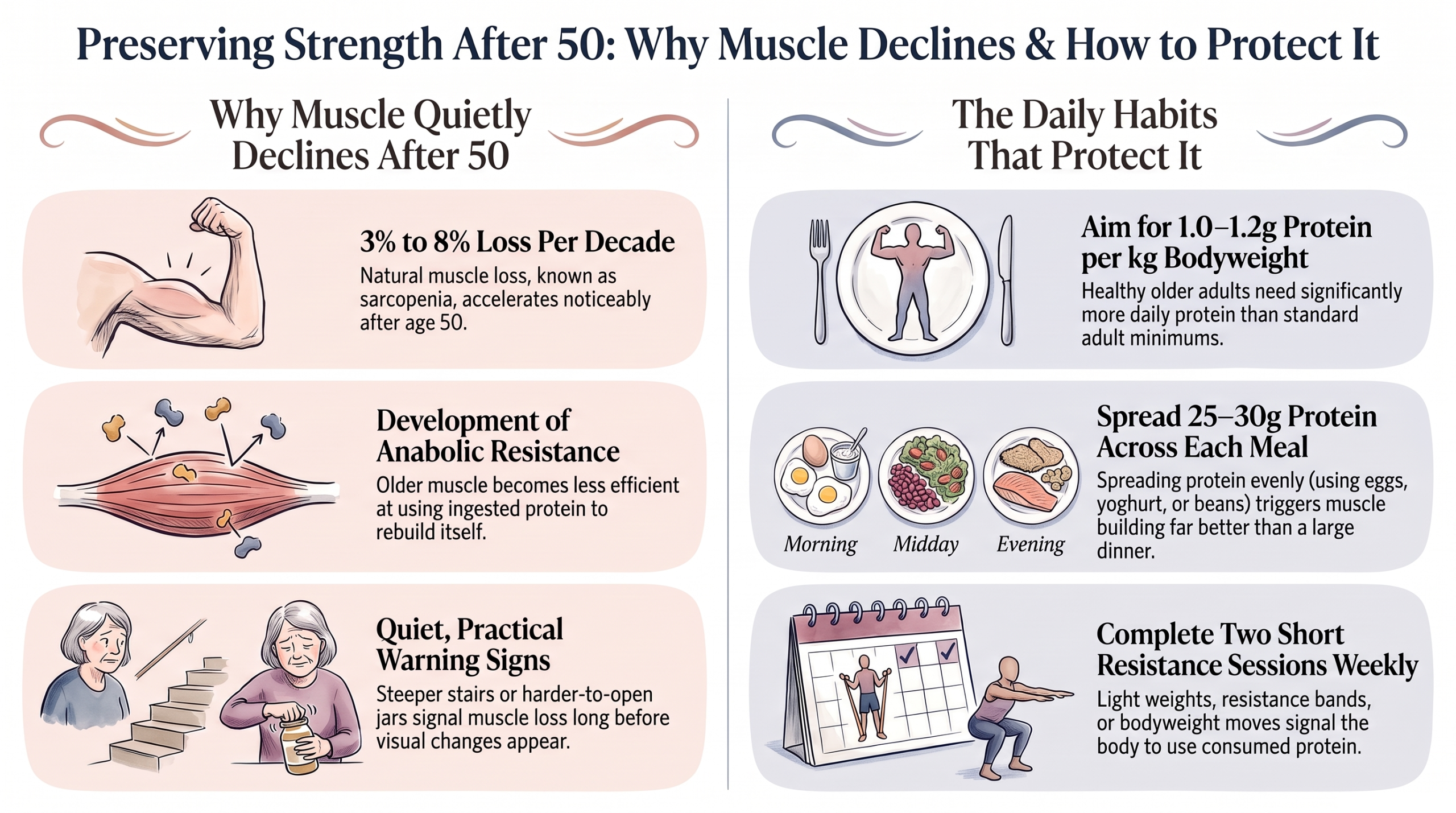
After 50, muscle mass and strength begin declining faster than most people realise, a process researchers call sarcopenia. Left unchecked, it can mean roughly 3 to 8 percent of muscle mass lost per decade, accelerating further after 60 or 70. The encouraging part is that this isn’t simply fate: the two biggest levers, protein intake and resistance exercise, are both things you can act on starting today, and the research behind both is genuinely strong.
The Story
Muscle loss speeds up quietly, long before you’d notice it in the mirror. Strength and muscle mass typically peak in your 30s and decline gradually after that, with the rate picking up noticeably after 50. Because it happens gradually, many people only notice once a jar lid feels harder to open or stairs feel steeper than they used to.
Protein needs actually go up with age, not down. Older muscle becomes less efficient at using protein to rebuild itself, a phenomenon researchers call anabolic resistance. Many geriatric nutrition guidelines now recommend closer to 1.0–1.2 grams of protein per kilogram of body weight per day for healthy older adults, meaningfully more than the standard adult minimum, and more again for those recovering from illness or injury.
Spreading protein across the day works better than loading it all at dinner. Muscle-building response to protein seems to work best with roughly 25–30 grams at each meal, rather than a small breakfast and lunch followed by a large dinner. A simple shift, like adding eggs or Greek yoghurt at breakfast, often does more than people expect.
Protein alone doesn’t build muscle — resistance exercise is what tells your body to use it. Eating enough protein without any strength-based movement still leaves muscle-building signals mostly switched off. Even two short sessions a week of resistance work, using bands, light weights, or just your own body weight, meaningfully changes how that protein gets used.
Reaching for enough protein doesn’t have to mean steak every night. Eggs, Greek yoghurt, cottage cheese, fish, poultry, beans, lentils, and tofu are all solid, affordable sources. Spreading a few of these across the day adds up faster than most people expect, without needing to overhaul how you eat.
Watch for the quiet, practical signs of muscle loss, not just how you look. Struggling more than before to rise from a low chair, a weakening grip, or feeling less steady on stairs are often earlier and more meaningful signs than anything visible. These are worth mentioning at a routine check-up rather than waiting for them to worsen.

Mrs Cure Confidence Score
Evidence strength — Strong
Practical value — High
Ease of following — Moderate
Cost — Low
Suitability for over 50s — Very Strong
Mrs Cure’s Wise Take
Muscle is sometimes called the body’s metabolic currency, and after 50 it’s worth treating it that way — something to actively keep in the bank, not something you only notice once the balance runs low.
What You Can Do Today
- Add a palm-sized portion of protein, like eggs, yoghurt, or beans, to one meal today that usually goes without it.
- Try one simple resistance move — sit-to-stand repeats from a chair, or wall push-ups — and notice how it feels.
- If rising from a chair or climbing stairs has felt harder lately, mention it at your next GP visit rather than filing it under ‘just getting older.’
Effort vs Benefit
Adding protein to meals you’re already eating sits firmly in the low-effort, high-benefit category — a matter of swapping or adding, not overhauling. Fitting in two short resistance sessions a week takes a bit more planning but pays off substantially, especially combined with adequate protein. Working with a physiotherapist or trainer to build a proper strength routine takes the most ongoing commitment, but is well worth it for anyone who’s noticed real declines in strength or balance.
Things to Keep in Mind
This isn’t a case for bodybuilder-style eating — for most healthy older adults, modest increases in everyday protein sources are enough. Anyone with kidney disease should check protein targets with their doctor first, since needs can differ. Sudden, unexplained muscle loss or weight loss, rather than a gradual decline, is worth raising with a GP rather than assuming it’s simply age.
Key Takeaway
Muscle loss after 50 is real and measurable, but it’s also one of the more controllable parts of ageing: enough protein, spread through the day, combined with regular resistance movement, meaningfully slows and can even partly reverse it.
Mrs Cure Wisdom
Strength isn’t something you either have or don’t after 50 — it’s something you keep choosing, one meal and one short workout at a time.
Enjoyed this? Get more like it.
Practical, no-nonsense health tips for adults 50+, dropped straight in your inbox. No spam, unsubscribe anytime.
This content is educational and not a substitute for personalised medical advice, diagnosis or treatment.