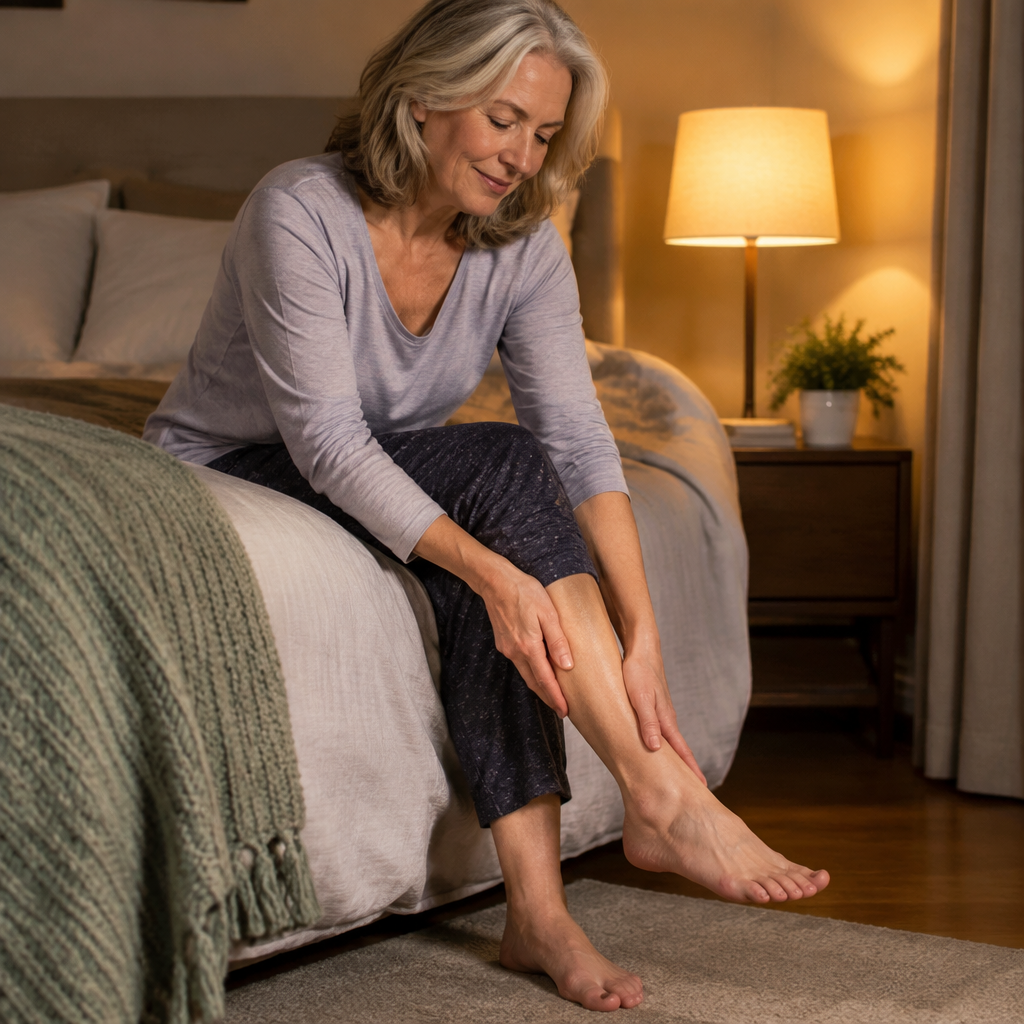
That jolt of a calf cramp at 2am has a habit of ruining a perfectly good night’s sleep, and it’s more common than most people realise.
Prefer to watch? Here’s the 72-second version.
Opening Summary
Nighttime leg cramps and restless legs syndrome both become noticeably more common after 50, and while they can feel similar in the dark, they have different causes and different fixes. Hydration, certain nutrient levels, circulation, and a handful of evening habits make a genuine difference to both, and a GP conversation is worthwhile if they’re happening often.
The Story
A nighttime leg cramp is a sudden, painful, involuntary muscle tightening, usually in the calf, that passes within a minute or two. Restless legs syndrome is different: an uncomfortable, hard-to-describe urge to move your legs, often worse in the evening and when sitting or lying still, relieved temporarily by movement. Both disrupt sleep, and both become more common with age, though for overlapping rather than identical reasons.
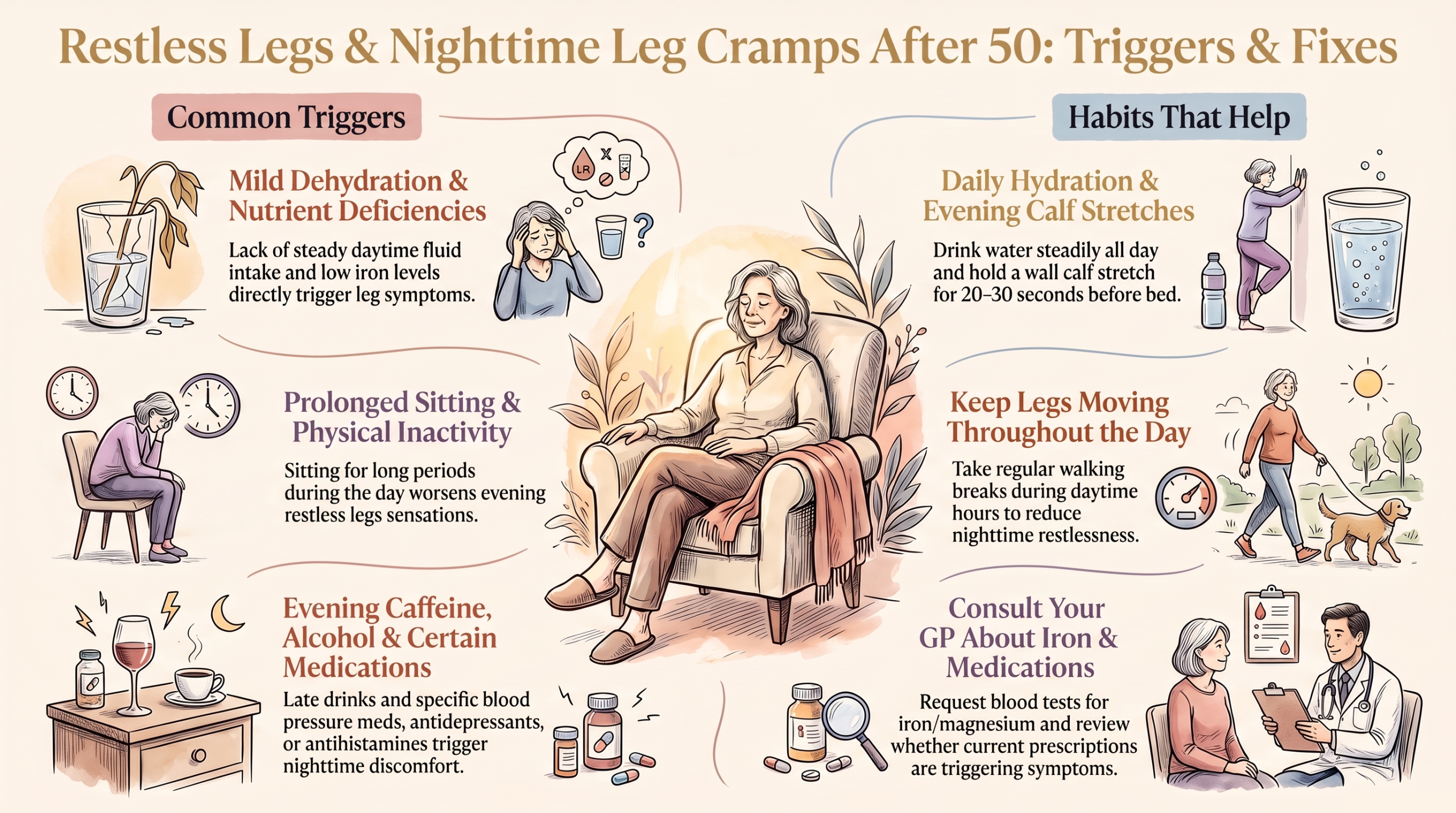
Stay steadily hydrated through the day, not just before bed. Mild dehydration is one of the most common, easily fixed contributors to nighttime cramping. Steady fluid intake across the day matters more than a last-minute glass before sleep.
Stretch your calves gently before bed. A simple standing calf stretch against a wall, held for twenty to thirty seconds each side, measurably reduces how often cramps strike overnight for many people.
Ask your GP about iron and magnesium levels. Low iron is specifically linked to restless legs syndrome, and a simple blood test can check it. Magnesium’s evidence is more mixed, but it’s a low-risk thing to discuss if cramps are frequent.
Review your medications with a pharmacist. Certain antidepressants, antihistamines, and some blood pressure medications can trigger or worsen restless legs symptoms. If symptoms started or worsened around a medication change, that timing is worth flagging.
Cut back on evening caffeine and alcohol. Both are known triggers for restless legs symptoms in people who are sensitive to them, and both also independently disrupt deeper sleep stages.
Keep legs moving during the day. Prolonged sitting is linked to worse restless legs symptoms in the evening. Regular movement, even short walking breaks, genuinely helps many people.
Mrs Cure Confidence Score
Evidence strength — Good
Practical value — High
Ease of following — Easy
Cost — Free
Suitability for over 50s — Strong
Mrs Cure’s Wise Take
It’s easy to write off disrupted sleep as just part of getting older. Leg cramps and restless legs are two of the few sleep disruptors with genuinely simple, well-evidenced fixes, so they’re worth tackling directly rather than quietly tolerating.
What You Can Do Today
- Do a thirty-second calf stretch against a wall before bed tonight.
- Track your fluid intake tomorrow to see if you’re drinking steadily through the day.
- Note whether symptoms started or worsened around any recent medication change, ready to mention to your GP.
Effort vs Benefit
Low effort, high benefit: evening calf stretches, steady daytime hydration.
Moderate effort, high benefit: cutting back on evening caffeine and alcohol, regular daytime movement.
Requires real commitment: a full medication or iron-level review with your GP for persistent restless legs symptoms.
Things to Keep in Mind
Restless legs symptoms that are frequent, severe, or clearly disrupting your sleep most nights are worth a proper GP assessment rather than long-term self-management, since effective prescription treatments exist. This is general guidance, not personalised medical advice. If broader sleep disruption is also a factor, our simple wind-down routine for better sleep pairs well with these habits.
Key Takeaway
Nighttime leg cramps and restless legs after 50 usually respond well to hydration, stretching, movement, and a look at nutrient levels or medications, rather than being something to simply tolerate.
Mrs Cure Wisdom
A good night’s sleep is worth chasing down to its actual cause, not just sleeping through in spite of it.
Enjoyed this? Get more like it.
Practical, no-nonsense health tips for adults 50+, dropped straight in your inbox. No spam, unsubscribe anytime.
This content is educational and not a substitute for personalised medical advice, diagnosis or treatment.