Grief doesn’t ask permission before it visits, and it rarely leaves on the schedule anyone expects it to.
Prefer to watch? Here’s the 75-second version.
Opening Summary
By your 50s, 60s and beyond, loss tends to accumulate, a parent, a partner, close friends, sometimes even the version of life you’d planned for. Grief later in life is often more layered than earlier losses, and it deserves more than the well-meaning but unhelpful advice to “move on.” The most supported approach isn’t about reaching some tidy end point, it’s about learning to carry loss while still building a life alongside it.
The Story
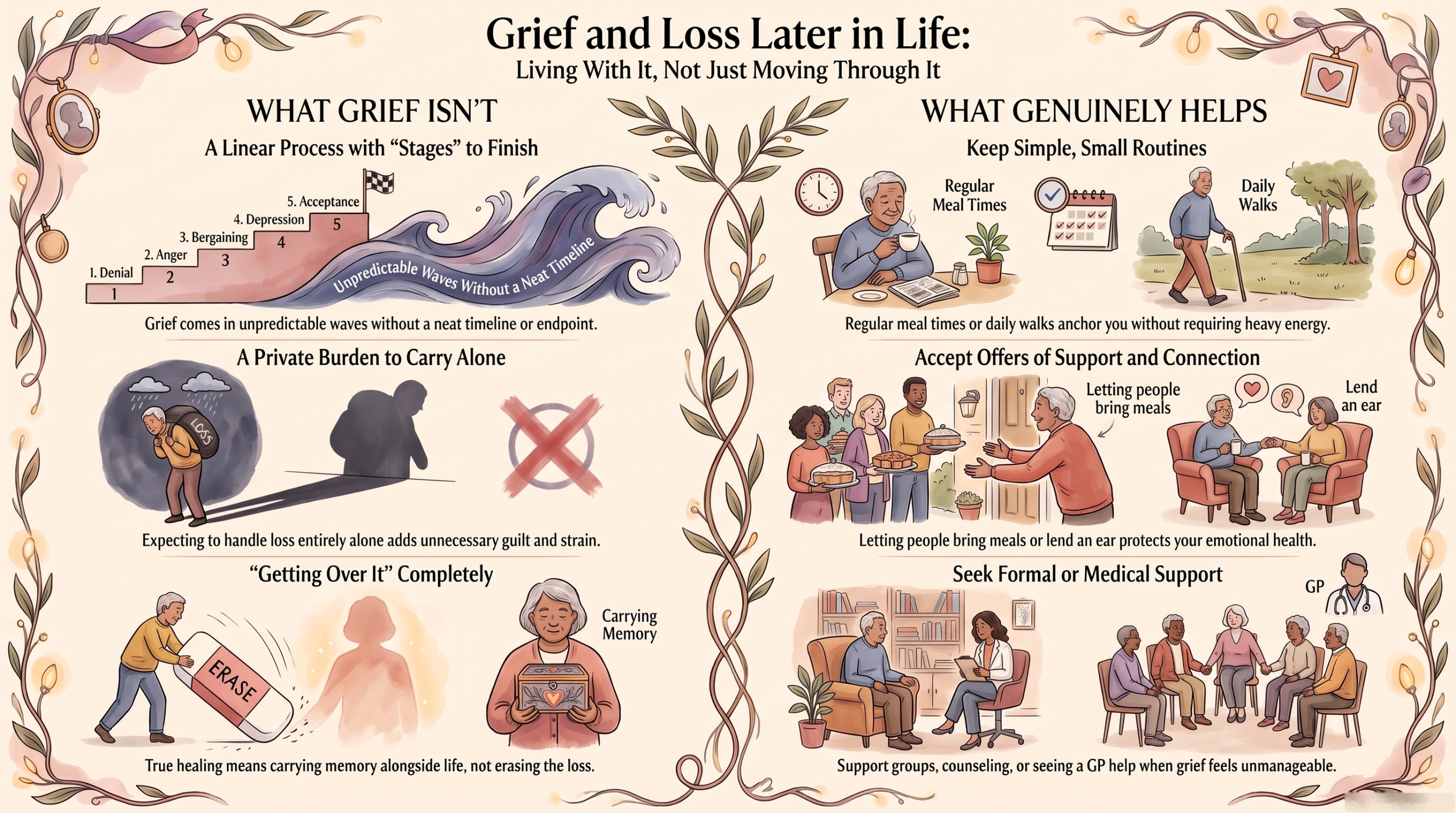
Grief research has moved away from the old idea of fixed “stages” you pass through in order and finish. Modern understanding treats grief as something that comes in waves, that can resurface unexpectedly years later, and that doesn’t have a universal timeline. What’s considered healthy grieving looks less like “getting over it” and more like gradually being able to hold both the loss and an ongoing life at the same time.
Let grief be non-linear, because it genuinely is. A good day followed by a hard one isn’t a setback, it’s simply how grief tends to move. Expecting steady, forward progress often just adds guilt to an already difficult experience.
Keep some structure and small routines. Grief can make ordinary tasks feel enormous. Simple anchors, a regular mealtime, a short daily walk, a call with a friend, give the day some shape without requiring much energy.
Let people help, even in small ways. Many people withdraw during grief, assuming they should manage it privately or not burden others. Accepting a meal, a lift, or simply company is not a weakness, and most people genuinely want to help but don’t know how unless you let them.
Find your people, formally or informally. A grief support group, whether in person or online, connects you with others who understand a version of what you’re feeling without needing it explained. It’s not for everyone, but it helps many people more than they expect.
Be wary of the “should be over it by now” voice. Whether it’s your own or someone else’s, there’s no correct timeline. Anniversaries, holidays and small unexpected triggers, a song, a smell, can bring grief back sharply even years later, and that’s normal, not a sign you’re doing it wrong.
Watch for signs it’s becoming something more. Most grief eases gradually, even while never fully disappearing. If it isn’t easing at all after a prolonged period, or is accompanied by an inability to function, that’s worth raising with your GP, who can help you find the right support.

Mrs Cure Confidence Score
Evidence strength — Good
Practical value — High
Ease of following — Gentle, at your own pace
Cost — Free to low
Suitability for over 50s — Strong
Mrs Cure’s Wise Take
Nobody ever really finishes grieving someone worth grieving. What changes, gradually and unevenly, is your capacity to carry it while still reaching for the rest of your life. That’s not moving on. It’s moving forward, with them still somewhere in the picture.
What You Can Do Today
- Reach out to one person, even just a short message, rather than managing today entirely alone.
- Keep one small routine today, a walk, a proper meal, a cup of tea at the same time you always have.
- Be gentle with yourself about however today actually goes, rather than measuring it against how you think it should go.
Effort vs Benefit
Low effort, high benefit: keeping small daily routines and accepting offers of help.
Moderate effort, high benefit: reaching out to friends or joining a grief support group.
Requires real commitment: grief counselling or therapy, which takes time but offers real, lasting support for complicated or prolonged grief.
Things to Keep in Mind
Grief and depression can look similar but aren’t the same thing, and it’s not always easy to tell them apart from the inside. If low mood, hopelessness or an inability to function continues without any easing over many months, or if you’re struggling to cope, please talk to your GP. Support is available, and reaching out for it is a sign of strength, not failure. This is general guidance, not a substitute for professional support.
Key Takeaway
Grief later in life is layered, non-linear, and doesn’t run on a schedule. Small routines, letting others help, and support when you need it don’t erase loss, but they make it possible to carry alongside a life that keeps going.
Mrs Cure Wisdom
Loving someone enough to grieve them well is not a wound to heal quickly. It’s a kind of ongoing tribute, and there’s no rush to finish it.
Enjoyed this? Get more like it.
Practical, no-nonsense health tips for adults 50+, dropped straight in your inbox. No spam, unsubscribe anytime.
This content is educational and not a substitute for personalised medical advice, diagnosis or treatment.