It’s one of the least talked-about changes of getting older, and one of the most manageable, if you know what actually helps.
Prefer to watch? Here’s the 60-second version.
Opening Summary
Bladder changes after 50, needing the toilet more often, a sudden urgent need to go, the odd leak when you cough or laugh, are extremely common and rarely discussed. They’re driven by real, understandable changes: weaker pelvic floor muscles, hormonal shifts around menopause, and simple habits like how much caffeine you drink. Most of it responds well to a handful of low-cost, low-effort changes, and it’s very rarely something to just quietly put up with.
The Story
Bladder control relies on a partnership between the bladder muscle itself and the pelvic floor, muscles that support the bladder, bowel and, in women, the uterus. Both change with age. The bladder wall can become less elastic and hold less, while pelvic floor muscles can weaken from childbirth, menopause, weight gain, or simply years of gravity. For women, declining oestrogen after menopause also thins the tissue lining the bladder and urethra, which is part of why urinary symptoms and infections become more common in the 50s and beyond. Men aren’t exempt either: an enlarging prostate can press on the urethra and change urinary patterns.
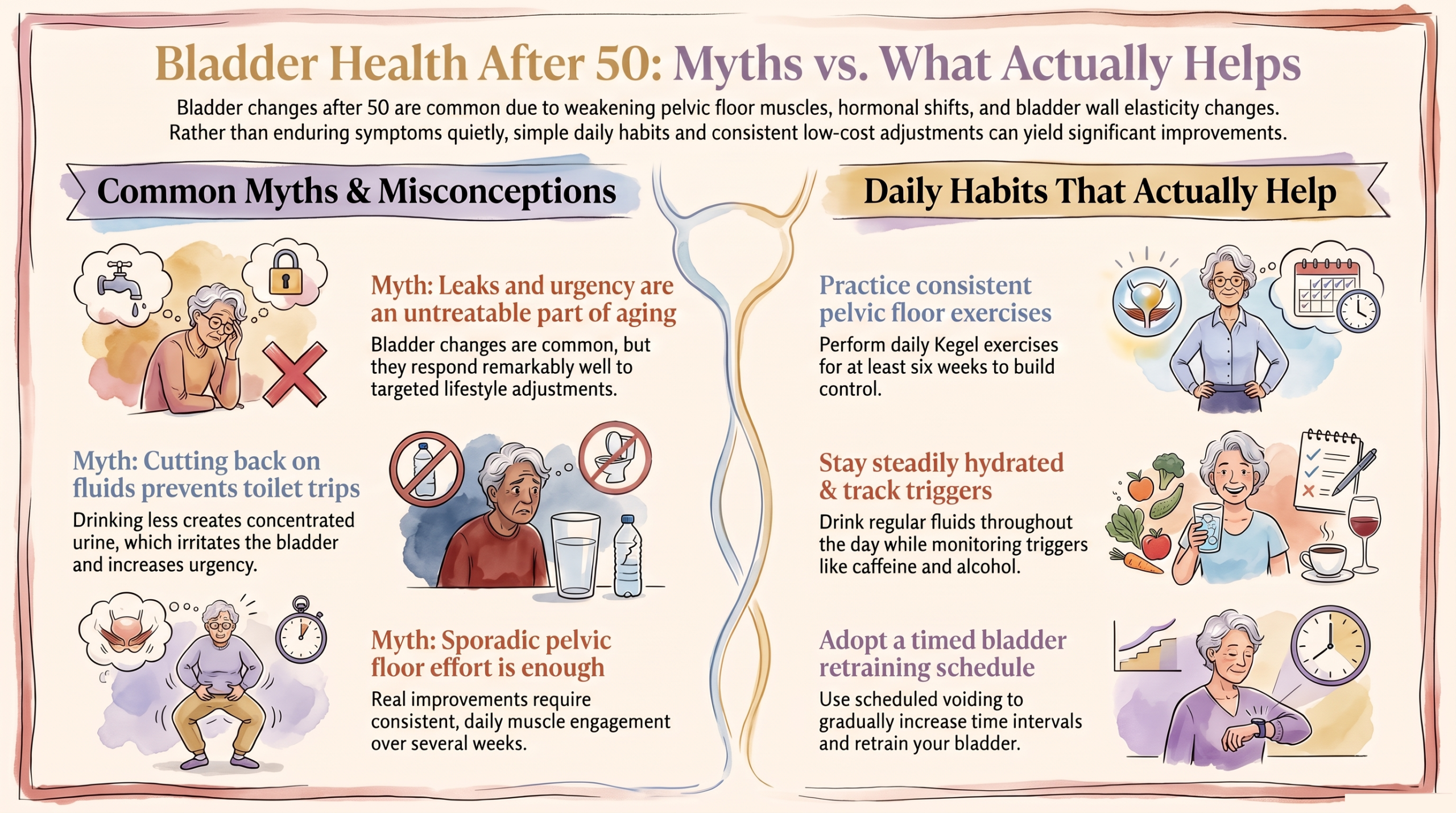
Do your pelvic floor exercises properly, and consistently. Kegel exercises, correctly done, strengthen the muscles that control the flow of urine. The trick most people miss: consistency over weeks, not a single determined effort. A physiotherapist who specialises in pelvic health can check you’re doing them correctly, since many people unknowingly clench the wrong muscles.
Don’t restrict fluids to avoid trips to the toilet. It’s a common instinct that backfires. Concentrated urine from not drinking enough can actually irritate the bladder and make urgency worse, and dehydration brings its own risks. Aim for steady fluid intake through the day rather than cutting back.
Know your bladder irritants. Caffeine, alcohol, carbonated drinks and artificial sweeteners are common triggers for urgency in people who are sensitive to them. You don’t need to cut them out entirely, but noticing whether your symptoms track with your coffee habit is worth doing.
Try timed or “bladder retraining” voiding. Going to the toilet on a schedule, gradually stretching the interval, rather than the moment you feel the slightest urge, can genuinely retrain an overactive bladder over several weeks.
Keep an eye on weight and constipation. Extra weight and a chronically full bowel both put physical pressure on the bladder and pelvic floor. Addressing either can meaningfully ease symptoms.
Don’t assume leaks or urgency are just “part of getting older.” They’re common, but common isn’t the same as untreatable. A GP can rule out infection, check medications that might be contributing, and refer you to pelvic health physiotherapy or, when needed, other treatment.

Mrs Cure Confidence Score
Evidence strength — Strong
Practical value — High
Ease of following — Moderate
Cost — Free
Suitability for over 50s — Strong
Mrs Cure’s Wise Take
Of all the changes we quietly accept as “just what happens now,” bladder changes might be the most needlessly endured. This is one of the few areas of ageing where a few weeks of consistent, unglamorous effort tends to produce a real, noticeable difference.
What You Can Do Today
- Do one proper set of pelvic floor exercises, and set a daily reminder to keep it up for six weeks.
- Track your caffeine and fluid intake for two or three days to see if there’s a pattern worth adjusting.
- Book a GP appointment if leaks, urgency or night-time trips are affecting your daily life, rather than assuming nothing can be done.
Effort vs Benefit
Low effort, high benefit: maintaining steady hydration and noticing your personal bladder irritants.
Moderate effort, high benefit: a consistent pelvic floor exercise routine over several weeks.
Requires real commitment: bladder retraining schedules, which take patience and several weeks to show results.
Things to Keep in Mind
Blood in the urine, pain when urinating, fever, or a sudden dramatic change in bladder habits are not things to self-manage, they warrant a prompt GP visit to rule out infection or other causes. Bladder symptoms can also be a side effect of some common medications, so it’s worth mentioning to your doctor what you’re taking. This is general guidance, not a substitute for a proper assessment.
Key Takeaway
Bladder changes after 50 are common, driven by real physical causes, and genuinely responsive to pelvic floor exercises, sensible hydration and, where needed, a conversation with your GP. Quiet endurance isn’t the only option.
Mrs Cure Wisdom
You don’t have to just live with it, and you certainly don’t have to be embarrassed about asking for help with it.
Enjoyed this? Get more like it.
Practical, no-nonsense health tips for adults 50+, dropped straight in your inbox. No spam, unsubscribe anytime.
This content is educational and not a substitute for personalised medical advice, diagnosis or treatment.