Your gums have been doing quiet, thankless work for decades, and after 50 they tend to start asking for a little more attention in return.
Prefer to watch? Here’s the short video version.
Opening Summary
Gum disease and dry mouth both become noticeably more common after 50, often quietly, without much pain to flag the problem early. What makes this more than a cosmetic issue is the growing body of evidence linking gum health to heart health and blood sugar control, which means the health of your mouth can genuinely echo through the rest of your body. The good news is that most of this is manageable with a few daily habits and regular check-ups, even when nothing hurts and everything feels fine.
The Story
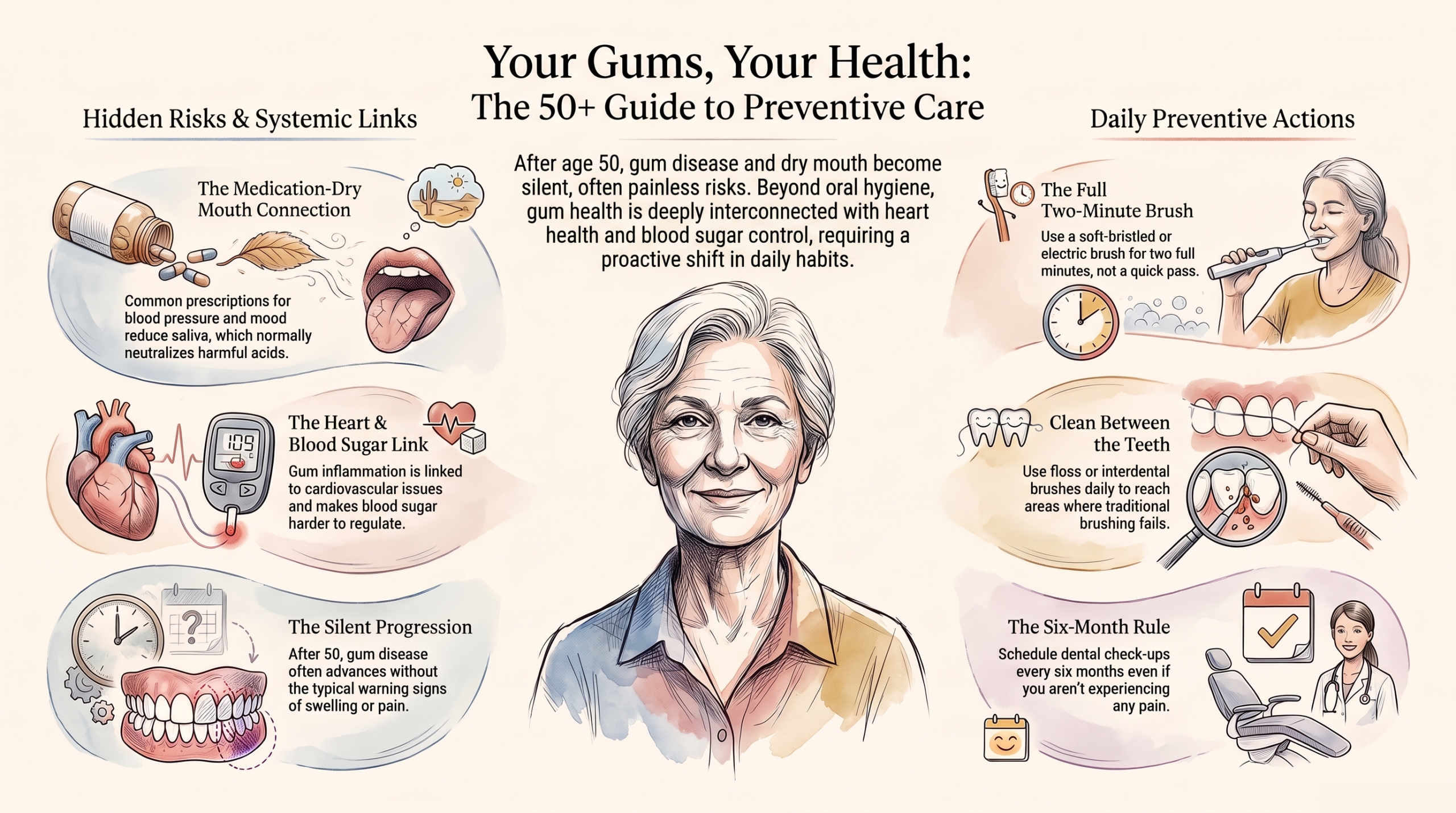
Gum tissue gets less forgiving with age. Decades of brushing, chewing and the slow effects of ageing on blood flow and tissue repair mean gums recede and heal more slowly than they did at 30. That slower healing lets plaque bacteria gain a foothold more easily, which is why gum disease rates climb steadily through your 50s, 60s and beyond, often without the swelling or bleeding people expect as an early warning sign.
Medications are the hidden driver of dry mouth. Blood pressure tablets, antidepressants, antihistamines and many other common prescriptions reduce saliva production as a side effect, and the more medications you take, the more this tends to add up. Saliva isn’t just for comfort — it rinses away food particles, neutralises acids and helps keep bacteria in check, so less of it means a mouth that’s more vulnerable to decay and gum irritation, even in people who’ve never had dental trouble before.
Gum disease and heart health are more connected than most people realise. Chronic gum inflammation appears to contribute to inflammation elsewhere in the body, and several large studies have found people with gum disease have a higher rate of cardiovascular problems than people with healthy gums. Nobody is claiming gum disease causes heart attacks outright, but the association is consistent enough that dentists and cardiologists both now take it seriously.
Blood sugar and gum health work in both directions. Diabetes makes gum disease more likely by reducing the body’s ability to fight infection, and in turn, untreated gum disease can make blood sugar harder to control, creating a loop that’s worth breaking from either side. If you manage diabetes or prediabetes, your dentist is effectively part of that care team, whether or not it feels that way.
Brush for the full two minutes, not the quick pass. A soft-bristled brush at a gentle angle along the gumline, twice a day, does more for gum health than a stronger brush used carelessly. Electric brushes with a built-in timer make this easier to get right without having to count in your head.
Floss or use interdental brushes daily, even when it feels unnecessary. Plaque builds up between teeth in places a brush simply can’t reach, and this is exactly where gum disease tends to start. Interdental brushes are often easier on ageing hands and receding gums than traditional floss, so it’s worth trying both to see which one you’ll actually keep up.
Treat dry mouth as a habit to manage, not just a nuisance to tolerate. Sipping water through the day, chewing sugar-free gum to stimulate saliva, and asking your pharmacist or doctor whether a medication swap is possible can all make a real difference. A simple fluoride mouth rinse can also help protect teeth when saliva is running low.

Mrs Cure Confidence Score
Evidence strength — Strong
Practical value — High
Ease of following — Moderate
Cost — Low
Suitability for over 50s — Very Strong
Mrs Cure’s Wise Take
It’s easy to file dental care under vanity, something you do for a nice smile in photos, but after 50 it quietly becomes something closer to preventive medicine — a small, unglamorous habit that keeps doing you good in places you’d never think to look.
What You Can Do Today
- Switch to a soft-bristled or electric toothbrush and spend the full two minutes on it, morning and night.
- Add daily flossing or interdental brushing to your routine if it isn’t there already, choosing whichever tool is easiest on your hands.
- Book a dental check-up if it’s been more than six months, even if nothing hurts and everything looks fine.
Effort vs Benefit
Daily brushing and flossing sit firmly in the low-effort, high-benefit category — a few extra minutes a day for a habit that protects both your teeth and, the evidence suggests, more of your overall health than most people assume. Managing dry mouth takes a bit more trial and error, since it often means adjusting habits around medication timing or trying a few products before finding what works. Keeping up with regular dental check-ups requires the most ongoing commitment, mainly in the form of time and cost, but it’s also the piece that catches problems while they’re still small and inexpensive to fix.
Things to Keep in Mind
Gum disease is notoriously quiet in its early stages, so absence of pain isn’t proof that everything is fine. Worth booking a dental visit sooner rather than later if you notice gums that bleed when brushing or flossing, persistent bad breath, gums that look like they’re pulling away from your teeth, teeth that feel loose or shifted, or a mouth that feels dry most of the time regardless of how much water you drink. None of these need to be alarming, but they’re exactly the sort of signals a dentist is best placed to interpret.
Key Takeaway
Gum disease risk and dry mouth both climb after 50, often without obvious symptoms, and the links between gum health and both heart health and blood sugar control mean this is worth taking seriously rather than waiting for pain to prompt action. A steady daily routine of thorough brushing and interdental cleaning, sensible management of dry mouth, and regular dental check-ups covers most of the ground, and none of it requires anything dramatic — just consistency.
Mrs Cure Wisdom
The mouth rarely shouts when something’s wrong — it tends to whisper, which is exactly why it pays to keep listening.
Enjoyed this? Get more like it.
Practical, no-nonsense health tips for adults 50+, dropped straight in your inbox. No spam, unsubscribe anytime.
This content is educational and not a substitute for personalised medical advice, diagnosis or treatment.