Owning a dog after 50 is linked with lower blood pressure, more daily walking, and less loneliness — which makes a pet one of the more enjoyable prescriptions in preventive health.
Prefer to watch? Here’s the 74-second version.
Opening Summary
Pets are usually chosen for companionship, not health benefits — but the research on pet ownership after 50 keeps turning up the same encouraging pattern: lower reported loneliness, more daily physical activity for dog owners specifically, and measurable benefits for stress and blood pressure. None of this means a pet is right for everyone or every living situation, but for the right person, it’s a genuinely evidence-backed source of wellbeing, not just a nice-to-have.
The Story
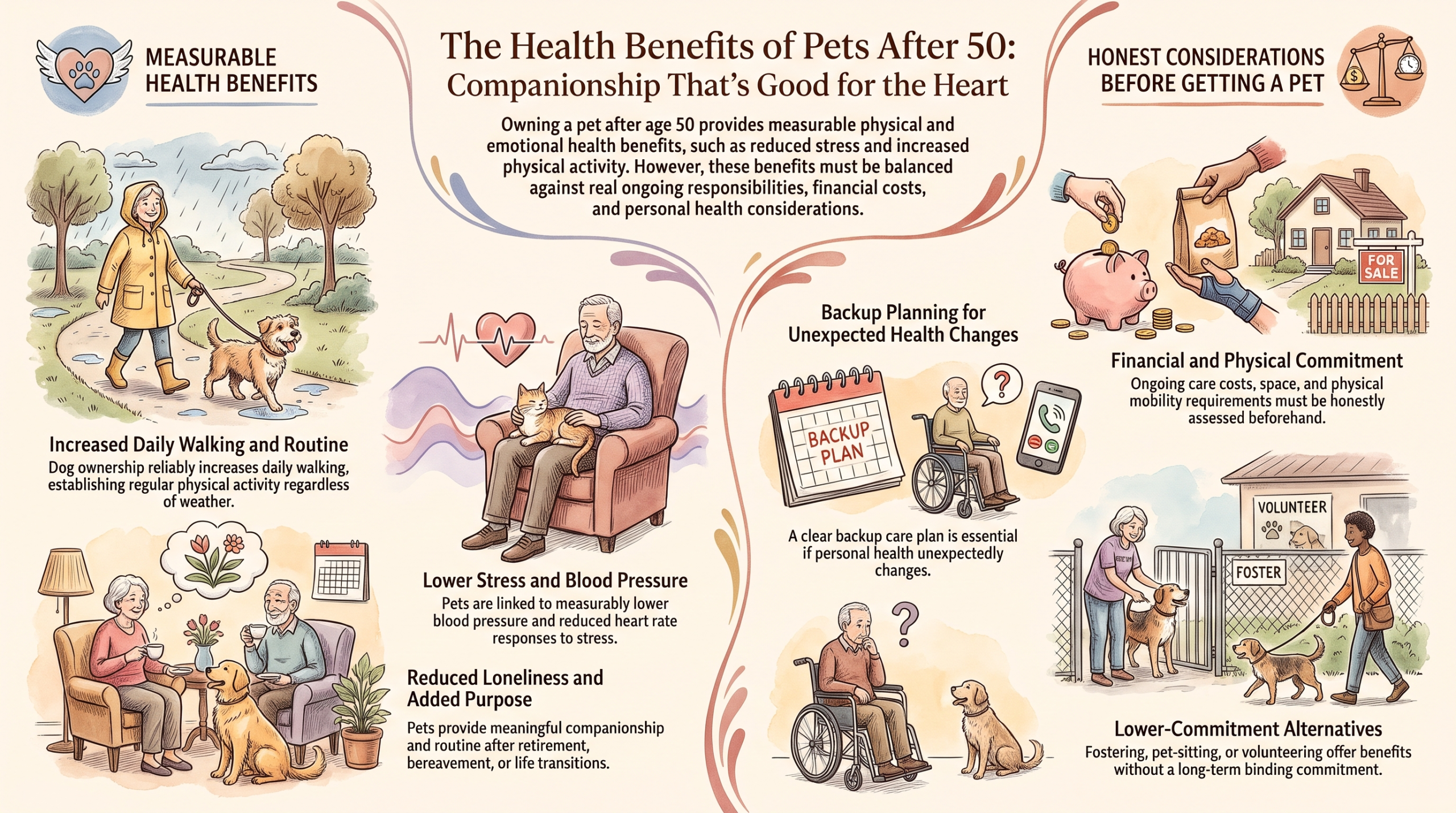
The health case for pet ownership after 50 rests on a few consistent findings.
- Dog ownership reliably increases daily walking. Dog owners consistently log more daily steps than non-owners, largely because a dog needs walking regardless of motivation or weather on any given day — which solves one of the most common barriers to staying active.
- Pets are linked with measurably lower stress responses. Several studies have found lower blood pressure and heart rate responses to stress among pet owners compared to non-owners, and interacting with a familiar, calm animal is associated with a drop in cortisol, the body’s primary stress hormone.
- Loneliness drops meaningfully for many pet owners. A pet provides routine, a reason to get up and engage with the day, and, for many people, a genuine sense of companionship — all of which matter more after life changes like retirement, bereavement, or children moving away.
- The type of pet, and the person’s circumstances, genuinely matter. A dog’s exercise and companionship demands suit an active person with a stable routine; a cat or smaller pet can offer much of the emotional benefit with considerably lower physical and logistical demands, which matters for anyone with mobility limitations, a smaller living space, or less certainty about long-term stability.
- Fostering or pet-sitting is a legitimate lower-commitment option. For anyone unsure about a long-term commitment, fostering through a local shelter, or regularly minding a family member’s or friend’s pet, offers a genuine taste of the benefits without the full responsibility.
- The costs are real and worth planning for honestly. Food, veterinary care, and unexpected medical bills add up, and thinking through what happens to a pet if your own health changes unexpectedly is a kindness to both of you, not something to skip over.

Mrs Cure Confidence Score
Evidence strength — Moderate
Practical value — High
Ease of following — Moderate
Cost — Moderate to High
Suitability for over 50s — Good, with caveats
Mrs Cure’s Wise Take
It says something that one of the better-evidenced ways to lower stress and get more steps in a day also happens to be one of the most enjoyable. A pet isn’t a substitute for human connection or medical care, but as a genuine, daily source of routine and warmth, it earns its place on this list fairly.
What You Can Do Today
- If you’re considering a pet but unsure, contact a local shelter about fostering or short-term pet-sitting to get an honest sense of the day-to-day commitment first.
- If you already have a pet, notice how a daily walk or a few minutes of quiet time with them actually affects your mood and stress levels — it’s worth appreciating deliberately, not just on autopilot.
- If a pet isn’t realistic right now, consider a lower-commitment version: a regular visit to a friend or family member’s pet, or volunteering at a local animal shelter.
Effort vs Benefit
This is genuinely a mixed bag by design: the benefits are real but so is the ongoing responsibility, cost, and commitment, which is why it belongs on a “think it through honestly” list rather than a universal recommendation. For someone with the stability, space, and physical capacity for it, a dog in particular tends to pay for itself many times over in walking habits and daily structure alone.
Things to Keep in Mind
- Allergies, mobility limitations, and living situation (including whether a tenancy allows pets) are all worth honestly assessing before committing, not after.
- Think through, and ideally write down, a backup plan for your pet’s care if your own health changes unexpectedly — many shelters and family members are glad to help with this kind of planning in advance.
- A pet should add to your life, not replace addressing loneliness or low mood with a doctor or counsellor if either has become persistent — the two aren’t mutually exclusive, but one isn’t a substitute for the other.
Key Takeaway
For the right person and situation, a pet offers a rare combination: genuine daily companionship, a built-in reason to move more, and measurable benefits for stress, wrapped up in something most people simply enjoy having around. It’s worth weighing honestly against the real commitment involved, rather than dismissing or romanticising it outright.
Mrs Cure Wisdom
Some of the best health habits don’t feel like health habits at all — they feel like a walk with someone who’s always glad to see you.
Enjoyed this? Get The Good Years, free.
Our free monthly magazine, packed with the best of our articles, guides and quizzes for life after 50. No spam, unsubscribe any time.
This content is educational and not a substitute for personalised medical advice, diagnosis or treatment.