Feeling more out of breath on the stairs than you used to isn’t something you simply have to accept after 50 — in many cases, it’s one of the more trainable things about your body.
Prefer to watch? Here’s the 75-second version.
Opening Summary
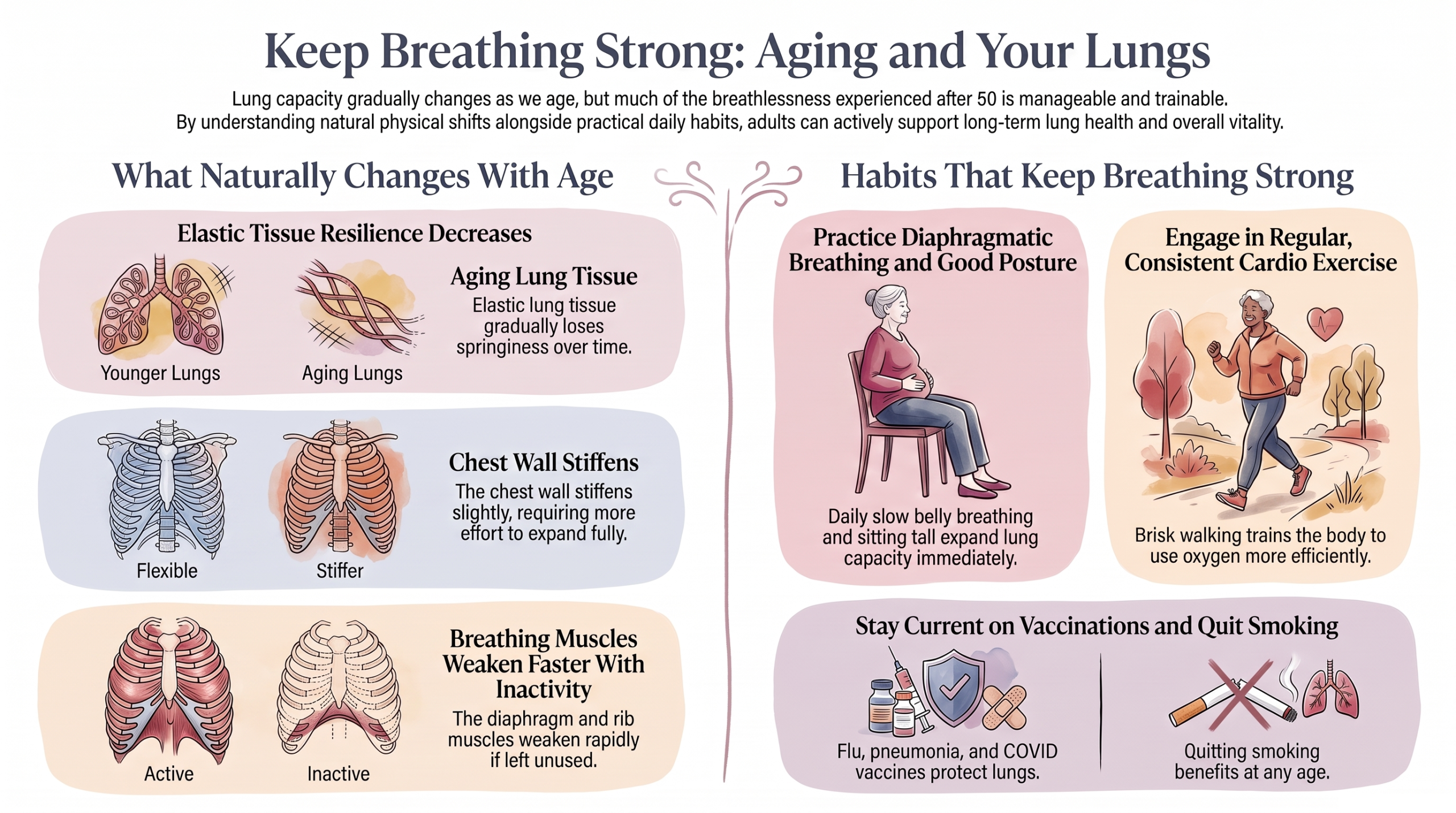
Lung capacity declines gradually from your 20s onward, with the drop becoming more noticeable after 50 as the lungs’ elastic tissue loses some springiness and the chest wall stiffens slightly. How much of that you actually feel day to day, though, depends heavily on fitness, posture, and whether the lungs have ever been exposed to smoke or heavy pollution. None of that is fixed — lung function responds well to the right habits at any age.
The Story
Lung capacity declines gradually, but inactivity speeds it up considerably. The lungs themselves age slowly, but the muscles that help you breathe, particularly the diaphragm and the muscles between your ribs, weaken faster with inactivity than almost anything else does. Staying physically active is one of the most effective ways to keep breathing capacity closer to where it was.
Your diaphragm is a muscle, and like any muscle, it responds to training. Simple diaphragmatic breathing — breathing slowly into the belly rather than the chest, for a few minutes a day — can improve how efficiently you use each breath over time. It’s a habit physiotherapists use with patients recovering from respiratory illness for exactly this reason.
Posture quietly affects how much air you can actually take in. Slouched sitting compresses the chest and reduces how far the lungs can expand, while sitting or standing tall gives them noticeably more room to work with. This is a free, immediate change, and it adds up meaningfully over a day spent mostly seated.
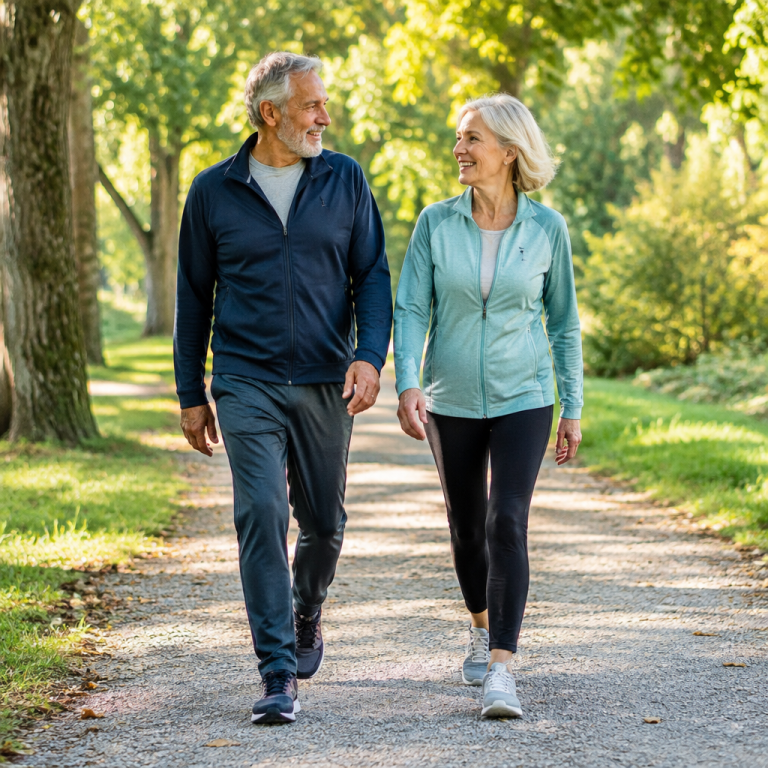
Cardio exercise is one of the best things you can do for your lungs, not just your heart. Regular aerobic activity, like brisk walking, swimming, or cycling, trains the body to use oxygen more efficiently, which often shows up as feeling less breathless at a given pace over time. You don’t need to run to get this benefit — consistency matters more than intensity.
Respiratory infections hit harder after 50, which makes vaccination matter more than people assume. Flu, pneumonia, and COVID-19 all carry a higher risk of serious lung complications as you get older. Checking with your GP about which vaccinations are currently recommended for your age and health history is a quick, low-effort way to protect lung health specifically.
If you’ve ever smoked, your lungs can still benefit from quitting, even many years later. Lung function doesn’t fully reverse once lost, but the rate of further decline slows noticeably after quitting, often within the first year. It’s genuinely never too late for this one to be worth doing.
Mrs Cure Confidence Score
Evidence strength — Strong
Practical value — High
Ease of following — Moderate
Cost — Free
Suitability for over 50s — Strong
Mrs Cure’s Wise Take
Breathing is the one habit we never have to remember to do, which is probably exactly why most of us never think to improve it — until the stairs start reminding us.
What You Can Do Today
- Try five minutes of slow belly breathing today: in through the nose, out slowly through the mouth, keeping shoulders relaxed.
- Notice your posture next time you’re sitting for a while, and sit a little taller for the rest of that hour.
- Check with your GP surgery about which seasonal vaccinations — flu, pneumonia, or others — are currently recommended for you.
Effort vs Benefit
Sitting taller and practising a few minutes of slow breathing are about as low-effort as healthy habits get, for a genuine and fairly quick payoff. Building regular cardio exercise into your week takes more consistency, but the lung and heart benefits together make it one of the highest-value habits available at any age. Quitting smoking, for anyone who still does, takes real commitment and often support, but it’s the single biggest lever for long-term lung health by a wide margin.
Things to Keep in Mind
Occasional breathlessness after exertion is normal and expected. New or worsening breathlessness, a cough lasting more than three weeks, wheezing, or chest pain are all worth raising with a GP rather than putting down to age, since they can point to conditions that are far easier to manage when caught early.
Key Takeaway
Lung function does decline somewhat with age, but how much you actually feel it is shaped heavily by activity levels, posture, infection protection, and smoking history — all things you have real, practical influence over.
Mrs Cure Wisdom
You can’t add years to your lungs, but you can absolutely teach them to work a little smarter with the years they have.
Enjoyed this? Get more like it.
Practical, no-nonsense health tips for adults 50+, dropped straight in your inbox. No spam, unsubscribe anytime.
This content is educational and not a substitute for personalised medical advice, diagnosis or treatment.